TL;DR
Stump removal and stump treatment are two different things. Removal methods (grinding, extraction, manual digging) physically eliminate the stump. Treatment methods (herbicide application, chemical decomposition, Epsom salt) either kill the root system to prevent regrowth or accelerate decay. The right choice depends on stump size, tree species, your timeline, budget, and what you plan to do with the space. In West Texas, species like mesquite and Siberian elm make herbicide stump treatment essential, not optional.
Every year, homeowners stare at a fresh stump in their yard and wonder what to do next. The tree is gone, but the stump sits there, an ugly reminder that the job isn’t finished. Left alone, stumps attract carpenter ants, harbor fungal diseases that can spread to living trees, create trip hazards, and slowly sink into the ground as they rot, sometimes taking the surrounding grade with them.
Understanding the full range of options for stump removal and treatment starts with recognizing that “removal” and “treatment” mean different things. Removal is the physical act of getting the stump out of (or below) the ground. Treatment can mean two things: applying chemicals to accelerate decomposition, or applying herbicide to a freshly cut stump to kill the root system and prevent regrowth. Most articles online blur these distinctions. This glossary won’t.
The method that makes sense for your property depends on the stump’s diameter, the tree species, how quickly you need the space cleared, whether you plan to build or replant in that spot, and how close the stump sits to structures or underground utilities like irrigation lines.
Need professional guidance for a stump on your property? Learn when to hire a certified arborist before choosing a method.
Quick Comparison: All Options for Stump Removal and Treatment at a Glance
Mechanical Removal Methods
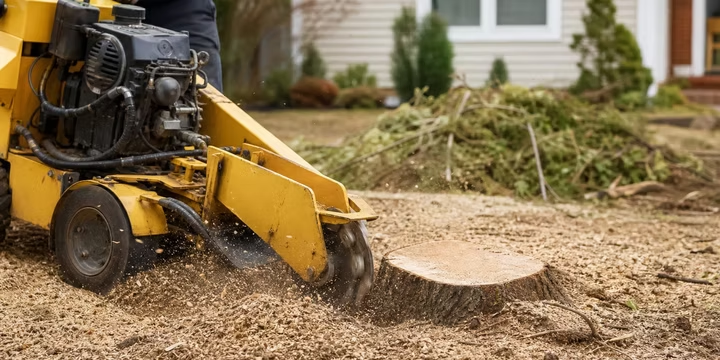
Stump Grinding
Definition: A process that uses a machine with a rotating carbide-tipped cutting disk to chip a stump down below ground level, leaving the root system in place to decompose naturally over time.
Stump grinding is the industry standard for good reason. It’s fast, relatively affordable, and causes minimal disruption to the surrounding yard. A professional operator can grind a small softwood stump in 15 minutes, while larger hardwood stumps may take up to two hours. Most residential stumps fall somewhere in between.
How deep does it go? Standard grinding takes the stump 4 to 6 inches below grade. Some machines can reach 13 to 20 inches deep if the situation calls for it. On ArboristSite forums, contractors report their standard bid specs differently; one notes their standard grind is “6 to 8 inches below grade.” The depth you need depends on whether you’re planting grass (4 to 6 inches is fine), planting a new tree (deeper is better), or laying pavers (extraction may be the real answer).
What grinding doesn’t do: It does not kill the roots. The remaining root system will decompose naturally over 5 to 10 years. For most species, this is fine. For aggressive resprouters like mesquite, grinding alone is not enough, and you’ll need herbicide treatment on the stump before or immediately after cutting.
Cost in 2026: Contractors typically price stump grinding by the inch, measured at the stump’s diameter at ground level. The national rate runs $2 to $6 per diameter inch, with most companies setting a minimum trip charge of $100 to $150 regardless of stump size. Hardwood species (like mesquite or oak) can add 20 to 50 percent to grinding time compared to a softwood of the same diameter. If you have multiple stumps, many contractors offer a per-stump discount of $40 to $75 each after the first.
A critical note about irrigation lines: Stump grinders operate with tremendous force below the soil surface, and they will shred anything in their path. Tree service companies commonly warn they cannot take responsibility for damage to underground utilities they aren’t told about. If you have a sprinkler system, flag every line and head near the stump before work begins. This is one area where having a company that understands both tree work and irrigation systems prevents expensive surprises. For more on identifying what’s underground, see this guide on detecting underground sprinkler leaks.
Safety reality: Professional stump grinders weigh over 1,000 pounds and throw debris at high velocity. They require training, experience, and liability insurance. Renting one from a big-box store and running it yourself is technically possible but genuinely dangerous if you haven’t operated one before.
Full Stump Extraction
Definition: The complete removal of the stump and its major root ball from the ground using heavy equipment, typically an excavator or backhoe.
Where grinding chips the stump below the surface and leaves roots to rot, extraction digs the whole thing out. The result is a clean hole, free of wood, that can be backfilled with fresh soil.
When extraction makes sense: If you’re building a deck, pouring a concrete patio, or planting a large replacement tree in the exact same spot, extraction is the right call. The extra cost and disruption are justified because you need the root ball gone, not just hidden below grade.
The tradeoffs are real. Full extraction costs $200 to $1,000 or more per stump, takes significantly longer than grinding, and leaves a large hole that needs to be backfilled and re-graded. The excavation can also damage root systems of neighboring trees you want to keep. An ISA Certified Arborist can evaluate these risks before work begins.
After extraction, the hole often disrupts the surrounding grade, which can create new lawn drainage problems if not properly addressed with fill dirt and compaction.
Manual Digging
Definition: Physically digging out a stump and its root system by hand using shovels, mattocks, axes, and saws.
Manual digging is the oldest stump removal method and the most labor-intensive. Some sources claim stumps up to 15 inches in diameter can be hand-dug, but practitioners are more conservative. One experienced tree worker noted they personally wouldn’t attempt anything much over a 6-inch trunk diameter. That’s honest advice. Digging out even a modest stump is brutally hard work, especially in the compacted caliche soils common across West Texas.
Manual removal makes sense for small stumps in accessible locations where you have time, energy, and don’t want to pay for equipment. For anything bigger, you’re looking at a full day of hard labor with no guarantee of getting all the roots.
Chemical and Natural Treatment Methods
This is where the two meanings of “treatment” diverge. Chemical decomposition (potassium nitrate, Epsom salt) is about accelerating the breakdown of wood so the stump disappears faster. Herbicide stump treatment is about killing the root system to prevent the tree from growing back. They solve different problems.
Potassium Nitrate (Saltpeter) Treatment
Definition: A chemical decomposition method where potassium nitrate is packed into drilled holes in the stump to accelerate microbial activity and soften the wood over weeks or months.
Potassium nitrate does not dissolve stumps. It’s a decomposition accelerant, not an acid. It works by encouraging the microbes that naturally break down wood to work faster. You drill holes across the stump surface, fill them with potassium nitrate granules, add water, and wait.
Timeline and cost: This is the least labor-intensive DIY option for stump removal and treatment, costing less than $20 for materials. The catch is patience. Full decomposition can take anywhere from 4 weeks to an entire year, depending on stump size, species, moisture levels, and temperature.
Do not burn a treated stump. This cannot be stated strongly enough. Potassium nitrate is a powerful oxidizer, a key ingredient in gunpowder and rocket propellant. Soaking a stump in it and lighting a match will not produce a controlled burn. It will cause the wood to burn incredibly hot, fast, and unpredictably. People have been seriously injured this way.
Epsom Salt Treatment
Definition: A natural drying method where Epsom salt (magnesium sulfate) is packed into drilled holes to draw moisture from the wood, accelerating decay through dehydration.
Epsom salt is hygroscopic, meaning it attracts and absorbs water molecules from surrounding material. When packed into a stump, it pulls moisture from the wood cells, drying the stump out and making it easier for fungi and bacteria to break it down. Unlike rock salt, which can sterilize the surrounding soil, Epsom salt releases magnesium and sulfur as it works, both of which are beneficial to plants.
Practitioners on arborist forums recommend Epsom salt to clients who are concerned about the environmental impact of herbicides. It takes longer than potassium nitrate but is gentler on the surrounding landscape. It works best on smaller stumps and in drier climates, which makes it directly relevant to West Texas conditions where low humidity already works in the homeowner’s favor.
Herbicide Stump Treatment (Cut-and-Paint)
Definition: The application of a systemic herbicide to the freshly cut surface of a stump to kill the root system and prevent regrowth, not to remove the stump itself.
This is the most overlooked option in stump management, and it’s arguably the most important one for homeowners in West Texas. Herbicide stump treatment doesn’t make the stump disappear. It kills the living tissue in the root system so the tree can’t send up new shoots. It’s paired with grinding or another removal method, not used as a substitute.
Timing is everything. The herbicide must be applied within minutes of cutting the tree. Delaying even a short time allows the tree to seal over the cut surface, dramatically reducing absorption. Cut-stump treatment can be practiced during most of the year but should not be conducted during heavy sap flow, typically in early spring.
Application technique: Common active ingredients include glyphosate, triclopyr, 2,4-D, dicamba, imazapyr, and picloram. For larger stumps over 3 inches in diameter, only the outer ring of the cut surface needs to be coated, because that’s where the vascular tissue sits. This puts the herbicide in contact with the tissue that absorbs and translocates it while minimizing the total amount of chemical used.
ISA best practice: According to the International Society of Arboriculture (ISA), combining mechanical removal with chemical application provides the best results for preventing regrowth in most hardwood species. A certified arborist who holds a TDA chemical applicator license can execute both steps in a single visit.
Natural Decomposition
Definition: Leaving a stump in place and allowing biological processes to break it down over time, sometimes assisted by covering the stump with soil, mulch, compost, or nitrogen-rich materials.
This is the cheapest and easiest of all options for stump removal and treatment. It costs nothing. It requires almost no effort. And it takes years.
Adding nitrogen-rich materials like manure or fertilizer can speed things up because the microbes that decompose wood consume nitrogen as they work. Covering the stump with mulch or a compost pile keeps moisture levels consistent and blocks sunlight, both of which favor decay.
The risks are worth knowing. Rotting wood attracts pests (carpenter ants, roaches, termites) and can harbor fungi that spread to nearby living trees. A slowly decomposing stump also changes the soil chemistry in its immediate area, which can affect anything planted nearby.
Natural decomposition is a reasonable choice for stumps tucked away in back corners of a property where aesthetics and function don’t matter. It’s a poor choice near structures, walkways, or healthy trees.
Methods to Avoid
Burning
Definition: Setting a stump on fire, sometimes after soaking it in an accelerant like diesel fuel, to burn it down to ash.
This method appears in plenty of “how-to” articles online. Extension services universally advise against it, and so does this guide. Accelerants like diesel fuel leach into the soil. Stump fires can burn underground along root channels for days and are extremely difficult to extinguish. Many cities and counties, including most municipalities in West Texas, do not allow open burning within city limits.
The combination of potassium-nitrate-treated wood and fire is particularly dangerous, as discussed above. There is no scenario where burning a stump is safer, cheaper, or more effective than the alternatives.
Choosing the Right Option: A Decision Framework
With all these options for stump removal and treatment laid out, the decision comes down to five practical factors.
1. How big is the stump? Stumps under 6 inches in diameter are candidates for manual digging or DIY chemical methods. Anything larger realistically needs professional grinding or extraction.
2. What species was the tree? This matters more than most people realize, and it’s the factor that generic national articles consistently miss. Aggressive resprouters, specifically mesquite, Siberian elm, and hackberry in the Lubbock area, require herbicide stump treatment. Without it, you’ll be cutting new sprouts for years. Species that don’t aggressively resprout (like most pines) can be ground without chemical treatment.
3. What are your plans for the space? If you just want the stump gone and plan to grow grass over the spot, grinding is the clear winner. If you’re pouring concrete or planting a large replacement tree in the same hole, full extraction is worth the added cost.
4. How close is the stump to structures or underground utilities? Stumps near foundations, fences, irrigation lines, or utility easements require extra care. This is where professional assessment pays for itself. A service that understands both tree care and irrigation system design can protect underground infrastructure during the grinding process.
5. What’s your budget and timeline? Chemical methods cost under $20 but require weeks to months of patience. Professional grinding costs $100 to $600 but takes an afternoon. Full extraction can exceed $1,000. Match the method to your reality.
What Happens After Stump Removal
Getting the stump out of the ground is only half the job. What you do next determines whether that patch of yard recovers or becomes a permanent problem spot.
Clean Up the Debris
One of the most common mistakes homeowners make after stump removal is not cleaning up. Burying wood chips and stump fragments in the hole can lead to settling, sinkholes, and pest problems as the buried wood decomposes. Remove all visible debris before backfilling.
Backfill the Hole Properly
Grinding leaves a depression filled with wood shavings. Extraction leaves a large open hole. Both need to be filled with clean topsoil, tamped down in layers, and slightly mounded to account for settling. Poor backfilling creates low spots that collect water and cause yard drainage issues.
Test and Amend the Soil
This is the step almost nobody talks about, and it’s the one that makes the biggest difference for whatever you plant next.
The wood shavings left behind from grinding drastically change the soil. Decomposing wood ties up nitrogen (the microbes breaking down the wood consume it), and tree stumps can make the surrounding soil more acidic. The result is soil where new turf or plants struggle to establish.
The fix is straightforward: get a soil test. A lab analysis will tell you the exact pH and nutrient levels so you can amend with precision rather than guessing. Lime can correct acidity. Compost and targeted fertilizers can restore nitrogen. For homeowners in the Lubbock area, soil testing through a TAMU-affiliated lab provides detailed, region-calibrated results that generic big-box store test kits can’t match.
Monitor for Regrowth
Even after grinding, some species will push new shoots from surviving roots. This is especially true if herbicide treatment was skipped at the time of cutting. Monitor the area for several months and treat any sprouts promptly with a targeted foliar herbicide application. Catching regrowth early is far easier than fighting established suckers later.
Why Species Matters in West Texas
National stump removal articles treat every tree the same. In West Texas, species identification is the single most important factor in choosing among options for stump removal and treatment.
Mesquite
Mesquite is the defining tree of west and south Texas rangelands. It rarely grows above 30 feet but spreads a wide canopy, and its taproot can reach up to 100 feet deep to find water. More importantly, mesquite is a sprouting plant with numerous dormant buds belowground that activate when the above-ground portion is damaged or killed.
Cutting mesquite without chemical treatment on the cut stump does not control it. It resets the above-ground biomass temporarily while the root system pushes out the next generation of stems. A mesquite management program that produces lasting results must address the root system, not just the stem. This means herbicide treatment applied immediately after cutting, followed by monitoring and foliar treatment of any regrowth.
Siberian Elm and Cedar Elm
Siberian elm is another common West Texas species notorious for aggressive resprouting after cutting. Cedar elm behaves similarly. For both species, herbicide stump treatment isn’t a nice-to-have. It’s essential. Grinding without it will leave you fighting new shoots for years.
Hackberry
Hackberry is common across the Lubbock area and, while less aggressive than mesquite or Siberian elm, can still produce sucker growth from the root system. Herbicide treatment at the time of cutting is the safest approach.
Why This Requires an Arborist
A certified arborist can identify the species before recommending a method. The difference between a tree that needs chemical treatment and one that doesn’t can save you years of follow-up work and frustration. In West Texas, where resprouting species dominate the urban and rural canopy, species-specific knowledge isn’t optional for effective stump management. Understanding how coordinated tree care prevents plant stress across your entire property starts with getting the stump treatment right.
When to Call a Professional
Some stump situations are clearly DIY-friendly: a small ornamental tree stump in soft soil, far from any structures or underground utilities, where you have time to wait for chemical decomposition. Go for it.
But most situations benefit from professional involvement. Call a pro when:
- The stump is larger than 6 inches in diameter
- The tree is a species known to resprout aggressively
- The stump is near your home’s foundation, fence, or irrigation system
- You have multiple stumps to deal with
- You need the space cleared quickly for construction or replanting
- You aren’t sure what species the tree was
The ISA recommends combining grinding with herbicide application for the most effective stump management in hardwood species. Executing this combined approach requires both the equipment for grinding and the licensing for chemical application, a combination most homeowners don’t have.
For properties in the Lubbock area, working with a service that has certified arborists, a TDA-licensed chemical applicator, and familiarity with irrigation systems means the stump gets ground without shredding your sprinkler lines, the root system gets treated to prevent regrowth, and the soil gets tested so whatever you plant next actually thrives.
Ready to address a stump on your property? Start with the certified arborist checklist to understand what to look for in a professional.
Frequently Asked Questions
Does stump grinding kill the tree roots?
No. Grinding removes the visible stump but leaves the root system intact. Roots will decompose naturally over 5 to 10 years. For species that resprout aggressively (like mesquite or Siberian elm), you need herbicide treatment on the cut stump to kill the root system. Grinding alone won’t stop regrowth.
How deep should a stump be ground?
The standard depth is 4 to 6 inches below ground level, which is sufficient for planting grass. If you plan to replant a tree or install hardscaping in the same spot, request grinding to 8 to 12 inches or consider full extraction instead.
Can I grind a stump myself with a rented machine?
Technically yes, but it’s risky. Professional stump grinders weigh over 1,000 pounds and throw debris at high speed. Without training, you risk injury, property damage, or hitting underground utilities. Most arborists and extension services recommend hiring a professional.
What’s the cheapest option for stump removal?
Potassium nitrate treatment costs under $20 in materials. Epsom salt is even cheaper. Both require patience (weeks to months for results) and follow-up physical effort to break apart the softened wood. If you need the stump gone quickly, professional grinding at $100 to $600 is the most cost-effective fast option.
Is it safe to burn a stump?
No. Extension services across the country advise against it. Stump fires are difficult to control, can burn underground along root channels for days, and accelerants contaminate the soil. Many municipalities prohibit open burning. If the stump has been treated with potassium nitrate, burning becomes genuinely dangerous.
Why do some stumps grow back after removal?
Certain tree species, particularly mesquite, Siberian elm, and hackberry, maintain dormant buds in their root systems. When the above-ground trunk is removed, these buds activate and produce new shoots. The only reliable way to prevent this is to apply a systemic herbicide to the cut surface immediately after the tree is felled.
What should I do with the wood chips left after grinding?
Don’t leave them piled in the hole. Wood chips decompose slowly, tie up nitrogen in the soil, and can make the area too acidic for new plants. Remove excess chips, backfill with clean topsoil, and consider a soil test to determine if you need lime or fertilizer amendments before replanting.
How long does it take for a stump to decompose naturally?
It depends on the species, size, climate, and whether you’re adding nitrogen-rich materials to speed things along. Small softwood stumps in a warm, moist environment might break down in 3 to 5 years. Large hardwood stumps in the dry West Texas climate can take a decade or more without intervention.