TL;DR
Plant stress rarely comes from a single cause. It builds through a cascade of drought, heat, poor soil, and nutrient deficiency that eventually invites pests and disease. Integrated irrigation and tree care prevents plant stress by treating these connected problems as one system, not separate issues. When water delivery, soil health, and arborist-led tree care are coordinated by the same team, you catch problems earlier, fix root causes instead of symptoms, and keep trees alive longer in tough climates like West Texas.
Why Plant Stress Is Rarely About Just One Thing
Most trees don’t die from a single event. They die from accumulating damage, a chain reaction that starts small and builds until the tree can no longer defend itself. The Texas A&M Forest Service puts it plainly: a stress is anything that reduces the capacity of a tree to function efficiently and grow vigorously, including heat, cold, drought, insects, and diseases.
Here’s the pattern that plays out across Lubbock and West Texas every summer. A tree doesn’t get enough deep water during a dry stretch. The drought weakens its internal defenses. Then borers, fungal infections, or bacterial pathogens move in on a tree that would have fought them off under normal conditions. Karl Flocke of the Texas A&M Forest Service has emphasized repeatedly that what appears as insect attacks or fungus is often secondary to the underlying drought and heat stress.
This is the stress cascade, and it’s the core reason why irrigation and tree care can’t be treated as separate problems. Fixing one without the other is treating symptoms while the root cause persists.
If your trees are already showing signs they need professional help, understanding the terms below will help you ask better questions and make smarter decisions.
Core Glossary: Plant Stress Fundamentals
Plant Stress
Any condition that impairs a plant’s ability to grow, photosynthesize, or defend itself. This includes drought, overwatering, heat, nutrient deficiency, soil compaction, and physical damage. The key insight is that stresses compound. A mildly water-stressed tree can handle a few beetle borers. A severely water-stressed tree in compacted, nutrient-poor soil cannot. Understanding how integrated irrigation and tree care prevents plant stress starts with recognizing that these factors don’t operate in isolation.
Drought Stress
Insufficient water reaching the root zone over a sustained period. Visible signs include leaf scorch (brown, crispy edges), premature leaf drop, curling foliage, and stunted new growth. Trees sometimes drop their leaves entirely as a survival mechanism, prioritizing staying alive over growing. In Lubbock, where annual rainfall averages just 19 inches distributed unevenly across the year, drought stress is the baseline condition for most of the calendar. Without supplemental irrigation designed specifically for tree root depths, established trees will enter stress every summer.
Overwatering Stress
Saturated soil that displaces the oxygen roots need to function. Signs include yellowing leaves, mushy or darkened root tissue, fungal growth at the base, and persistently soggy soil. Overwatering creates soil compaction that chokes root access to air while simultaneously encouraging root rot pathogens. Many homeowners are surprised to learn that overwatering kills as many trees as underwatering, sometimes more. A sprinkler system running daily on a timer, designed for turf grass, can easily drown a tree’s root zone while the lawn looks fine.
Persistent overwatering can eventually cause root rot that requires professional treatment to reverse, if it’s caught in time.
Heat Stress
High temperatures that exceed a tree’s ability to transpire (release water vapor) fast enough to cool its tissues. West Texas summers regularly push past 100°F, and the combination of heat with low humidity and constant wind accelerates water loss from leaves far beyond what shallow irrigation can replace. Heat stress compounds drought stress, and together they create the conditions that invite secondary pest and disease attacks.
Nutrient Deficiency Stress
A lack of essential macro or micronutrients that a tree needs for growth, photosynthesis, and defense chemistry. In Lubbock and across the Texas Panhandle, nutrient deficiency is often caused not by missing nutrients but by soil pH locking them out. Alkaline soils (pH 7 to 8.5, which is typical here) reduce the availability of iron, manganese, and zinc even when those elements are present in the ground. Iron chlorosis, where leaves turn yellow between green veins, is one of the most common visible symptoms in West Texas trees.
Core Glossary: Irrigation Concepts
These terms describe the water-delivery side of integrated plant stress prevention. Each one connects directly to how trees receive (or fail to receive) the moisture they need.
Drip Irrigation
A slow, targeted water delivery method that applies moisture directly to the soil at a plant’s root zone. Drip systems operate at 90% to 95% efficiency, compared to 50% to 70% for conventional sprinklers. For trees, the difference matters enormously. Sprinklers are designed for turf grass and often don’t penetrate deeply enough to reach tree roots. Drip lines installed just inside the canopy edge (the drip line of the tree) deliver water where roots actually absorb it.
Practitioners in the arborist community have specifically warned against relying on sprinklers for trees. Cherokee Tree Care has noted they’ve seen frequent damage from sprinklers repeatedly spraying the trunk, which can promote bark disease and fungal entry points. If your landscape has both turf and trees sharing the same sprinkler zones, that’s worth taking seriously.
For homeowners considering the switch, this guide on adding drip irrigation to existing landscapes walks through the practical steps.
Cycle-and-Soak
An irrigation technique that divides watering into multiple short intervals with rest periods in between, allowing water to absorb into the soil before the next cycle begins. This matters because many soil types, particularly the clay and caliche soils common in Lubbock, struggle to absorb water quickly. Without breaks between cycles, water runs off the surface or pools, wasting water and creating uneven moisture.
K-State Extension describes cycle-and-soak as the method that most closely mimics natural rainfall. The practical application: program your controller to run through zones once at a duration short enough to prevent runoff, pause, then run through a second time to achieve deeper penetration. On clay soils with infiltration rates around 0.5 inches per hour, this is the difference between water reaching tree roots and water washing down the gutter.
Weather-Based Irrigation Controller (Smart Controller)
A controller that adjusts watering schedules automatically using real-time weather data, including temperature, humidity, rainfall, and wind speed. The EPA reports that replacing a standard clock-based controller with a WaterSense-labeled weather-based controller saves an average home nearly 7,600 gallons of water annually. Traditional timer-based controllers overwater by 30% to 60%.
This isn’t just about saving water. Precision irrigation keeps plants healthier by delivering the right amount at the right time, which directly reduces both drought stress and overwatering stress. A smart controller can factor in yesterday’s rain, today’s wind, and tomorrow’s forecast to decide whether your trees actually need water tonight.
For a deeper look at what makes an irrigation system “smart,” check this smart irrigation glossary and checklist.
Evapotranspiration (ET)
The combined water loss from soil evaporation and plant transpiration. Smart controllers use ET data, calculated from local weather stations, to determine how much water a landscape actually consumed and needs replaced. In West Texas, where wind and low humidity drive ET rates well above national averages, this calculation prevents the chronic underwatering that occurs when homeowners guess at schedules and the chronic overwatering that happens when they set timers to compensate.
Hydrozoning
Grouping plants with similar water needs onto separate irrigation zones. Trees and turf grass have fundamentally different watering requirements. Turf needs frequent, shallow irrigation. Trees need deep, infrequent soaking. The University of Nebraska-Lincoln Water program recommends a deep soaking every two weeks for most established trees in unirrigated landscapes, which contrasts sharply with the daily sprinkler schedule many homeowners run for their lawns. When trees and turf share the same zone, one of them always gets the wrong amount of water. Hydrozoning solves this by giving each plant type its own schedule and delivery method.
Understanding the differences between delivery systems helps here. This comparison of sprinkler and drip irrigation breaks down where each performs best.
Flow Monitoring
Real-time tracking of water volume moving through an irrigation system. Flow sensors detect abnormal usage, which can indicate a broken pipe, clogged emitter, or stuck valve, and alert the homeowner or service provider before the problem causes landscape damage. A broken mainline flooding a tree’s root zone for days can cause fatal overwatering stress. A clogged drip emitter can starve a tree during peak summer heat. Flow monitoring catches both.
When underground leaks go undetected, the damage compounds quickly. This guide on detecting underground sprinkler leaks covers the warning signs.
Core Glossary: Tree Care and Soil Health
These terms cover the arborist-led side of integrated care, from diagnosis to treatment.
Plant Health Care (PHC)
A systematic, prevention-first approach to landscape plant health introduced by the arboricultural industry in the 1990s. PHC shifts the focus from reactive treatment (waiting for a tree to get sick, then spraying chemicals) to proactive management (maintaining conditions that keep trees healthy so problems don’t develop). Irrigation should be a component of any good Plant Health Care plan, since drought stresses are often cyclical and predictable.
Integrated Plant Health Care (IPHC)
PHC taken a step further. IPHC is a proactive approach that considers all aspects of plant health, from soil quality and watering practices to pest monitoring and targeted interventions. It rests on three pillars:
- Prevention. Fostering healthy growing conditions through correct soil adjustments, sufficient drainage, appropriate water delivery, and proper sunlight exposure.
- Monitoring. Regularly checking plants for signs of stress (drooping, leaf color changes, irregular growth) so action can be taken before deterioration accelerates.
- Targeted Interventions. Avoiding one-size-fits-all treatments. Instead, IPHC uses diagnosis-driven solutions tailored to identified problems.
This is the framework that explains how integrated irrigation and tree care prevents plant stress at a systems level. It treats the soil, the water, and the plant as interconnected, not as separate line items on different invoices.
Deep Root Fertilization (Deep Root Feeding)
Injecting nutrients below the soil surface directly into the root zone, typically using a pressurized probe. Deep root fertilization encourages deeper root growth, making trees more resilient to drought, disease, and environmental stressors. It also combats soil compaction by physically aerating the soil during the injection process.
The best timing for deep root feeding is during the growing seasons: spring and fall. In spring, trees use the nutrients for new growth. In fall, nutrients help strengthen roots before winter dormancy. Trees stressed from poor soil conditions, drought, or construction damage are strong candidates.
Soil Compaction
The compression of soil particles that restricts root growth, water infiltration, and oxygen exchange. Research from the University of Georgia identifies the top three growth limitations for trees as soil water availability, soil aeration, and soil drainage, all three severely disrupted by compaction. Compacted soils make drought worse in summer (water can’t penetrate to roots) and waterlogging worse in winter (water can’t drain away). It’s been called the number one urban tree stressor, yet its effects are usually blamed on other causes like insects or disease.
If you’re dealing with drainage failures linked to compacted soil, this guide on lawn drainage problems and fixes covers the common scenarios.
Caliche
A calcium carbonate hardpan layer found throughout West Texas soils, including most Lubbock properties. Caliche blocks normal water percolation, which means irrigation water that should drain down through the soil profile instead pools above the hardpan. After heavy rain or irrigation, flat South Plains lots can turn into standing water problems. This creates a paradox: the surface may be saturated while deeper root zones remain dry. Trees growing above caliche need irrigation strategies specifically designed to work with (not against) this soil structure.
Soil pH
A measure of how acidic or alkaline soil is. Lubbock-area soils typically range from 7 to 8.5 on the pH scale, firmly alkaline. High pH reduces the availability of iron, manganese, and zinc to plant roots, even when those nutrients exist in the soil. This is why iron chlorosis is so common in West Texas trees: the iron is there, but the soil chemistry locks it away. Without soil testing, this condition gets misdiagnosed as a watering problem, and adjusting irrigation alone won’t fix it.
Soil and Tissue Testing
Laboratory analysis of soil nutrient content and plant tissue composition to diagnose deficiencies before choosing a treatment. A soil test from the Texas A&M Soil, Water & Forage Testing Laboratory is the most reliable way to identify hidden problems like pH-driven nutrient lockout, low organic matter (Texas clay soils often run 1% to 2% organic matter versus the ideal 3% to 5%), or micronutrient imbalances. Tissue testing analyzes actual nutrient uptake in the tree itself, typically using the most fully developed leaves from the mid-canopy. Together, these tests remove guesswork and prevent the costly mistake of treating the wrong problem.
Certified Arborist
A professional credentialed by the International Society of Arboriculture (ISA) with demonstrated knowledge of tree biology, diagnosis, and care practices. Certified arborists are trained to read the signs of stress cascade, connecting what they see in the canopy with what’s happening in the soil and root zone. They diagnose first, then recommend treatment, rather than applying generic solutions.
Mulching
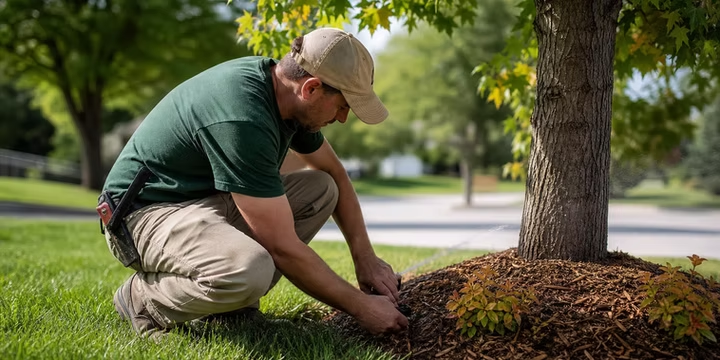
Applying a layer of organic material (wood chips, shredded bark, compost) around the base of a tree, typically 2 to 4 inches deep and extending toward the drip line. Mulch reduces soil moisture evaporation, moderates soil temperature extremes, suppresses competing weeds, and adds organic matter as it decomposes. In a region where wind and heat drive rapid moisture loss from bare soil, mulching is one of the simplest and most effective stress-prevention tools available. Keep mulch pulled back a few inches from the trunk to avoid bark moisture problems.
How Integration Works in Practice
Understanding individual terms is useful. Seeing how they connect in a real scenario is where the value becomes clear. Here’s how integrated irrigation and tree care prevents plant stress when the pieces come together.
The situation: A Lubbock homeowner notices a red oak with yellowing leaves between green veins. Growth has slowed noticeably over two seasons. An insect problem seems to be developing on the weakened branches.
The diagnosis: A certified arborist examines the tree and suspects iron chlorosis, not insect damage, as the primary issue. Tissue testing through the TAMU lab confirms low iron uptake. A soil test reveals pH 8.2 and organic matter at 1.4%. Meanwhile, the irrigation technician discovers the tree is on the same sprinkler zone as the front lawn, receiving shallow daily watering. The soil beneath the canopy is saturated in the top few inches but bone dry below 6 inches, right where the feeder roots are concentrated.
The integrated solution:
- A dedicated drip zone is installed for the tree, running along the canopy drip line, separated from the turf zone.
- The drip zone is programmed with cycle-and-soak scheduling to work with the property’s clay and caliche soil layers.
- A weather-based controller replaces the old clock timer, using ET data to adjust watering based on actual conditions.
- The arborist performs deep root feeding with a nutrient blend that includes chelated micronutrients (iron, manganese, zinc) formulated for alkaline soil conditions, along with beneficial bacteria to improve soil biology.
- Mulch is applied from 6 inches off the trunk out to the drip line.
No single one of these steps would have solved the problem. The tree didn’t just need more iron. It needed iron delivered in a form available at high pH, soil conditions that allow root uptake, and water reaching the right depth on the right schedule. That’s the practical meaning of integration.
For a more detailed look at how irrigation and tree nutrition coordinate, see this guide on coordinating irrigation, tree health, and deep root feeding.
Why One-Vendor Integration Matters
When irrigation contractors and tree care companies operate separately, problems fall through the gap between them. The irrigation tech sees sprinkler coverage and pressure. The tree company sees canopy symptoms. Neither has the full picture of soil conditions, water delivery patterns, root zone moisture, and nutrient availability at the same time.
Having a single team that manages both irrigation and tree health means the arborist can tell the irrigation tech to change zone timing, and the irrigation tech can flag drainage patterns that the arborist needs to know about. Soil testing results inform both watering schedules and fertilization plans. There’s one diagnosis driving one coordinated treatment plan.
This is ultimately what explains how integrated irrigation and tree care prevents plant stress more effectively than hiring separate specialists: fewer handoffs, faster diagnosis, and treatment plans where every piece reinforces the others.
Regular system upkeep is part of this approach. Here’s a practical guide on sprinkler system maintenance for West Texas conditions.
Frequently Asked Questions
Can overwatering actually kill a tree?
Yes, and it’s more common than many homeowners realize. Overwatering displaces oxygen in the soil, suffocating roots and creating conditions for root rot fungi. Over-irrigating also encourages compaction and shifts the soil’s chemical balance. In Lubbock, where caliche layers trap water near the surface, daily sprinkler schedules designed for turf can easily push trees into overwatering stress.
Do sprinklers work for watering trees?
Generally, no. Sprinklers deliver water to the top inch or two of soil, which is great for turf grass but too shallow for tree roots. Trees need deep, infrequent soaking rather than light daily applications. Frequent, light irrigation leads to shallow root systems that are more prone to water stress. Switching tree areas to drip irrigation on a separate zone is one of the most impactful changes a homeowner can make.
What is the best time of year for deep root fertilization?
Spring and fall are ideal. Spring applications fuel new growth, while fall treatments strengthen roots before winter dormancy. Trees showing signs of stress from poor soil conditions, drought, or construction damage can benefit from deep root feeding during either window.
How does soil testing help prevent plant stress?
Soil testing identifies hidden problems that visual inspection can’t reveal: pH levels, nutrient concentrations, organic matter content, and salinity. In alkaline West Texas soils, testing frequently uncovers nutrient lockout where iron, manganese, or zinc is present but chemically unavailable to roots. Without this data, you risk treating the wrong problem, adjusting water when the real issue is soil chemistry, or adding fertilizer that the soil pH renders useless.
What makes Lubbock soils particularly challenging for trees?
Three factors compound here. First, alkaline pH (typically 7 to 8.5) locks out critical micronutrients. Second, caliche hardpan beneath most properties blocks drainage and root penetration. Third, organic matter levels in local clay soils often sit at 1% to 2%, well below the 3% to 5% ideal range. Combined with only 19 inches of unevenly distributed annual rainfall and persistent summer heat, these conditions make a strong case for why integrated irrigation and tree care prevents plant stress more effectively than either service alone.
How often should established trees be watered in West Texas?
The University of Nebraska-Lincoln recommends a deep soaking every two weeks for established trees in unirrigated landscapes. In Lubbock’s summer heat, that frequency may need to increase slightly, but the principle holds: deep and infrequent beats shallow and daily. Cycle-and-soak programming helps ensure each watering session actually reaches the root zone instead of running off compacted soil.
What is the stress cascade, and why does it matter?
The stress cascade describes how initial stresses (usually drought and heat) weaken a tree’s natural defenses, allowing secondary problems like insect infestations and fungal infections to take hold. Most tree deaths result from this chain reaction rather than a single cause. Breaking the cascade early, through proper watering, soil improvement, and proactive monitoring, is far cheaper and more effective than treating advanced pest or disease damage after the fact.
Can a smart irrigation controller really help prevent tree stress?
It can. Traditional timer-based controllers overwater by 30% to 60% because they run the same schedule regardless of weather. A weather-based smart controller adjusts automatically for rain, temperature, wind, and humidity, delivering only what the landscape actually needs. That precision reduces both overwatering stress and drought stress, the two most common triggers of the stress cascade in residential trees.