2026 Guide: 7 Signs You Have a Drainage Problem in Your Yard
TLDR
A drainage problem means water is staying where it should not, long enough to damage turf, trees, soil, or structures. Common signs include standing water that lasts more than 48 hours, soggy grass, erosion channels, foundation moisture, plant decline, mosquito surges, and wet spots that appear even when it has not rained. In Lubbock and West Texas, the cause is often tied to irrigation scheduling or leaks, not just rainfall. Identify the water source before choosing a fix.
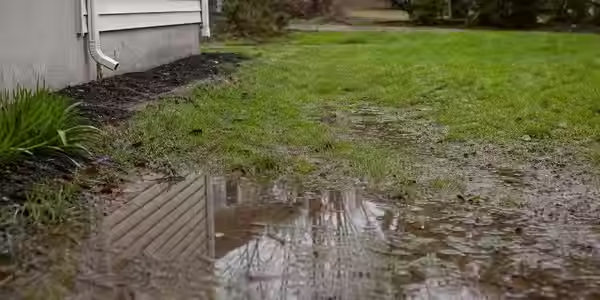
After a hard rain, a puddle in the yard is not automatically a crisis. But if the same spot stays wet for days, feels spongy underfoot, washes mulch onto the sidewalk, or gets wet even during a dry spell, you are looking at signs you have a drainage problem.
A drainage problem happens when water does not move away from your lawn, beds, trees, or foundation fast enough. It shows up as standing water, spongy soil, erosion, plant decline, mosquitoes, or moisture near the home. The cause can be surface runoff, compacted soil, poor grading, clogged drains, roof runoff, overwatering, or a hidden irrigation leak.
Fairfax County’s Soil and Water Conservation District puts it simply: a yard that dries within a day or two after rain is generally normal, but puddles or soggy areas that persist for several days or are always present indicate a wetness problem.
In Lubbock and the surrounding West Texas towns, this distinction matters even more. With only 18.33 inches of normal annual precipitation, a chronically soggy yard is not something to blame on “too much rain.” It usually deserves a closer look at irrigation, soil, and grading.
If your yard already shows warning signs, a Lubbock sprinkler system check can rule out (or confirm) whether your irrigation is part of the problem.
Quick Glossary: Signs You Have a Drainage Problem
Use this table as a fast reference. Each sign is explained in detail further down.
For a deeper look at causes and solutions beyond the signs themselves, see our guide on common lawn drainage problems.
The 24 / 48 / Always Wet Rule
Timing is one of the simplest diagnostic tools. Before you hire anyone or start digging, track how long water sticks around.
Water gone within a day or two
Usually normal after a heavy storm, especially in low areas or clay-heavy spots. No action needed unless it happens after every minor rain.
Water still there after 48 hours
Worth investigating. Look for grading issues, compaction, roof runoff pooling, hardscape runoff, or a sprinkler zone that ran too long. This is the “monitor closely” zone.
Soggy for several days or always wet
This is a real problem. Fairfax County identifies always-wet areas as potentially caused by leaks from damaged water pipes, lawn sprinkler systems, outdoor faucets, ponds, or high groundwater. The visible wetness may not even be at the actual source.
Because Lubbock’s annual rainfall is so modest, a yard that stays wet between storms should trigger an irrigation and leak check before anything else. According to the National Weather Service, Lubbock averages just 18.33 inches per year. A perpetually soggy lawn in that climate is a clue worth taking seriously.
Standing Water or Puddles
Standing water is water that remains on the surface after rain or irrigation instead of soaking in or draining away. It becomes a warning sign when it recurs in the same place or lasts beyond the normal drying window.
Common causes: Low spots or depressions, compacted soil, clay-heavy soil with slow infiltration, poor grading, clogged drainage outlets, roof runoff dumping too close, or sprinkler overwatering and leaks.
West Texas nuance: Some Lubbock storms are short but intense. The City of Lubbock’s floodplain information notes the area is susceptible to flash flooding from intense rainfall events, with documented cases of 7.8 inches in 24 hours (September 2008) and over 7 inches across multiple locations (July 2010). A single big storm can reveal grading problems that dry weather hides.
Recurring standing water in the same location after 24 to 48 hours is one of the clearest signs you have a drainage problem. But a one-time puddle after a two-inch downpour is not necessarily a red flag. Track the pattern before jumping to conclusions.
Soggy, Spongy, or Waterlogged Grass
Waterlogged grass means the soil below the turf stays saturated long enough that roots lose access to air. You notice it as spongy ground underfoot, mud sticking to shoes, footprints that stay visible, or grass that yellows and thins even though it is getting plenty of water.
Roots need both water and air. According to Texas A&M’s Earth-Kind program, soils that hold too much water can cause root disease, nutrient deficiencies, root deterioration, and plant death. This is why a soggy lawn is not just an inconvenience. It is actively harming the grass.
Here is a critical distinction most articles miss: soggy grass after rain points to a drainage issue. Soggy grass after your sprinklers run points to an irrigation scheduling issue. Texas A&M notes that clay soil absorbs water more slowly, and if a sprinkler applies water faster than the soil can take it in, significant water is lost as surface runoff. The fix is shorter run times with pauses between cycles (called cycle-and-soak scheduling), not a French drain.
If your system creates soggy patches or dry spots simultaneously, that is often a coverage and scheduling problem worth diagnosing zone by zone.
Mud, Bare Patches, or Grass That Will Not Grow
A muddy or bare patch is a recurring area where turf thins, dies, or refuses to establish. The soil may be too wet, too compacted, or both.
What happens under the surface: when soil stays saturated, oxygen gets squeezed out of pore spaces. Roots suffocate. Foot traffic or mowing on wet soil compounds the problem by packing the soil tighter, which slows future drainage even more.
Texas A&M’s lawn care guide recommends aerating once a year to improve drainage and reduce compaction, watering in the morning, wetting soil to a depth of 4 to 6 inches, and allowing soil to dry between waterings.
A practical tip: if grass is dying in a wet patch, do not automatically add fertilizer. Fertilizer does not fix roots sitting in saturated soil. First check moisture depth, irrigation schedule, and whether the area has a grading issue.
Soil Erosion, Washouts, and Mulch Movement
Erosion means soil is being carried away by moving water. You will see mulch washed onto sidewalks, exposed tree or shrub roots, small ruts or channels in the soil, gravel migrating downhill, or sediment collecting against patios and curbs.
This is different from standing water. With erosion, water is not just sitting. It is moving too fast or too concentrated in one path. The source might be a roof valley, a driveway slope, a neighbor’s yard, or a sprinkler zone creating runoff on a slope.
There is also a local responsibility angle. The City of Lubbock notes that stormwater runoff drains untreated into playa lakes and the Yellow House and Blackwater draws. Washing soil, fertilizer, or debris into streets or storm drains is not just bad practice. It can impede drainage and is prohibited.
If mulch is washing out of the same bed after every rain, that is one of the signs you have a drainage problem that needs attention at the source, not just a mulch replacement.
Water Near the Foundation
Foundation-adjacent drainage problems happen when water collects next to the slab, garage, porch, or any other structure. Signs include damp soil against the home, water stains on lower exterior walls, downspouts dumping right at the foundation, soil that slopes toward the house, and beds along the foundation that are always wet.
Water near a structure is not just a lawn issue. It is a site-design issue. As one practitioner explained on LinkedIn, wet basement walls are often a site drainage failure, not a membrane failure. Swales and grading should keep water away before pressure builds against the structure.
As a practical benchmark, many drainage standards call for the ground to slope away from structures. If water consistently pools against your home after rain, the grading and downspout routing should be evaluated by a professional. This is one of the higher-urgency signs you have a drainage problem.
Mosquitoes, Smells, Algae, or Moldy Spots
These are secondary symptoms that confirm water has been sitting too long. More mosquitoes after rain, a sour or musty odor in a low area, slimy green film on shaded wet surfaces, or mold around containers and saucers all point to persistent standing water.
According to the CDC, Aedes mosquito eggs can develop into adult mosquitoes in as few as 7 to 10 days. That means any water that stays put for a week is potential breeding habitat.
Mosquitoes do not prove you need a French drain. They prove water is sticking around somewhere. First find every source: containers, clogged gutters, birdbaths, valve boxes, saucers under pots, and shaded depressions in the yard. Dump or empty standing water weekly.
Yellowing Plants, Thinning Turf, or Tree Decline
When turf, shrubs, or trees show stress in the same wet zone, poor drainage may be the underlying cause. Symptoms include yellow or pale leaves, stunted growth, thinning canopy, early leaf drop, branch dieback, and mushrooms or fungal bodies near tree trunks.
The Texas A&M Forest Service identifies changes in drainage and soil compaction as environmental stressors linked to tree decline. Symptoms often show up as pale green or yellow leaves, small leaves, poor growth, and dieback, and these typically indicate root-system problems that started months or years earlier.
Root rot is a particular concern. Texas A&M Forest Service’s guidance on root rot explains that waterlogged conditions stress trees and promote decay fungi, which damage root systems and can increase tree-failure risk. The recommendation is to improve soil drainage to avoid chronic waterlogging.
This is where signs you have a drainage problem overlap with tree health. A wet root zone might be caused by irrigation scheduling, soil compaction, a grade change from a construction project, or several of these together. Understanding how irrigation and tree care interact can prevent expensive tree losses.
If a high-value tree is declining in a consistently wet area, an evaluation for root rot diagnosis and treatment should happen sooner rather than later.
Wet Spots When It Has Not Rained
A wet spot during dry weather is one of the strongest indicators that an active water source, not just poor drainage, is responsible. Possible culprits include a broken sprinkler pipe, leaking valve, low-head drainage from a sprinkler zone, an outdoor faucet leak, or a pool or fountain leak.
Practitioners on Reddit have shared instructive examples. In one r/Irrigation thread, a homeowner traced a persistent wet area to a sprinkler system leak of about 1 gallon per hour. They noticed water trickling from a French drain whenever the irrigation main valve was on. Turning off the master valve stopped the trickle. That small leak, just 1 gallon per hour, adds up to roughly 720 gallons per month and over 8,700 gallons per year if left undetected.
Here is a simple test. Photograph the wet area. Turn off the irrigation controller for several days (if the landscape can handle it). If the property has an irrigation shutoff valve, compare wetness with the system on versus off. If the wet spot dries up with irrigation off, the problem is your sprinkler system, not your yard’s drainage.
For a deeper walkthrough on tracking down hidden leaks, see our guide on detecting underground sprinkler leaks.
Drainage Problem or Sprinkler Problem?
Most articles about signs you have a drainage problem treat all water as rainwater. In a semi-arid region like Lubbock, that is incomplete. Your sprinkler system runs far more often than it rains. If the soggy area appears after irrigation cycles rather than storms, the irrigation system should be suspect number one.
Texas A&M recommends adjusting irrigation to match soil type. Clay soils absorb water slowly, so sprinklers should apply water at lower rates with pauses between cycles. If your system dumps water faster than the ground can absorb it, runoff and soggy spots are inevitable, no matter how good the grading is.
A homeowner on Reddit described exactly this scenario. After installing a French drain, dry well, and new sod, their sprinkler still waterlogged part of the yard after 30 minutes of watering. The practical answer from the community: water less, or split runtimes into shorter cycles. The drain was not the problem. The runtime was.
If you suspect your system is contributing, troubleshoot your sprinkler system zone by zone before spending money on drainage construction.
What Causes Drainage Problems?
Understanding the cause matters more than recognizing the symptom. Here are the most common sources.
Poor grading or low spots
Water collects wherever the surface slopes toward a depression or toward the home. This is the most common cause identified by both extension services and experienced contractors. In a Reddit r/landscaping thread, a commenter with 28 years of experience said the core issue in most soggy-yard cases was low or improper grading, and advised against installing a French drain until the grading issue was addressed first.
Compacted or clay-heavy soil
Clay-heavy soil and compaction reduce pore space and slow drainage. Iowa State Extension explains that high-clay soils have less pore space and hold water longer. Many West Texas yards can have slow-infiltration or compacted areas, though individual properties vary. The USDA’s Lubbock soil series includes silty clay loam with 35 to 59 percent clay in some layers, but that does not mean every Lubbock lawn sits on heavy clay. Site-specific conditions differ by subdivision, fill history, and construction compaction.
Roof and hardscape runoff
Roofs, driveways, sidewalks, and patios shed water quickly and can overload beds and low spots. The EPA notes that stormwater runoff is generated when precipitation flows over impervious surfaces instead of soaking into the ground.
Irrigation leaks or overwatering
Broken heads, leaking valves, hidden mainline leaks, and long runtimes can all mimic drainage problems. This is the cause most competing articles undercover.
Blocked or undersized drainage systems
Existing drains, catch basins, French drains, and swales can fail if clogged, crushed, silted in, or lacking a proper outlet. Community discussions repeatedly warn that French drains disappoint when grading and outlet problems remain unresolved.
A French drain is a tool, not a diagnosis. It is useful for certain subsurface water problems, but it does not fix roof runoff landing in a low spot, a sprinkler leak, or a yard that slopes toward the house. As one contractor-style post on Reddit put it: check the downspout discharge, grading, whether the problem is surface or subsurface water, soil type, and whether there is a legal discharge location before choosing the fix.
Neighbor or street runoff
Oklahoma State Extension warns that drainage fixes should address the problem without creating a bigger one for a downslope neighbor. Redirecting water onto someone else’s property is not a solution.
Simple Tests Before You Call Someone
Test 1: Watch the yard during rain
Safely observe where water starts, where it speeds up, where it slows, and where it pools. Note whether downspouts, slopes, patios, or neighbors are contributing.
Test 2: Mark the puddle timeline
Take photos right after rain or irrigation, then at 2 hours, 24 hours, 48 hours, and after several dry days. Use the benchmark: drying within a day or two is normal. Several days or always wet means you have a problem.
Test 3: Soil drainage test
Dig a hole about 12 inches deep, fill it with water, let it drain, then fill it again and time it. Iowa State Extension says soils draining less than 1 inch per hour have poor drainage, 1 to 3 inches per hour is desirable, and more than 4 inches per hour is very well drained.
Test 4: Irrigation shutoff comparison
Turn off scheduled irrigation for a few days. Close the master valve if you have one. Compare the wet area at 24, 48, and 72 hours. Then run each zone manually, one at a time, and inspect heads, valves, and low spots.
Test 5: Probe the root zone
Push a soil probe, screwdriver, or trowel into the soil near the problem area. Is it wet below the surface even when the top looks dry? Is there a foul smell? Are roots dark, mushy, or sparse? These clues point to chronic saturation, not a one-time puddle.
What to Do When You Spot Drainage Signs
Minor and isolated issues
Some fixes are straightforward:
Fill and regrade a small low spot.
Extend downspouts away from the foundation to a safe outlet.
Keep gutters clear.
Core aerate compacted turf once a year.
Adjust sprinkler runtimes and use cycle-and-soak scheduling.
Keep foot and mower traffic off wet soil.
Replant small wet areas with water-tolerant plants.
Repeated or widespread issues
These usually require professional assessment:
Regrading or installing swales.
Catch basins, downspout drainage, or French drains.
Drain repair or replacement.
Sprinkler leak repair.
Irrigation redesign or scheduling overhaul.
Tree and root-zone evaluation.
For an overview of options, see yard drainage solutions that actually work.
A key principle from Houzz community discussions: soil fixes help absorption, but drainage fixes need an outlet. Improving your soil is great for grass health, but water still needs somewhere to go. The most effective approaches combine grading, outlet, vegetation, and irrigation adjustment together.
Foundation, tree, or leak concerns
Do not wait on these. Water moving toward the home, a tree showing canopy decline in a wet zone, or a suspected irrigation leak are higher-risk symptoms. The cost of delay is almost always greater than the cost of diagnosis.
When to Call a Professional
Call for help if:
Water stands for several days after rain.
A wet spot appears when it has not rained and sprinklers are off.
A soggy patch lines up with sprinkler heads, valves, or buried lines.
A sprinkler zone has low pressure plus a wet area nearby.
Water moves toward the foundation.
Mulch, soil, or rock washes out repeatedly.
A tree shows decline in a wet or over-irrigated zone.
You see mushrooms or fungal bodies near a high-value tree.
The problem involves neighbor runoff or property boundaries.
You need to change grading, install drains, or redirect water to a public or private outlet.
If the signs you have a drainage problem point toward sprinklers, irrigation scheduling, a hidden leak, low pressure, valves, heads, or tree stress, get the irrigation and plant-health side inspected before spending money on the wrong fix.
Schedule regular sprinkler maintenance to catch small problems before they become soggy, expensive ones.
Glossary of Key Drainage Terms
Standing water. Water on the surface that does not soak in or drain away. A warning sign when it recurs in the same spot or lasts more than 48 hours.
Ponding. A more technical term for water pooling in a low area. Describes the “bowl effect” in yards.
Waterlogged soil. Soil that remains saturated below the surface, depriving roots of oxygen.
Soggy lawn. A lawn that feels soft, muddy, or spongy underfoot, indicating saturated soil or poor infiltration.
Runoff. Water flowing across the surface instead of soaking in. Generated when rain or irrigation hits impervious surfaces like roofs, driveways, and patios.
Erosion. Soil displacement caused by moving water. Look for exposed roots, ruts, mulch washing away, and sediment on hard surfaces.
Negative grade. A slope that sends water toward the home or structure instead of away from it.
Swale. A shallow, graded channel designed to move surface water.
French drain. A gravel-filled trench with perforated pipe that collects and redirects subsurface water. Not a universal fix for all drainage problems.
Catch basin. A surface drain box that collects water at a low point and routes it through a pipe.
Infiltration. The process of water moving into and through soil. Less than 1 inch per hour is considered poor drainage by Iowa State Extension.
Compaction. Soil packed tight enough that air and water movement are reduced. Common after construction, heavy traffic, or years of mowing on wet ground.
Low-head drainage. Sprinkler water draining from the lowest head on a zone after the valve shuts off. Can mimic a leak or drainage problem.
Root rot. Root decay caused by pathogens that thrive in waterlogged conditions. Texas A&M Forest Service recommends improving soil drainage to prevent it.
Frequently Asked Questions
How long should water stand in my yard after rain?
A yard that dries within a day or two after rain is usually fine. If the same puddles or soggy areas last several days or are always present, you likely have a drainage problem or a hidden water source that needs investigation.
Is a soggy lawn always a drainage problem?
No. It can be poor drainage, but it can also be overwatering, a broken sprinkler head, a leaking valve, or slow clay-soil infiltration. Texas A&M notes that clay soil absorbs water slowly and that sprinklers applying water faster than the soil can handle will produce runoff, not drainage failure.
Can poor drainage kill grass and trees?
Yes. Saturated soil reduces oxygen around roots and can lead to root disease, nutrient deficiencies, and plant death. Trees may show delayed stress: thinning canopy, smaller leaves, early leaf drop, and branch dieback. Texas A&M Forest Service lists changes in drainage and soil compaction as common environmental stressors behind tree decline.
Are mosquitoes a sign of a drainage problem?
They can be. Mosquitoes need standing water to reproduce, and some species go from egg to adult in 7 to 10 days. If mosquitoes spike after rain or irrigation, look for standing water in low spots, containers, gutters, valve boxes, and shaded depressions. Address the water source, not just the bugs.
Do I need a French drain?
Not necessarily. A French drain helps with some subsurface water problems, but it is not the answer for every wet yard. First identify the water source, check the grade, evaluate soil infiltration, review irrigation behavior, and confirm there is a safe outlet for the water. Practitioners on Reddit and Houzz repeatedly warn that French drains disappoint when grading, downspout routing, or discharge location are not resolved first.
Why is one spot wet when the rest of my yard is dry?
A single wet spot can result from a small low area, localized compaction, shade slowing evaporation, a sprinkler leak, a leaking valve, overspray from a nearby head, roof runoff, or an underground line issue. If it stays wet without rain, test the irrigation system and inspect nearby heads, valves, and lines.
Could my sprinkler system be causing the wet area?
Absolutely. Broken pipes, leaking valves, stuck zones, excessive runtimes, and low-head drainage can all produce wet spots that look identical to drainage problems. The test is simple: turn off irrigation for a few days and see if the wet area dries up. If it does, the sprinkler system is the culprit.
What should I document before calling a professional?
Note when the water appears, how long it lasts, whether it follows rain or irrigation, which sprinkler zone runs nearby, where downspouts discharge, and whether plants or trees in the area are declining. Photos at 2 hours, 24 hours, and 48 hours after rain or irrigation give any contractor useful context for diagnosis.


Comments