
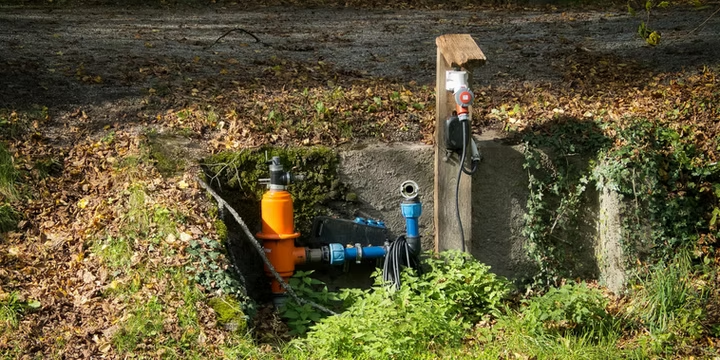
As summer fades and cooler temperatures arrive, your lawn care routine starts to shift. One of the most critical tasks on your autumn to do list should be fall irrigation maintenance. Often called winterization, this process is all about protecting your sprinkler system from the destructive power of freezing weather.
Ignoring this crucial step can lead to cracked pipes, broken sprinkler heads, and a very expensive and soggy surprise come springtime. When water freezes, it expands by about 9 to 10 percent, creating immense pressure inside a pipe. That’s more than enough force to split PVC lines or burst a brass backflow preventer.
This guide covers everything you need to know about proper fall irrigation maintenance, from adjusting your controller and fine tuning spray patterns to draining the lines, so you can put your system to bed for the winter with confidence.
If your system already has issues heading into fall, it’s worth getting a professional inspection before winterizing so you’re not locking in problems over the cold months.
Why Fall Winterization is Non Negotiable
The core goal of winterizing your sprinkler system is to prevent freeze damage. Even a small amount of water left in a pipe elbow can freeze, expand, and crack the fitting. You often won’t discover this damage until you turn the system on in the spring, resulting in geysers of water and costly emergency repairs.
Proper fall irrigation maintenance is cheap insurance against these headaches. A typical professional winterization service is a fraction of the cost of repairing widespread freeze damage, which can range from a few hundred to over a thousand dollars. For a deeper look at why this matters specifically in Texas, check out this guide on winterization importance.
Pre Winterization: Adjusting Your Autumn Watering Routine
Gradually Reduce Watering Times
Long before the first freeze, your landscape’s water needs begin to decrease. Cooler days and longer nights mean less evaporation. Lawns and plants simply don’t require as much water in October as they do in the peak of July.
This is the first step in your fall irrigation maintenance routine. Start by gradually reducing your watering times. Many controllers have a “Seasonal Adjust” feature that lets you decrease run times by a percentage (for example, 50 percent), making it easy to scale back without reprogramming every zone. As the season progresses, you’ll water less frequently, eventually turning the system off entirely before you winterize it.
Don’t Stop Too Soon: Water Until the Ground Freezes
While you should reduce watering frequency, don’t shut the system off completely at the first sign of cool weather. Trees, shrubs, and turf need to be well hydrated to withstand the dry winter winds and frozen ground. Continue to water your landscape every few weeks, especially if rainfall is scarce, right up until the ground begins to freeze. A final deep watering helps insulate roots and prevent winter desiccation, a common cause of damage to valuable landscape plants.
For properties with both sprinklers and mature trees, coordinating irrigation with tree health through deep root feeding in the fall can give roots an extra boost before dormancy.
Zone and Spray Pattern Adjustment Before Shutdown
Fall is the single best time to audit and adjust your zone settings and spray patterns. Most homeowners skip this step, but experienced irrigation practitioners on Reddit consistently point out that shutting down a poorly adjusted system just means you’ll wake up to the same dry spots and wasted water in April. Fixing coverage problems now, while you can still see the results on the lawn, saves a scramble during the busy spring season.
Why Fall Is the Ideal Time to Adjust
During summer, landscapes are under constant heat stress and lawns grow fast enough to mask uneven watering. In the cooler fall months, growth slows down and problem areas become more obvious. Brown patches, compacted soil near sidewalks, and overspray onto driveways all stand out clearly. Walking each zone in October gives you an honest picture of system performance.
There’s also a practical advantage. Because water demand is lower, you can run individual zones during the day without stressing the lawn, making it easy to observe spray patterns, measure coverage, and tweak settings.
How to Audit Each Zone
Run every zone one at a time for its full cycle. While it runs, stand back and look for these issues:
- Head to head coverage gaps. Each sprinkler head should throw water all the way to its nearest neighbor. If you see dry strips between heads, the radius needs adjusting or a nozzle swap is required.
- Overspray onto hardscape. Water landing on driveways, sidewalks, or fences is water (and money) down the drain. Adjust the arc on any heads that waste water on non landscape surfaces.
- Tilted or sunken heads. Heads that have settled or been bumped by mowers will throw water at odd angles. A head that’s even slightly off level can miss several feet of turf. Raising or straightening these heads before winter means one less task in the spring.
- Mixed precipitation rates. If one zone has both rotary heads and fixed spray heads, the spray heads will put down water roughly four times faster than the rotors. This causes some areas to flood while others stay dry. Fall is the time to either separate those heads into different zones or switch to matched precipitation nozzles like Hunter MP Rotators.
Making the Adjustments
Most spray head adjustments require nothing more than a flat head screwdriver or the plastic adjustment key that came with the head. For arc changes on popular models like Rain Bird 1800 series or Toro heads, a step by step guide on adjusting sprinkler arcs walks through the process.
For radius (distance) adjustments, turn the radius reduction screw clockwise to shorten the throw. If a head can’t reach far enough even with the screw fully open, the nozzle size likely needs to go up, or there may be a low pressure issue worth investigating before winter.
Practitioners on YouTube walkthroughs frequently recommend using catch cups (or empty tuna cans) placed at even intervals across each zone. Run the zone for 15 minutes, then measure the water depth in each cup. Variation of more than 25 percent between cups means coverage is uneven and further adjustment is needed.
Zone Runtime Recalibration for Fall
Beyond spray pattern geometry, fall is the right time to recalibrate how long each zone runs. Shaded zones need less water than south facing slopes. Zones with clay soil absorb water slowly and benefit from shorter, more frequent cycles (cycle and soak), while sandy zones drain fast and need longer, less frequent runs.
A good rule of thumb for West Texas fall watering: cut runtimes to roughly 50 percent of summer levels by mid October, then drop to about 25 percent by early November before shutdown. Adjust based on rainfall, of course. If you have a smart controller with weather based scheduling, it should handle much of this automatically, but it’s still worth verifying that the sensor data matches what you see on the ground.
Document What You Find
Write down or photograph any heads that need replacement, zones with persistent coverage problems, or areas where you suspect underground leaks. This fall audit becomes your spring startup repair list, and having it ready means your system comes back online faster when temperatures warm up. One project manager on a YouTube irrigation channel shared that keeping a simple zone by zone spreadsheet saved hours of diagnostic work every spring because the crew didn’t have to rediscover the same issues.
Draining Your System: The Heart of Winterization
Even after you shut off the main water supply, water will remain trapped in the pipes, valves, and sprinkler heads. Getting this water out is the most important part of winterization. There are three primary methods for draining an irrigation system.
Manual Drain Valve Method
Some systems are designed with manual drain valves located at the lowest points of the piping. To use this method, you shut off the main water supply and then open each of these small valves, allowing gravity to pull the water out. You also need to open any test cocks on your backflow prevention device to ensure it drains completely. While effective, this method can sometimes leave small pools of water in low spots, which could still freeze.
Automatic Drain Valve Method
This method uses automatic, spring loaded valves installed at low points in the system. When you shut off the water and the system pressure drops, these valves automatically pop open and allow water to drain out. To trigger them, you simply turn off the main water supply and then run any station for a moment to release the pressure. This is a convenient way to handle draining, but it’s crucial to ensure the backflow preventer is also drained manually.
The Blowout Method: The Professional Standard
For many systems, especially in regions with hard freezes like West Texas, the blowout method is the most thorough and reliable option. This technique uses a high volume air compressor to physically push all the water out of the pipes and sprinkler heads. Because it involves pressurized air, this is a task where safety is paramount. Many irrigation experts recommend hiring a professional for this procedure due to the potential for injury or damage.
If you’re performing a blowout, always follow these critical safety precautions:
- Wear ANSI approved eye protection. Debris and water can exit sprinkler heads at high velocity.
- Never stand over sprinkler heads or other components while air is flowing through the system.
- Regulate the air pressure. Never exceed 80 PSI for PVC pipes or 50 PSI for flexible poly pipes. It’s about high volume, not high pressure.
- Work zone by zone, starting with the one furthest from the compressor and moving closer.
For a more detailed walkthrough of protecting your system through freezing temperatures, see this guide on how to protect your sprinkler system from freezing.
Final System Inspection and Protection
Once the water is out, a few final steps will ensure your system is fully protected. Fall is the perfect time for a quick system audit to catch any issues before they become bigger problems next spring.
Clean Your System Filters
Your irrigation system likely has one or more filters to prevent sediment and debris from clogging sprinkler heads. Locate the main system filter, typically near the control valves, and clean it thoroughly. Some sprinkler heads also have small individual screen filters at their base that should be checked and rinsed. A clean filter improves efficiency and prevents frustrating clogs next season. If you’ve been dealing with frequent clogs, this guide on how to clean sprinkler heads covers the full process.
Inspect Your Valves and Valve Boxes
Open the lids on your underground valve boxes. Check for any signs of slow leaks, such as pooling water or damp soil. Examine the valves and wiring for any visible damage or corrosion. These boxes are also a favorite hiding spot for insects and rodents, so cleaning out leaves and debris can prevent future problems.
Check Sprinkler Heads and Nozzles
Walk your property and check each sprinkler head for damage. Clean any nozzles clogged with dirt or debris to ensure optimal performance next season. A single broken sprinkler head can waste thousands of gallons of water, so finding and flagging them now for prompt sprinkler repairs is a smart move.
Look for Hidden Leaks
Look for any soggy spots in the yard, which could indicate a slow, underground leak. Even a tiny leak, the size of a pen tip, can waste over 6,300 gallons of water in a month. Identifying these areas in the fall makes for a much quicker fix in the spring.
Insulate Pipes and Backflow Preventers
Any part of your system that remains above ground, like pipes, valves, and especially the backflow preventer, is highly vulnerable. Wrapping these components with foam pipe insulation and tape is an easy and effective protective measure. The backflow preventer is particularly susceptible and expensive to replace, with costs ranging from $280 to over $1,500. You can use insulating pouches designed specifically for backflow devices for a snug fit. For a complete walkthrough, see this guide on how to winterize a backflow preventer in Texas.
Using Technology for Smarter Winterization
Modern irrigation technology offers several features that simplify fall irrigation maintenance.
Smart Controller Setup
If you have a smart, weather based controller, it will automatically adjust watering schedules as the weather cools, taking the guesswork out of seasonal changes. For fall, ensure your controller’s Wi Fi is connected and its location is set correctly. Many smart controllers also have a “winterize” or “shutdown” mode you can activate through an app, which gives you remote shutdown capability.
Sensors and Controller Upkeep
- Rain and Soil Moisture Sensors: A rain sensor will automatically prevent your system from watering during a fall shower. A soil moisture sensor goes a step further, measuring water content at the root zone and only allowing the system to run when the ground is actually dry. Both sensors are valuable water saving tools year round.
- Timer Battery Removal: Many controllers use a backup battery to save your settings during a power outage. If you plan to completely unplug your controller for the winter, it’s a good idea to remove the battery to prevent it from corroding and damaging the unit.
When to Call a Professional
While some homeowners are comfortable with DIY fall irrigation maintenance, there are times when calling a professional is the smartest choice.
The blowout method, as mentioned, carries safety risks and requires specialized equipment. Likewise, backflow preventer testing is a job for a licensed professional. In many cities, including Lubbock, an annual test by a certified Backflow Prevention Assembly Tester (BPAT) is required by law.
Scheduling professional maintenance ensures the job is done correctly and efficiently. Irrigation contractors have a short window to winterize all their clients’ systems before the first hard freeze, so booking in late summer or early fall is a good idea. Practitioners on Reddit report that in markets like West Texas, wait times for winterization appointments can stretch to two or three weeks once temperatures start dropping, so procrastinating is genuinely risky.
Many local companies offer maintenance plans that include a spring startup, mid season check, and fall winterization, giving you peace of mind year round. A professional can also perform a full system audit for efficiency, using catch cups and pressure gauges to fine tune your system and maximize water savings.
Ready to get your system winterized before the first hard freeze? Schedule your fall service with a licensed Lubbock irrigation team.
Frequently Asked Questions
1. When is the best time to perform fall irrigation maintenance? It’s best to winterize your system before the first hard freeze in your area. This is typically a week or so before the historical first freeze date. For Lubbock and much of West Texas, that usually falls in late October or early November.
2. Can I skip winterizing my sprinkler system if my pipes are buried? No. While buried pipes have some protection, the frost line can go deeper than your pipes in a hard freeze. More importantly, components like the backflow preventer, valves, and sprinkler heads are often at or near the surface and are highly susceptible to freeze damage.
3. What is the most common mistake homeowners make with fall irrigation maintenance? The most common and costly mistake is waiting too long. An unexpected early freeze can catch homeowners by surprise, leading to widespread damage. The second most common mistake is performing an improper blowout, either by using too much pressure (which damages components) or not getting all the water out.
4. Should I adjust my spray patterns before or after winterizing? Before. Run each zone and check coverage, arc settings, and head alignment while water is still flowing. Once you’ve blown the lines out, you can’t test adjustments until spring. Doing this audit in fall gives you a clear repair list and ensures every zone performs well from day one next season.
5. How much does it cost to repair freeze damage? Repair costs can vary widely. A single broken sprinkler head might cost under $100 to fix, but repairing a cracked backflow preventer can cost anywhere from $280 to $1,550. Fixing multiple underground pipe breaks can easily exceed $500 or more, which is why preventative winterization is so cost effective.
6. Is a professional blowout really necessary? For most homeowners, yes. It is the most effective way to remove all water and requires a high volume air compressor that most people don’t own. Given the safety risks of working with compressed air, hiring a professional ensures the job is done safely and correctly.