TL;DR
Low water pressure in your yard shows up as weak spray patterns, sprinkler heads that won’t pop up, brown patches in specific zones, soggy spots over buried lines, and unexplained water bill spikes. Most residential sprinkler systems need 30 to 60 PSI to work properly. If you spot multiple signs on the same zone, the problem is usually upstream at a valve, line, or the municipal supply, not at an individual head.
Low water pressure in your yard is rarely dramatic. There’s no geyser, no alarm. Instead, it creeps in as a collection of quiet symptoms: a sprinkler that used to throw water 15 feet now barely reaches 10, a brown strip that keeps getting wider, a zone that runs but accomplishes nothing.
The challenge is recognizing these signs for what they are. Brown grass could be fungus. A wet spot could be overwatering. A weak sprinkler could just need a new nozzle. This glossary defines each observable sign of low water pressure in your yard so you can identify the actual problem before spending money on the wrong fix.
A quick diagnostic framework before you start: If multiple signs appear on the same zone, the issue is likely upstream (a valve, a supply line, or the municipal connection). If a sign is isolated to a single head, it’s probably local (a clog, a cracked fitting, or head damage).
If you’ve already confirmed low pressure, our low water pressure repair guide walks through the fix process step by step.
Signs You Can See at the Sprinkler Head
These are the symptoms you’ll notice by standing in your yard and watching a zone run. They’re the most direct indicators.
Weak or Short Spray Pattern
When sprinkler heads are barely spraying water or the distance they cover is noticeably reduced, that’s a sign of low water pressure. The coverage radius shrinks, water falls short of where it normally lands, and in a head-to-head design (where each head is supposed to throw water all the way to its neighbor), dry gaps appear between heads.
This is often the first thing homeowners notice. A head that used to cover a 12-foot radius now only reaches 8 feet. The missing 4 feet of coverage dries out within a week or two of summer heat.
Most spray heads are designed to operate at around 30 PSI, where water droplets are larger and distribute evenly across the coverage area. Drop below that threshold and the spray pattern collapses.
Pop-Up Heads That Won’t Fully Rise
Pop-up sprinkler heads rely on water pressure to push the riser stem up against an internal spring. When pressure falls below the head’s minimum threshold, the spring wins. The riser barely peeks above the turf, or stays completely flush with the ground.
What you’ll see: water shooting sideways into the surrounding grass instead of arcing over it. The spray catches on blades and pooling occurs right around the head rather than distributing outward. This is one of the most visible signs of low water pressure in a yard because the head is physically failing to do its job.
Misting or Fogging (This Actually Means the Opposite)
This is a commonly confused sign, and it’s worth clearing up. If your sprinkler heads produce a fine mist or fog, that’s a sign of high pressure, not low. The EPA’s WaterSense program notes that operating under too much pressure causes misting, fogging, overspray, and uneven coverage.
Here’s why it matters in this context: if some heads on a zone are misting while others are barely dribbling, you likely have a pressure regulation problem rather than a simple low-pressure issue. The heads closest to the valve get too much pressure; the heads farthest away get too little. That uneven distribution is a sign worth investigating.
For more on diagnosing mixed symptoms like this, our sprinkler system troubleshooting guide covers the full diagnostic process.
Sprinkler Head Barely Trickling or Dribbling
This is the extreme version of weak spray. Water exits the nozzle without forming any discernible pattern. It just pools around the base of the head. At this point, the system is operating well below the minimum PSI for the head type.
For reference, fixed spray heads typically need 20 to 30 PSI. Rotor heads need 30 to 50 PSI. Drip irrigation systems work best at 10 to 30 PSI. When a spray head trickles, the system is likely running at single-digit pressure at that point in the line.
Uneven Pressure Across Heads on the Same Zone
One of the clearest signs of low water pressure in your yard is when some sprinkler heads on a zone work fine while others don’t. Specifically, heads closer to the valve run normally, but performance degrades progressively the farther you get from the valve.
This pattern almost always points to either a leak between the last good head and the first weak one, or a restriction in the line (root intrusion, a partially crushed pipe, sediment buildup). Practitioners on Reddit’s r/Irrigation forum emphasize this diagnostic approach: the problem is located between the last working head and the first non-working head.
Signs You Can See Across the Lawn
These signs don’t show up at the sprinkler head itself. You notice them in the turf, the soil, and the overall appearance of your lawn.
Dry Spots or Brown Patches from Insufficient Coverage
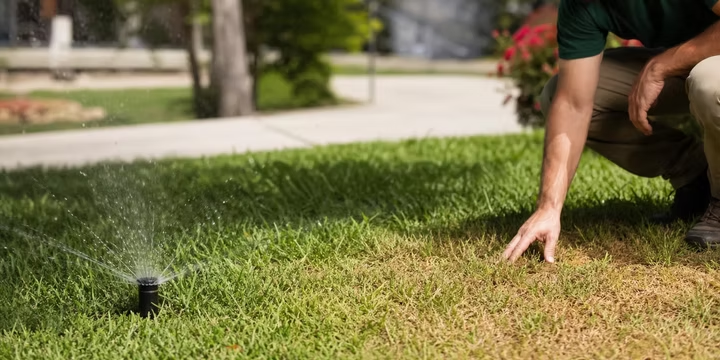
Brown patches have many causes: fungus, grub damage, heat stress. The way to tell whether low pressure is the culprit is to look at the pattern. If the dry zone matches where a weak head should be reaching but isn’t, pressure is likely the problem.
Data from Colorado State Extension puts this in perspective: a green area receiving 0.2 inches of water versus a brown area getting just 0.1 inches is receiving twice as much water every irrigation cycle. That gap compounds quickly. After a week of watering, the underfed zone is dramatically behind.
The tuna-can test: Set several shallow cans (tuna cans work perfectly) around a zone at various distances from each head. Run the zone for its normal cycle time. Compare how much water each can catches. Big differences confirm uneven coverage, which is one of the most reliable signs of low water pressure in a yard.
For a deeper look at coverage problems specifically, see our guide on why sprinklers leave dry spots.
Unusually Wet or Soggy Areas
This seems counterintuitive. Low pressure creates wet areas? Yes, because the most common cause of a sudden pressure drop is a leak. A cracked pipe or broken fitting underground diverts water away from the heads and saturates the soil directly above the break. You’ll see depressions, standing water, or areas that stay muddy long after the system shuts off.
Bubbling water is an especially telling sign. If you see water actively bubbling up from the ground while a zone runs, that’s a strong indicator of a broken line. The leak steals flow from every head on that zone, causing weak spray at the nozzles and a swamp above the break.
Some of these leaks are hard to find without specialized equipment. Our guide on detecting underground sprinkler leaks covers the methods professionals use.
Lawn Depressions or Sinkholes Near Sprinkler Lines
When a lateral line cracks, the escaping water washes away soil beneath the surface. Over time, this creates a void. You’ll feel it as a soft, spongy spot when you walk over it, and eventually it collapses into a visible depression or sinkhole.
These depressions tend to follow the path of underground irrigation lines. If you notice a dip in the turf that seems to track in a line across your yard, that’s a strong sign a pipe has been leaking for a while. The pressure loss at the heads may have been gradual enough that you didn’t notice until the brown spots or sinkholes appeared.
Unusually Dark Green Strips or Patches
Look for grass that’s noticeably greener and more lush around one head or along one section of line, especially when the rest of the yard looks stressed. A slow, continuous leak feeds that area extra water around the clock, creating a patch of thriving turf surrounded by underfed grass.
This sign is easy to miss because green grass looks healthy. But it’s actually evidence of a leak that’s stealing pressure from the rest of the zone. The contrast between the dark green leak zone and the stressed areas nearby is the giveaway.
Signs You Detect Through Measurement or Observation
Some signs of low water pressure in your yard aren’t visible at all. They show up in your water bill, on a pressure gauge, or through a process of elimination.
High Water Bill Without Increased Runtime
A spike in water cost when your irrigation schedule hasn’t changed is one of the most reliable (and most expensive) indicators. A hidden underground leak wastes water constantly, whether the system is running or not, while simultaneously starving heads of the pressure they need to distribute water properly.
In Lubbock, where roughly 50% of summer water demand goes to irrigation, even a moderate leak adds up fast. Under the city’s permanent two-day-per-week watering restriction, every drop that leaks out is a drop your lawn doesn’t get during its limited watering window.
For strategies to get water costs under control, see our water bill reduction tips.
Pressure Gauge Reading Below Normal Range
Most residential water systems deliver between 40 and 80 PSI. Anything below 40 is generally considered low. You can test this yourself with a hose-bib pressure gauge (available at any hardware store for about $10).
The key is to test two numbers:
- Static pressure: measured when no water is flowing anywhere on the property. This is your baseline.
- Dynamic pressure: measured while a zone is running. This shows the actual operating pressure the system works with.
A drop of 20 or more PSI between static and dynamic readings suggests a significant flow restriction, whether from a leak, an undersized line, or a valve that isn’t fully open.
One irrigation practitioner on Reddit described a simple diagnostic framework: put a pressure gauge on your hose bib. If there’s a 20 to 30+ PSI drop when a zone kicks on, you’re probably looking at a leak. If the drop is small but heads are still weak, it’s more likely a clogged nozzle or partially closed valve.
For detailed instructions on testing and interpreting pressure readings, our water pressure testing guide walks through the process.
Municipal Pressure Drop (Not Your System)
Sometimes the problem isn’t on your property at all. Municipal water pressure can drop during peak demand periods, especially in summer when entire neighborhoods irrigate on the same schedule.
This is particularly relevant in Lubbock. The city draws from the Ogallala Aquifer, one of the most critically depleted aquifers in the country, and average annual rainfall is only about 18 inches. In August 2025, the City of Lubbock identified an operational issue at one of its large pump stations that temporarily affected water pressure across parts of the city.
With the two-day watering restriction, huge numbers of homes irrigate simultaneously during their designated windows. That concentrated demand can push municipal pressure below what your system needs to operate properly.
How to tell: if every zone in your system is weak, your neighbor’s system looks weak too, and your static pressure reading at the hose bib is lower than usual, it’s likely a municipal issue. Contact the city’s utilities department to report it.
The Oklahoma State Extension 5-4-3-2-1 rule of thumb is helpful here: expect roughly 15 PSI of pressure loss from the utility’s supply line to the sprinkler head, accounting for losses through the meter, backflow device, valves, pipe friction, and elevation changes. If the city delivers 60 PSI, expect about 45 PSI at each head under normal conditions. Start with lower municipal pressure and the math gets tight fast.
Common Causes Worth Knowing
Understanding the most frequent causes helps you connect the signs you’re seeing to a likely explanation. These are the culprits behind the majority of low-pressure situations.
Partially Closed Backflow Preventer
This is the single most cited cause of low sprinkler water pressure, and it’s often the easiest to fix. Your backflow preventer has two main shut-off valves (on the vertical and horizontal pipes). Both handles must be fully parallel to the pipe they’re mounted on. Even a partial turn restricts flow significantly.
After backflow testing, winterization, or any plumbing work, these handles sometimes get left in a partially closed position. Before assuming something serious is wrong, check the handles.
For everything you need to know about keeping this device in working order, our backflow preventer maintenance guide covers the details.
Clogged Sprinkler Heads or Nozzles
Soil, sand, and mineral deposits work their way into nozzle openings over time. A clogged head either doesn’t spray at all or produces a distorted, weak pattern that mimics low pressure.
In Lubbock and across West Texas, this problem is accelerated by two factors: hard water that deposits mineral scale inside nozzles, and constant windblown dirt and sand that infiltrates the system through any opening. Local irrigation companies consistently identify hard water and soil clogging as the top maintenance issue in this region.
Community forums also highlight that dirt gets into systems during repairs. It’s good practice to flush the line all the way to the last head after any zone repair to prevent clogs from redistributed sediment.
Tree Root Intrusion on Water Lines
Roots from nearby trees can wrap around irrigation lines and slowly squeeze them closed. The restriction builds over months or years, gradually reducing flow and pressure to downstream heads.
This is an underappreciated cause because it’s invisible. The line isn’t broken, so there’s no wet spot or sinkhole. Pressure just slowly declines on that zone. If you have large trees near your irrigation lines and one zone has gotten progressively weaker over time, root intrusion is worth investigating.
This is also a situation where tree health and irrigation performance intersect directly. Aggressive root growth toward irrigation lines often signals the tree is seeking water, which may point to soil or irrigation design issues. Our guide on how irrigation and tree care work together explores this relationship.
Overloaded Zone (Design-Based Pressure Loss)
Sometimes low pressure isn’t a malfunction. It’s a design limitation. This happens most often when a sprinkler system has been expanded without recalculating the hydraulics. Adding heads to an existing zone divides available pressure among more outlets, reducing performance for every head on that zone.
Each zone has a maximum flow capacity based on pipe size and available pressure. Exceed it and every head suffers. This is worth considering if your system was recently modified and pressure dropped afterward.
Elevation matters too. Every foot of elevation gain costs roughly 0.433 PSI (or about 1 PSI per 2.3 feet). Properties with significant slope lose meaningful pressure on uphill zones. A zone running 10 feet uphill from the valve loses about 4.3 PSI to elevation alone, on top of all the other friction losses in the system.
What to Do Next
If you’ve identified several signs of low water pressure in your yard, here’s a quick self-check sequence before calling a professional:
- Check the backflow preventer handles. Both should be fully parallel to their pipes. This solves the problem more often than you’d think.
- Check the main shut-off valve. Make sure it’s completely open.
- Attach a pressure gauge to your hose bib. Test static pressure (nothing running) and dynamic pressure (with a zone on). Note the numbers.
- Walk each zone while it runs. Look for weak heads, wet spots, depressions, and uneven performance. Note which zones are affected.
When to call a professional: If multiple zones are affected, if you find unexplained wet or soggy areas, if your gauge shows a 20+ PSI drop from static to dynamic, or if you suspect an underground leak. These situations usually require specialized equipment (sonic leak detection, line locating) and experience interpreting what the readings mean.
For a complete walkthrough of self-inspection, our sprinkler system problem checklist covers every step.
If you’re in Lubbock or the surrounding West Texas area and need professional help, M&M Sprinkler and Tree Services has been diagnosing and repairing irrigation systems in this region since 1987. With licensed irrigators, certified arborists, and a Technology Plan that includes live flow monitoring with automatic alerts for breaks and pressure drops, the team can often catch these issues before brown spots ever appear. Call (806) 794-1300 or visit mmsprinklerslbk.com to schedule a system checkup.
Frequently Asked Questions
What PSI is considered low for a residential sprinkler system?
Most residential systems are designed to operate between 30 and 60 PSI at the head. Municipal supply typically runs 40 to 80 PSI at the meter. If your hose-bib gauge reads below 40 PSI with nothing running, your supply pressure is low. Fixed spray heads need at least 20 to 30 PSI, rotors need 30 to 50 PSI, and drip systems work best at 10 to 30 PSI.
Can low water pressure damage my lawn?
Yes, and the damage compounds over time. Low pressure means less water reaches each part of the yard per cycle. A zone receiving half the intended water every time it runs falls farther behind with each watering, especially during Lubbock summers where temperatures regularly exceed 100 degrees and annual rainfall averages only 18 inches.
Why does only one zone have low pressure?
If the pressure problem is isolated to a single zone, the most likely causes are a leak on that zone’s lateral line, a partially open zone valve, a clogged head or nozzle, or root intrusion compressing the pipe. The issue is usually located between the last normally performing head and the first weak one.
How can I tell if the problem is my system or the city’s water supply?
Test your static pressure at a hose bib with no water running anywhere on the property. If it’s below 40 PSI, the issue is likely on the municipal side. You can also check with neighbors. If everyone’s pressure is low, especially during designated watering windows, it’s a community-wide supply issue. In Lubbock, these drops happen most often during peak summer irrigation periods.
Does elevation affect sprinkler water pressure?
Absolutely. Every foot of elevation gain costs about 0.433 PSI. A zone that runs uphill 10 feet from the valve loses roughly 4.3 PSI to gravity alone. On properties with significant slope, uphill zones may need pressure boosting or fewer heads per zone to compensate.
How much pressure loss should I expect between my water meter and sprinkler heads?
The Oklahoma State Extension’s 5-4-3-2-1 rule of thumb estimates about 15 PSI of total loss through the meter, backflow preventer, valves, pipe friction, and elevation changes. If your utility delivers 60 PSI, expect roughly 45 PSI at the heads. With lower starting pressure, every component loss matters more.
Should I flush my sprinkler lines after a repair?
Yes. Dirt and debris enter the system through any opening during repairs. Experienced practitioners recommend flushing the line to the last head on the zone after any work. In areas with sandy or silty soil like West Texas, even a small amount of infiltrated dirt can clog nozzles and mimic low-pressure symptoms.