Backflow Preventer Maintenance: Lubbock, TX Guide (2026)
TL;DR
Backflow preventer maintenance is the routine inspection, testing, cleaning, and repair of the mechanical device that keeps contaminated water from flowing backward into your drinking supply. The City of Lubbock requires testing every one to three years for residential irrigation systems and annually for commercial properties, with fines up to $2,000 per day for noncompliance. Maintenance includes annual professional testing by a TCEQ-licensed tester, monthly visual inspections you can do yourself, seasonal cleaning, and winterization for West Texas freezes.
What Is Backflow Preventer Maintenance?
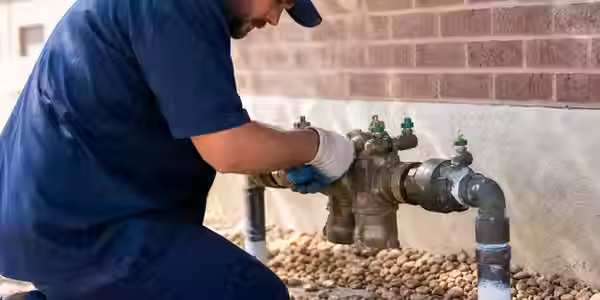
A backflow preventer is a mechanical device installed on your water supply line that forces water to flow in only one direction, away from your potable (drinkable) water. Think of it as a one-way gate for your plumbing. When everything works correctly, irrigation water stays in your sprinkler system and drinking water stays clean.
Backflow preventer maintenance refers to everything required to keep that gate functioning: professional testing, visual inspections, cleaning, winterization, minor repairs, and documentation. It’s not optional. These devices contain internal seals, springs, and moving parts that wear out over time. Without regular attention, they fail, and the consequences range from contaminated drinking water to city fines.
If you’ve received a notice from the City of Lubbock about your backflow device, this guide explains exactly what’s expected of you.
Wondering about repair costs? See our backflow preventer repair cost breakdown for Lubbock pricing.
Why Backflow Preventer Maintenance Matters
Three things are at stake when you skip or delay backflow preventer maintenance: your health, your wallet, and your irrigation system’s performance.
Protecting Your Drinking Water
When water pressure drops (during a main break, fire hydrant use, or heavy demand), water can reverse direction in your pipes. If your irrigation system is connected to city water and the backflow preventer isn’t working, that reversed flow can pull fertilizers, pesticides, soil bacteria, and stagnant water directly into your home’s drinking supply. This isn’t a theoretical risk. It’s the specific reason cities mandate these devices on irrigation systems.
Avoiding Fines and Water Shutoff
In Lubbock, the financial consequences of ignoring backflow preventer maintenance are steep. According to the City of Lubbock’s ordinance, property owners who refuse to have their backflow prevention assembly tested face potential water service shutoff and fines up to $2,000 per day for noncompliance. That adds up fast.
Keeping Your Irrigation System Healthy
Here’s something most guides miss entirely: a failing backflow preventer directly affects your sprinkler system’s performance. Every backflow device creates some pressure loss. An RPZ valve drops 10 to 15 psi at rated flow. A PVB drops 5 to 10 psi. A DCVA drops 3 to 8 psi. When internal components clog or stick, that pressure loss increases, starving downstream zones of the water they need.
If you’re troubleshooting low sprinkler water pressure, check your backflow preventer before chasing problems elsewhere in the system. A neglected device can cause uneven coverage, weak spray patterns, and zones that barely function.
What Backflow Preventer Maintenance Includes
Maintaining your backflow preventer isn’t a single task. It’s a combination of professional testing, homeowner inspections, cleaning, winterization, and record keeping.
Annual Professional Testing
This is the non-negotiable piece. Annual testing by a certified backflow prevention assembly tester is legally mandated in Lubbock and across Texas. During a professional test, the tester will:
Visually inspect the device for leaks, corrosion, and physical damage
Perform a functional test using calibrated gauges to verify check valves are sealing correctly
Confirm the relief valve (on RPZ assemblies) is opening at the proper differential
Document results on the City of Lubbock Test and Maintenance Form
The original form must be mailed or delivered to the Water Compliance Department within 10 days of testing. Missing that deadline can restart the compliance clock.
Not sure how to get ready for this? Our guide on preparing for a backflow test walks through the full process.
Monthly Visual Inspections (Homeowner Level)
Between professional tests, you can catch problems early with simple visual checks. Once a month, look for:
Water pooling around the device or connected pipes
Visible rust, corrosion, or sediment buildup on fittings
Cracks in the housing or connected plumbing
The device tilting, shifting, or sitting below its required height
Also pay attention to changes in water pressure, unusual tastes, or odd odors from your taps. These can indicate the backflow preventer has failed or is failing.
Cleaning
Mineral buildup is common in West Texas water. Keeping your backflow preventer clean and free of debris prevents blockages that can jam valves or degrade internal parts.
A sound baseline: quarterly external cleaning to remove dirt, grass, and debris from around the device, plus flushing the device every 6 to 12 months if mineral buildup is an issue. Don’t use harsh chemicals on the housing, as they can damage seals and coatings.
Winterization
West Texas doesn’t experience prolonged northern-style winters, but occasional hard freezes can destroy a backflow preventer overnight. Water trapped inside the device expands when it freezes, cracking the body or rupturing internal components.
To winterize properly:
Shut off the water supply to the device
Open both test cocks and drain valves to empty residual water
Wrap the preventer with insulation material (pipe wrap, insulated covers, or towels secured with waterproof tape)
For a broader look at protecting your entire system, see our freeze protection guide for West Texas conditions.
Record Keeping
This is the maintenance step people most often skip, and it comes back to bite them during city inspections or when selling a property. Keep records of every professional test, including the date, results, and any repairs performed. Save copies of the forms submitted to the city. If a compliance question ever comes up, these records are your proof.
Warning Signs Your Backflow Preventer Needs Attention
Don’t wait for your annual test to reveal a problem. These symptoms indicate your backflow preventer maintenance is overdue:
Leaks or pooling water. Water dripping from the vent, test cocks, or pipe connections usually means worn diaphragms or damaged seals. Small leaks get worse quickly. If your device is actively leaking, our guide on backflow device leak causes covers the most common culprits and fixes.
Hissing or unusual sounds. Air escaping through a failed check valve or relief valve often produces a hissing noise. This means the one-way seal isn’t holding.
Low water pressure near the device. Clogged valves, stuck check assemblies, or heavy mineral buildup restrict flow. If pressure drops noticeably at zones closest to the backflow preventer, the device is the likely cause.
Visible corrosion or physical damage. Rust, flaking epoxy coatings, cracked housings, or bent fittings all compromise the device’s ability to prevent backflow.
Discolored or off-tasting water. This is the most alarming sign, as it suggests contamination may already be occurring. Stop using the water and get the device tested immediately.
If you’re noticing several of these signs, it may be time for more than just maintenance. Learn how to tell if your backflow device needs repair.
Maintenance by Device Type
Not all backflow preventers are the same. The type installed on your property affects how maintenance is performed, what can go wrong, and what testing costs.
For homes with PVB devices, a common failure point is the vacuum breaker itself. If yours is dripping or spraying, our vacuum breaker repair guide covers the diagnosis and fix.
Experienced practitioners note that over 40% of irrigation systems in Texas and California may not even have the correct device type installed. If your device seems undersized, mounted too low, or doesn’t match your hazard level, bring it up during your next professional test.
One piece of real-world advice that shows up repeatedly among backflow testing professionals: don’t skip annual testing through the test ports by a certified tester, and flag any unit pushing past ten years for a closer evaluation.
Repair vs. Replace: When Maintenance Isn’t Enough
Backflow preventers typically last 5 to 15 years. At some point, ongoing repairs become more expensive than replacement.
Sean Cleary, VP of IAPMO and the Backflow Prevention Institute with over 40 years of industry experience, puts it plainly: “You may have a 35-year-old valve with its epoxy coating flaking off, and even though it may only cost a few hundred dollars to repair, you may be better off installing a more modern valve that will be less expensive to maintain over the years.”
He also notes that today’s backflow preventers are shorter, lighter, have fewer parts, and are easier to maintain than older models.
Consider replacement when:
The device is more than 10 to 15 years old
Check valves are brittle and cracking
Epoxy coatings are flaking, exposing bare metal to corrosion
Repair costs are approaching 50% or more of a new unit
The device has failed multiple consecutive tests
For a full cost breakdown on repairs versus new installations, see our backflow repair cost guide.
Lubbock and West Texas Compliance Rules
Understanding the local rules is where most national backflow content falls short. Here’s exactly what Lubbock homeowners and property managers need to know.
Testing Frequency
Residential irrigation systems connected to the City of Lubbock’s water supply require backflow testing every one to three years, depending on the hazard classification
Commercial plumbing backflow systems must be inspected annually
Who Can Test
Only individuals holding a TCEQ Backflow Prevention Assembly Tester (BPAT) license can legally test your device. In Lubbock specifically, testers must also register with the city by presenting their BPAT license, photo ID, and an Instrument Calibration Report in person.
Do not attempt to test or re-certify your device yourself. Even if you understand how it works, the city will not accept results from an unlicensed person.
The City’s Notice Process
The City of Lubbock sends three escalating notices per testing cycle:
First notice at the beginning of the month
Reminder mid-month
Final notice (a sticker on your door) at the end of the month
If testing still hasn’t been completed after all three notices, the city can shut off water service to the property and begin assessing fines.
After the Test
Once a licensed BPAT tester completes the inspection, they fill out the City of Lubbock Test and Maintenance Form. The original form must be submitted to the Water Compliance Department within 10 days.
If the assembly fails the test, the property owner must have it repaired or replaced and retested by a certified tester before the deadline.
Who Pays
The costs for installation, maintenance, and annual testing are the property owner’s responsibility. The backflow prevention assembly is considered a fixture of your private plumbing system. The city doesn’t cover it.
Texas State Framework
This isn’t just a Lubbock thing. The Texas Commission on Environmental Quality (TCEQ) requires all Texas municipalities to develop and maintain a Backflow Prevention Program. Every backflow prevention assembly must be maintained and tested according to local ordinance. If you own property in surrounding towns like Wolfforth, Levelland, or Plainview, check with your local water utility for their specific schedule.
Common Backflow Preventer Maintenance Mistakes
These are the errors that cause failed tests, damaged devices, and unnecessary expenses.
Attempting DIY certification. You can (and should) do visual inspections. But testing and certification require calibrated gauges, specific training, and a TCEQ BPAT license. Submitting self-performed test results will be rejected and may trigger compliance action.
Not draining before service. Water sitting in front of the device during maintenance causes damage. When you shut off a backflow preventer, let all water drain completely before turning it back on.
Over-tightening seals and O-rings. During repairs, the small rubber components inside the device are easy to damage. Over-tightening or misaligning O-rings is one of the most common causes of post-repair leaks.
Ignoring a tilted or shifted device. Your backflow preventer should stand upright and stay put. If it’s leaning, too low, or has shifted from settling soil, it may not function correctly. PVBs specifically must be at least 12 inches above the highest sprinkler head to work.
Skipping tests on systems that aren’t in use. This is a question that comes up constantly. Even if your sprinkler system is turned off for the season, the backflow preventer is still connected to the water supply. Stagnant water, pressure changes, or a surprise city inspection can expose risks. The city doesn’t care whether the system was running. They care whether the device was tested.
Ignoring the connection to overall system health. Backflow preventer maintenance should be part of your broader sprinkler system maintenance routine, not treated as a separate chore. Pressure issues, leaks, and zone failures are often connected.
Frequently Asked Questions
How often does a backflow preventer need maintenance?
Professional testing is required every one to three years for residential irrigation systems in Lubbock and annually for commercial properties. Between professional tests, perform monthly visual inspections and quarterly external cleaning. Flush the device every 6 to 12 months if you have hard water.
Can I test my own backflow preventer?
No. Texas law requires testing by a TCEQ-licensed Backflow Prevention Assembly Tester (BPAT). In Lubbock, that tester must also be registered with the city. You can and should perform visual inspections between tests, but the official certification must come from a licensed professional.
What happens if my backflow preventer fails its test?
The property owner must have the device repaired or replaced, then retested by a certified tester. The original test and maintenance form must be submitted to the Lubbock Water Compliance Department within 10 days. Until the device passes, your property remains out of compliance.
Do I need backflow testing if my sprinkler system is turned off?
Yes. Your backflow preventer is connected to the potable water supply regardless of whether the irrigation system is actively running. Stagnant water and pressure fluctuations still pose contamination risks. The city’s testing requirement applies based on the device’s existence, not its usage.
How much does backflow preventer maintenance cost in Lubbock?
Market rates for a standard backflow test in Lubbock start around $75, though costs vary based on device type, accessibility, and whether repairs are needed. RPZ assemblies typically cost more to test than PVBs due to their complexity. For detailed pricing, check our backflow repair cost guide.
What’s the difference between backflow preventer maintenance and backflow testing?
Testing is one component of maintenance. A backflow test specifically measures whether the internal check valves and relief valves are sealing properly. Maintenance is broader: it includes testing, visual inspections, cleaning, winterization, repairs, and record keeping. Think of testing as the annual checkup and maintenance as the full year of care.
How long do backflow preventers last?
Most devices last between 5 and 15 years, depending on water quality, climate exposure, and how well they’re maintained. Units in hard-water areas like West Texas tend to wear faster due to mineral buildup. Any device older than 10 years deserves close evaluation during its next annual test.
Will the City of Lubbock really shut off my water?
Yes. The city’s ordinance explicitly allows water service disconnection for properties that fail to comply with backflow testing requirements. Combined with fines of up to $2,000 per day, ignoring those three notices is an expensive gamble.


Comments