
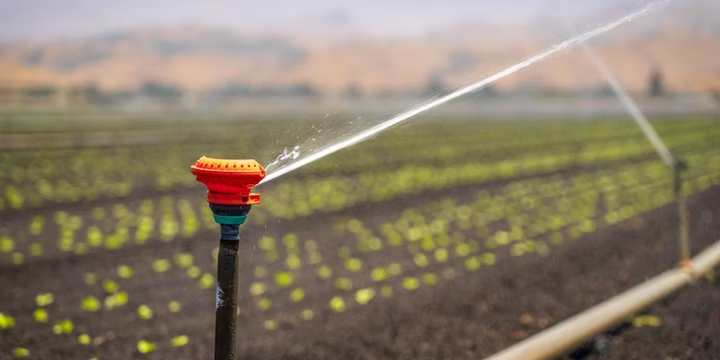
West Texas winters may be short, but they hit hard enough to damage irrigation systems. A proper sprinkler system startup involves inspecting for freeze damage, slowly reopening the main water valve to prevent pressure surges, testing each zone individually, cleaning nozzles clogged by hard water and sediment, verifying backflow preventer function, and programming your controller for Lubbock’s spring watering schedule. Rushing this process, or skipping it entirely, leads to cracked pipes, broken heads, and water bills that climb fast once summer arrives.
Below is a breakdown of what a professional sprinkler system startup actually includes, why each step matters for Lubbock area properties, and when it makes sense to call in a licensed irrigator rather than tackling it yourself.
If your system sat idle all winter and you want it handled right the first time, schedule a system inspection before peak season hits.
Before the Water Goes On: Why Preparation Matters in West Texas
A successful sprinkler system startup begins before anyone touches a valve. Lubbock’s clay and caliche soils shift during freeze/thaw cycles, and that ground movement can crack fittings and push sprinkler heads out of alignment over the winter. A quick walk through catches these problems before they turn into flooding.
Pre Start Damage Inspection
Winter can be tough on irrigation components. Water expands when it freezes, cracking pipes, fittings, and valves. The Insurance Institute for Business and Home Safety notes that even a single hard freeze can cause significant pipe and fitting failures, and roughly 80% of sprinkler systems need at least minor repairs after the cold months. In the Lubbock area, late freezes (sometimes into April) make this inspection even more important.
A thorough pre start check covers:
- Sprinkler heads and risers: Cracked bodies, heads pushed sideways by soil movement, or heads buried by landscaping over the winter.
- Valve boxes: Visible cracks, standing water, or soil intrusion that could interfere with valve operation.
- Backflow preventer assembly: The brass device above ground is especially vulnerable to freeze damage. Even hairline cracks here can cause a failed inspection.
- Controller and wiring: Power supply, battery backup, and any visible wire damage from rodents or lawn equipment.
Practitioners on Reddit’s Lubbock forums note that long waits for irrigation repairs are common once spring hits. Scheduling a professional startup early (before the rush) is one of the easiest ways to avoid sitting on a broken system for weeks. If your inspection turns up significant damage, schedule sprinkler repairs with M&M Sprinklers before pressurizing the system.
Locating the Main Shutoff Valve
Every irrigation system has a main shutoff valve separating it from your home’s water supply. Common locations include a basement, crawl space, garage, or an underground valve box near the water meter. This valve should have been closed all winter. Knowing where it is matters for the startup process and for emergencies, like a sudden mainline break flooding your yard. If you have never located yours, this guide to finding sprinkler lines walks through the process.
Turning the Water Back On: What Can Go Wrong (and How Pros Prevent It)
This is the most critical phase of any sprinkler system startup, and the step where DIY attempts most commonly cause damage. The goal is to reintroduce water slowly to prevent a destructive pressure surge called water hammer.
Backflow Preventer Preparation
Your backflow prevention device (often a Pressure Vacuum Breaker, or PVB) keeps irrigation water from contaminating your home’s drinking water. The City of Lubbock requires annual backflow testing to verify it’s functioning properly. You can read more about what a backflow preventer does and why Texas municipalities take it seriously.
During startup, a technician will:
- Close all test cocks that were left open during winterization.
- Reinstall any bleeder caps or drain plugs.
- Open the downstream valve (toward the sprinklers) fully, then very slowly open the upstream valve (from the water supply) to fill the device without shocking the seals.
If your backflow preventer is due for its annual certification, or if you spot any cracks or seepage, book backflow testing and certification with M&M’s licensed BPAT tester. M&M holds Texas BPAT licensure in house, so testing, repairs, and written certification happen in one visit rather than requiring a subcontractor.
Slow Opening the Main Valve
Water hammer is a shockwave created when fast moving water slams into a closed valve or air pocket. It can crack PVC pipes, blow out fittings, and destroy sprinkler heads in seconds. The Irrigation Association’s best practices emphasize that gradual pressurization is the single most important step in spring activation.
A licensed irrigator opens the main valve over 30 to 60 seconds, listening as water fills the mainline and pushes air out. Once the valve is fully open, the rushing sound should stop. If it continues, there’s a leak somewhere in the main line. This slow, controlled fill is simple in concept but surprisingly easy to get wrong, especially if the valve handle is stiff from sitting closed all winter.
Zone by Zone Testing: Where Most Problems Show Up
With the main lines pressurized, a professional startup moves to testing each zone individually. This is where the real value of a trained eye becomes obvious.
Running Each Zone Manually
Using the controller’s manual mode, a technician activates Zone 1, then walks the coverage area watching every head. They repeat this for every zone in the system. Here’s what they’re looking for:
- Geysers from broken heads (common after freeze damage).
- Dry spots indicating poor coverage, misaligned heads, or clogged nozzles.
- Soggy areas that suggest an underground pipe leak.
- Heads watering sidewalks, driveways, or the street instead of turf (wasting water and potentially violating Lubbock watering ordinances).
M&M Sprinklers’ technicians run every station, either through the controller or manually at the valve, checking for leaks, coverage gaps, and efficiency improvements. This systematic approach catches problems that a quick visual check from the porch would miss entirely. For a full rundown of common zone problems, see this sprinkler troubleshooting guide.
Valve Operation and Silent Leaks
As each zone runs, a technician listens for the station valve opening and closing. A zone that fails to turn on might have a bad solenoid or wiring issue. A valve that doesn’t fully close will continue to leak underground, creating a soggy patch and quietly running up your water bill.
This “weeping valve” problem is one of the most common sources of high water bills in Lubbock. Because the leak is underground and often in a valve box you never open, it can go undetected for months. A professional startup catches it immediately. If you suspect a hidden leak between visits, flow monitoring technology can flag the problem automatically.
Sprinkler Head Leaks and Replacements
During zone tests, technicians watch for two types of head leaks:
- Active leaks: Water gushing from the base of a head while the zone runs, typically caused by a cracked body from winter freeze damage.
- Drainage leaks: Water pooling around a head after the zone shuts off. This is often low head drainage (water draining from pipes through the lowest head on a slope) or a sign of a weeping valve.
Sometimes tightening the cap is enough. If the body is cracked, the head needs replacement. M&M’s maintenance plan members receive up to four free sprinkler heads per visit, which covers the most common startup repairs without an additional charge.
Backflow Preventer and Valve Box Final Check
After all zones have run, a final leak inspection covers the most critical points. Valve box lids come off to check for standing water or active leaks. The backflow preventer gets a close look for drips at the handles, test cocks, or vent cap. Even a small drip can indicate a failing seal that will get worse under summer pressure.
Pressure Evaluation
Sprinklers perform best between 45 and 60 PSI. A technician can spot pressure problems quickly:
- Low pressure: Heads don’t pop up fully, spray patterns fall short. Causes include leaks, partially closed valves, or too many heads on one zone.
- High pressure: Sprinklers produce fine mist instead of droplets. In Lubbock’s wind, misting means most of your water blows away before it ever hits the ground.
Pressure regulation is one of the upgrades included in M&M’s Technology Plan, which pairs pressure regulated nozzles with live flow monitoring and automatic leak/clog alerts. For a deeper explanation, this water pressure guide covers testing methods and common fixes.
Nozzle Cleaning at Startup: A Step Most Homeowners Skip
Nozzle cleaning deserves its own discussion because it is one of the highest impact, most frequently overlooked steps in a sprinkler system startup. A clogged nozzle doesn’t just reduce coverage; it changes the precipitation rate of the entire zone, creating dry spots in some areas and overwatering in others.
Why Lubbock Systems Clog Faster Than Average
Lubbock’s water is notoriously hard. The city’s water supply routinely measures above 200 mg/L of total dissolved solids, and calcium carbonate deposits build up inside nozzle orifices over winter. On top of the mineral content, West Texas wind drives fine sand and caliche dust into every exposed component. By spring, many nozzles are partially blocked even if they looked fine at winterization.
Practitioners on irrigation forums describe finding nozzles that appear clean from the outside but spray half their rated radius because mineral scale has narrowed the orifice from the inside. One irrigation technician shared in a YouTube walkthrough that he pulls the filter screen on every pop up head during spring startups and finds visible sediment on roughly seven out of ten heads in hard water markets like Lubbock.
What Proper Nozzle Cleaning Involves
During a professional startup, a technician will:
- Pull each pop up stem and remove the nozzle from the head body.
- Remove the inlet filter screen (the small mesh basket at the base of the pop up stem) and flush or replace it. Hunter and Rain Bird heads both use removable screens, though the design varies by model.
- Clear the nozzle orifice using a nozzle cleaning tool or compressed air. Poking with a wire or nail risks enlarging the orifice, which changes the flow rate and throws off zone balance.
- Inspect the nozzle for wear. Nozzles are molded plastic with a designed orifice diameter. Sand abrasion gradually widens the opening, increasing flow and reducing throw distance. The Irrigation Association recommends replacing nozzles that show visible wear rather than simply cleaning them.
- Reinstall and test. After cleaning, the technician runs the zone again to confirm the spray pattern matches the head’s rated coverage.
For a step by step look at the process, this nozzle replacement guide covers both cleaning and full nozzle swaps.
Clogged Nozzles vs. Low Pressure: Knowing the Difference
These two problems look similar from the curb (short throw distance, weak spray) but have completely different fixes. A clogged nozzle affects one or two heads on a zone. Low pressure affects the entire zone uniformly. During startup, a technician can tell the difference in seconds by comparing heads on the same zone. If one head sprays half the distance of its neighbor, it’s almost certainly a nozzle or filter issue, not a pressure problem.
Homeowners who skip nozzle cleaning at startup often misdiagnose clogged heads as a pressure problem and end up chasing the wrong fix for weeks. If your system has signs of low pressure across multiple zones, that’s a different issue worth investigating separately.
How Often Should Nozzles Be Cleaned?
In markets with clean, soft water, once a year at startup may be enough. In Lubbock, twice a year (spring startup and a midsummer check) is more realistic. M&M’s Gold and Technology maintenance plan members get nozzle inspection and cleaning at each of their four scheduled visits, which keeps performance consistent through the full irrigation season.
Head Adjustment and Final Tuning
With nozzles cleaned and pressure verified, the final hands on step is fine tuning every head:
- Straighten tilted heads so spray hits turf, not air.
- Adjust spray arcs on rotor heads to match the coverage area (keeping water off sidewalks and driveways).
- Verify matched precipitation rates across each zone so all areas receive water evenly.
Lubbock’s hard water and sandy soil make this adjustment step more involved than in most markets. A clean screen can dramatically improve spray performance, but only if the head is also aimed correctly and the arc is set to the right coverage area.
Finalizing Your Sprinkler System Startup for the Lubbock Season
With the system tested, repaired, cleaned, and adjusted, the final step is setting it up for efficient automated watering through spring and into summer.
Programming a Lubbock Appropriate Watering Schedule
Lubbock’s watering needs change dramatically from April through August. A proper spring schedule is lighter than a summer schedule, and your controller should reflect that.
A technician will set the correct date and time, program watering days and start times (early morning is best to minimize wind and evaporation losses), and set zone run times appropriate for the season. Many modern controllers have a seasonal adjust feature that lets you scale all run times by percentage, starting at 50% to 60% in spring and increasing as temperatures climb. Texas A&M AgriLife Extension’s irrigation scheduling guidelines confirm that adjusting run times monthly rather than running a fixed schedule can reduce water use by 20% to 30% without harming turf health.
M&M’s maintenance plan members receive seasonal runtime programming at each visit, so the schedule stays matched to actual conditions rather than running on a “set it and forget it” program that wastes water in cool months and starves turf in hot ones.
If your current controller is outdated or unreliable, ask about smart controller upgrades. M&M installs Hunter X2 controllers with Hydrawise Wi-Fi management, allowing weather based scheduling, remote adjustments from your phone, and integration with rain/freeze sensors.
Common Controller Issues at Startup
Sometimes the system is mechanically sound but the controller causes problems. A blank screen usually means a tripped breaker or unplugged unit. A controller with power that won’t run its schedule may have the dial set wrong or an active rain sensor override. A specific zone that fails to activate from the controller (but works when manually opened at the valve) points to a wiring or solenoid issue between the controller and that valve.
Modern smart controllers provide diagnostic alerts for many of these faults, which is one reason upgrading from an old mechanical timer pays for itself in reduced troubleshooting time. For more on how sensors interact with controllers, this climate sensor testing guide walks through common sensor overrides.
Final Details That Get Missed
Two small items finish off a thorough sprinkler system startup:
- Replace the controller’s backup battery: This battery (typically 9V or coin cell) saves your program during power outages, which are common in West Texas storm season. Professionals replace it every spring.
- Clean your weather sensor: Rain and rain/freeze sensors collect leaves, spiderwebs, and dust over the winter. A clogged sensor won’t trigger properly, causing your system to water during rain or failing to shut down during a late freeze.
Why Lubbock Homeowners Hire a Pro for Sprinkler System Startup
A sprinkler system startup is straightforward in theory, but in practice, most homeowners discover problems they aren’t equipped to fix: cracked backflow preventers, weeping valves, wiring faults, clogged nozzles that look fine from the outside, or pressure issues that require parts and expertise beyond what a YouTube tutorial covers.
Local Reddit threads about Lubbock sprinkler companies show a recurring theme: homeowners who attempt a spring startup themselves often end up calling a pro anyway, just later in the season when wait times are longer and damage has gotten worse.
M&M Sprinkler and Tree Services has been serving Lubbock since 1987, with three licensed irrigators on staff who understand the specific challenges of West Texas irrigation: caliche soil, hard water, high winds, extreme temperature swings, and the City of Lubbock’s backflow and watering requirements. Their 4.9 star rating across 318 Google reviews reflects consistent, professional work.
For property managers and homeowners who want to skip the guesswork entirely, M&M’s Gold and Technology maintenance plans include scheduled seasonal startups, nozzle cleaning and inspection, runtime programming, priority scheduling during peak season, and repair discounts. The Technology Plan adds live flow monitoring with automatic leak and clog alerts, so problems get caught between visits rather than showing up as a surprise on your water bill.
Ready to get your system running this spring? Contact M&M Sprinklers at (806) 794 1300 or schedule online. The team includes licensed irrigators, ISA certified arborists, and a licensed BPAT tester, so whether the issue is irrigation, backflow compliance, or tree health affecting your landscape, one call covers it.
Frequently Asked Questions about Sprinkler System Startup in Lubbock
When should I schedule a sprinkler system startup in Lubbock?
The best time is after the last hard frost has passed and the ground has thawed, typically late March through mid April in the Lubbock area. Watch for late freezes (Lubbock has seen freezing temperatures into April), and book early. Wait times for irrigation service grow quickly once spring arrives, and local forums confirm that availability gets tight by May.
What is the most common mistake during a sprinkler system startup?
Opening the main water valve too quickly. The resulting pressure surge (water hammer) can crack PVC pipes, blow fittings, and destroy sprinkler heads. A licensed technician opens the valve gradually over 30 to 60 seconds to prevent this.
Why is my sprinkler head leaking when the system is off?
If a single head (usually the lowest one in a zone) leaks after the zone shuts off, it’s likely low head drainage: water draining from the pipes by gravity. This is fixed by installing heads with built in check valves. If multiple heads in a zone weep or a wet spot persists, you likely have a zone valve that isn’t closing completely, a problem a technician can diagnose and repair on site.
Does Lubbock require annual backflow testing?
Yes. The City of Lubbock requires annual backflow preventer testing by a licensed BPAT (Backflow Prevention Assembly Tester). M&M Sprinklers holds BPAT licensure in house and provides written certification after testing or repair. Schedule your backflow test here.
Should I clean my sprinkler nozzles during startup?
Absolutely. Lubbock’s hard water and wind driven sand clog nozzle orifices and filter screens over the winter. A partially blocked nozzle throws a shorter, uneven spray pattern that creates dry spots and wastes water. Cleaning or replacing nozzles at startup restores proper coverage before the growing season begins.
What should I do if a zone doesn’t turn on at all?
The issue is usually electrical: a faulty solenoid on the zone valve, a bad wire connection, or a break in the wire run between the controller and the valve. These faults can be tricky to locate without proper equipment. Contact M&M Sprinklers for diagnosis and repair.
How much does a professional sprinkler system startup cost in Lubbock?
Costs vary based on the number of zones, system age, and whether repairs are needed. Most companies charge a flat fee for the startup inspection and provide an estimate for any necessary repairs. M&M’s maintenance plan members receive seasonal startups as part of their membership, along with repair discounts and priority scheduling, which often makes the plan the better value for systems that need attention each year.