
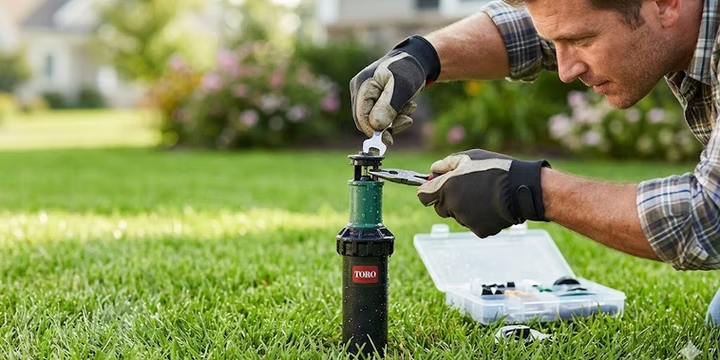
A sputtering sprinkler head or a geyser in your lawn is more than an annoyance. It’s a waste of water and money. A single broken sprinkler head can waste up to 25,000 gallons of water in a six month season. If you’re dealing with a true geyser, use this emergency sprinkler repair guide to shut off water fast.
Fortunately, most Toro sprinkler head repair tasks are manageable for a motivated homeowner. Whether you need to clean a clogged nozzle, replace a cracked sprinkler body, or adjust an uneven spray pattern, this guide provides step by step instructions to get your irrigation system running efficiently. The goal: keep your Lubbock lawn green and your water bills down.
Need a pro to handle it?M&M Sprinklers in Lubbock has been repairing irrigation systems across West Texas since 1987.
Identify Your Toro Head Type and Model
Before starting any Toro sprinkler head repair, you need to know what you’re working with. Toro primarily offers two categories of sprinkler heads for residential use:
- Spray Heads: Stationary pop up heads that spray a fixed fan pattern. Ideal for smaller, more intricate lawn shapes and garden beds. The Toro 570Z series is one of the most popular and versatile spray head families.
- Rotor Heads: These pop up and rotate, shooting a single stream across a larger area. Best for medium to large lawns. Common models include the Toro T5 and T7 series, which feature adjustable arcs and long spray distances.
Identifying the model is usually as simple as looking at the cap of the sprinkler head. For a broader comparison of head types across brands, check out this guide to irrigation head types. Knowing whether you have a spray or rotor is the essential first step to buying the correct replacement parts.
Tools, Parts, and Prep Checklist
Having the right gear on hand makes any repair job smoother. You won’t need a massive toolbox for most Toro sprinkler head repair tasks.
Essential Tools & Parts:
- Small shovel or trowel
- Flathead screwdriver
- Pliers or sprinkler head wrench
- Replacement Toro sprinkler head or nozzle
- Small bucket or container to prevent dirt from falling into the pipe
- Teflon tape (for threaded connections)
Preparation Steps:
- Turn Off the Water: Locate your sprinkler system’s main shutoff valve or the valve for the specific zone you are working on and turn it off.
- Mark the Head: Place a flag or other marker next to the faulty head so you don’t lose its location in the grass.
- Clear the Area: Use your hands to clear away any loose grass or mulch from around the sprinkler head.
Diagnose by Symptom: Find the Root Cause Fast
A little detective work can save you a lot of time. Here are common symptoms and their likely causes.
Head Won’t Pop Up or Retract
If a head doesn’t pop up, it’s often due to a clogged filter or debris inside the head. If it stays up, the retraction spring might be worn out or jammed with sand. Practitioners on Reddit report that simply pulling the riser up by hand and flushing out compacted grit fixes the issue about half the time, with the other half needing a full head swap.
Leaking at the Base
Water pooling around the base when the zone is on usually indicates a cracked body or a loose connection to the underground pipe. If it leaks constantly when the system is off, you likely have a leaking zone valve, not a head issue.
Poor or Uneven Spray Pattern
This is one of the most frequent reasons for a Toro sprinkler head repair. The cause is almost always a clogged or damaged nozzle. Misting or fogging is a sign of excessively high water pressure. Most sprinkler systems are designed to operate best at around 30 psi. If pressure problems are widespread across your system, this low water pressure fix guide walks through the diagnostics.
Quick Fixes Without Digging
Before you start digging, try the simplest solutions first. Many performance issues stem from a clogged nozzle or filter screen.
- Turn on the zone for a moment to make the head pop up.
- Hold the riser stem firmly with one hand and unscrew the nozzle with the other.
- Lift out the small filter screen located directly underneath the nozzle.
- Rinse both the nozzle and the filter thoroughly under clean water. Use a thin piece of wire to gently clear any stubborn debris from the nozzle opening.
- Reassemble and test the sprinkler. This simple cleaning solves a majority of spray pattern problems.
One irrigation technician shared in a YouTube walkthrough that soaking Toro nozzles in white vinegar for 15 minutes dissolves mineral scale that rinsing alone can’t budge. This is especially relevant in hard water areas like Lubbock and the surrounding West Texas towns.
Replace a Toro Spray Head (Step by Step)
If cleaning doesn’t work or the head is visibly damaged, a full replacement is the next step. This is a common and straightforward Toro sprinkler head repair.
- Excavate: Carefully dig a circle about 6 to 8 inches in diameter around the sprinkler head, exposing the body and the pipe fitting it’s connected to.
- Unscrew: Turn the old sprinkler body counterclockwise to unscrew it from the riser pipe below. Be careful not to let dirt fall into the open pipe.
- Flush the Line: Briefly turn on the water to the zone for a few seconds to flush out any dirt that may have entered the pipe.
- Install the New Head: Screw the new Toro head onto the riser, hand tightening it until it’s snug. Wrap the threads with Teflon tape first if the old head showed any signs of leaking at the connection.
- Adjust and Backfill: Position the nozzle so its spray pattern is aimed correctly. Carefully backfill the hole with soil, tamping it down gently around the head.
For detailed arc and radius tuning after installation, see the Toro sprinkler head adjustment guide.
Repair or Replace a Toro Rotor (T5/T7)
Replacing a rotor is similar to replacing a spray head, but involves an extra step for adjustment. Toro rotors like the T5 RapidSet can often be adjusted without tools. For others, you’ll use a special key or a flathead screwdriver.
- Installation: Follow the same dig and replace steps as for a spray head.
- Arc Adjustment: Once installed, set the left and right stops to define the watering pattern. Turn the turret to the fixed left stop and then adjust the right stop to increase or decrease the arc.
- Radius Adjustment: A radius adjustment screw on top of the rotor controls how far the water stream shoots. Turning it clockwise decreases the distance.
If your rotor spins but won’t oscillate back and forth properly, the internal drive mechanism is likely worn. That’s a replacement, not a repair. Practitioners on Reddit frequently note that trying to rebuild Toro rotor internals rarely lasts more than a few weeks, and a new rotor (typically $12 to $25) is the better investment.
Leveling, Raising, and Straightening Heads
A sprinkler head that is tilted or sits too low won’t provide even coverage and is a prime target for lawnmower damage.
- To Straighten: Dig out the soil around the head, reposition it so it is perfectly vertical, and firmly pack the soil back around it.
- To Raise: If a head is too low, unscrew it and add a small plastic riser extension (available at any hardware store) before screwing the head back on. This guide to fixing a sprinkler head that’s too low covers the full process.
Stop Leaks and Fix Breaks at the Head
A leak at the sprinkler head is a major source of water waste.
- Leaking Wiper Seal: If water bubbles up from the top of the head around the pop up stem, the wiper seal is worn out. You can sometimes replace just the seal, but replacing the entire head is usually easier and more reliable.
- Cracked Body: A visible crack in the plastic casing means the head must be replaced. No amount of glue or tape will hold under pressure.
- Broken Riser: If the break is on the PVC pipe fitting underneath the head, you’ll need to dig a larger hole to cut out the broken piece and install a new fitting. See the broken sprinkler line repair guide for step by step instructions. This type of Toro sprinkler head repair is more involved and may require professional help if you’re not comfortable with PVC work.
Sprinkler Head Replacement Part Sourcing
Finding the right replacement part is half the battle. Toro parts are widely available, but buying the wrong nozzle or body wastes time and money. Here’s how to source parts efficiently.
Where to Buy Toro Replacement Parts:
Tips for getting the right part:
- Bring the old head or nozzle to the store. Matching by sight is faster and more reliable than guessing at model numbers.
- For Toro 570Z spray bodies, pay attention to the pop up height (3 inch, 4 inch, 6 inch, or 12 inch). The wrong height leads to poor coverage or mower strikes.
- Nozzles are not universal across brands. A Rain Bird nozzle will physically thread onto some Toro bodies, but the precipitation rates won’t match the rest of your zone. Stick with Toro nozzles on Toro heads.
- If you have a Toro Super 700 or older model that’s been discontinued, a local irrigation supply house is your best bet. They often carry legacy inventory or can identify a compatible modern replacement. The Toro Super 700 replacement guide covers this transition in detail.
One forum user on an irrigation community board pointed out that buying a 10 pack of Toro 570Z bodies runs about 30% cheaper per unit than buying singles. If you have an older system, buying extras makes sense because you’ll inevitably need them again.
Toro Irrigation Warranty and What It Covers
Understanding Toro’s warranty can save real money, especially when a relatively new head fails prematurely.
Toro offers a limited warranty on most residential irrigation products. The specifics vary by product line, but here’s the general picture:
- Toro 570Z Spray Bodies: Typically covered by a 5 year limited warranty against manufacturing defects.
- Toro T5 and T7 Rotors: Also generally carry a 5 year limited warranty.
- Nozzles and Small Accessories: Warranty terms vary. Some carry shorter coverage periods.
What the warranty covers: Manufacturing defects in materials and workmanship. If a sprinkler body cracks under normal use within the warranty window, Toro should replace it.
What the warranty does not cover: Damage from improper installation, freezing, lawn equipment strikes, vandalism, or normal wear items like wiper seals and filter screens. It also won’t cover labor costs for removal and reinstallation.
How to file a claim: Keep your purchase receipt. You’ll need it along with the product model number and a description of the defect. Claims are processed through Toro’s customer support or through the retailer where you purchased the product.
The practical reality is that most homeowners find it faster and cheaper to simply buy a new $8 to $15 spray body than to go through a warranty process. But for higher value rotors (especially the T7 series at $20 to $35 each), filing a warranty claim is worth the effort if the unit failed within the coverage period.
How to Contact Toro Support for Sprinkler Repair Help
When you’ve tried the standard fixes and something still isn’t right, Toro’s customer support team can be genuinely helpful. They deal with irrigation questions daily and can often diagnose issues over the phone that would take hours of trial and error on your own.
Toro Customer Support Options:
- Phone: Call Toro’s residential irrigation support line at 1 (877) 345 8676. Representatives can help identify part numbers, walk through troubleshooting, and process warranty claims.
- Online: Visit Toro’s customer support page to access product manuals, parts diagrams, FAQs, and a live chat option.
- Product Manuals: Every Toro sprinkler model has a downloadable installation and adjustment guide on the Toro website. These include exploded parts diagrams that make identifying worn components much easier.
When contacting Toro, have these details ready:
- The model number (printed on the head cap or body)
- The specific symptom (won’t pop up, leaks at base, irregular arc, etc.)
- Your purchase date and retailer, if making a warranty claim
Several homeowners on Reddit have mentioned that Toro’s phone support is surprisingly responsive compared to other irrigation brands. One user reported getting a replacement rotor shipped free after describing a defective gear drive, with the whole call taking under 10 minutes.
That said, Toro support handles product questions and warranty claims. They won’t troubleshoot your entire irrigation system’s plumbing, wiring, or valve problems. For system level issues in the Lubbock area, that’s where a professional irrigation service comes in.
Optimize Pressure, Nozzles, and Coverage
Proper Toro sprinkler head repair isn’t just about fixing what’s broken. It’s also about optimizing performance.
- Pressure: If you notice widespread misting, your system’s pressure may be too high. Toro’s 570Z series offers pressure regulated (PR) models that maintain a constant 30 PSI for optimal performance.
- Nozzles: Use nozzles that match the watering needs of the area. A strip of lawn needs a different nozzle than a large, open area. Toro offers a wide variety of nozzles for different patterns and distances. For step by step arc and radius tuning, see the sprinkler nozzle adjustment guide.
- Coverage: Ensure you have “head to head” coverage, which means the spray from one sprinkler should reach the next one. This guarantees there are no dry spots.
If you have low pressure or poor coverage across multiple zones, it might be time for a professional irrigation tune up.
For a comprehensive system checkup in the Lubbock area, contact the team at M&M Sprinklers to diagnose underlying issues.
Test, Tune, and Preventative Maintenance
After any repair, always run the zone for a few minutes. Watch the repaired head closely to ensure it’s operating correctly, not leaking, and spraying the intended pattern. Make final adjustments to the arc or radius as needed.
Regularly inspecting your system, especially at the beginning of the watering season, is the best way to catch small problems. A quick walk through while each zone is running can help you spot issues before they lead to costly water waste or landscape damage. For a complete seasonal walkthrough, the spring sprinkler startup checklist covers everything from controller programming to head inspection.
Preventative maintenance tips that actually matter:
- Flush each zone for 30 seconds at the start of each season by removing the last head on the line
- Trim grass away from heads monthly during the growing season
- Check for tilted heads after mowing (especially with riding mowers)
- Replace filter screens annually in areas with hard water or sandy soil
When DIY Becomes Pro Work (Costs and Time Estimates)
While many Toro sprinkler head repair tasks are DIY friendly, some problems require a licensed professional. If an entire zone won’t turn on, you have persistent low pressure across multiple zones, or you suspect an underground leak, it’s time to call for help. These symptoms often point to a faulty valve, a mainline break, or electrical issues.
A professional service call in Lubbock typically ranges from $75 to $150 for the visit and diagnosis. While this may seem costly, a pro can often identify and fix a complex problem in an hour that might take a homeowner an entire weekend of frustrating guesswork.
For reliable Toro sprinkler head repair and system maintenance in Lubbock and across West Texas, schedule a visit with M&M Sprinklers.
Frequently Asked Questions
How do I know if my Toro sprinkler head is broken?
Common signs include the head not popping up or retracting, visible cracks in the plastic casing, water gushing or pooling around the base, or a spray pattern that is uneven, weak, or nonexistent.
Can I just replace the nozzle on my Toro sprinkler?
Yes. If the body of the sprinkler is in good condition and the problem is just a poor spray pattern, unscrewing the old nozzle and replacing it with a new one is a quick and effective fix. Make sure you match the nozzle to your Toro model for correct precipitation rates.
Why does my Toro sprinkler head leak when the system is off?
If water constantly trickles from the lowest head in a zone, the problem is almost always a worn out or debris fouled zone valve, not the sprinkler head itself. The valve is failing to close completely, allowing water to pass through to the pipes.
How much does professional Toro sprinkler head repair cost?
The cost for a professional to replace a single sprinkler head typically ranges from $75 to $150, which includes the service call fee, labor, and the part itself. Costs can be higher if multiple heads or more complex issues are involved.
What’s the difference between a Toro spray head and a rotor?
A spray head pops up and sprays a fixed, fan shaped pattern of water, ideal for smaller or irregularly shaped areas. A rotor head pops up and shoots a rotating stream of water, designed to cover larger, more open areas of turf.
Is it hard to replace a Toro sprinkler head?
For most homeowners, replacing a pop up spray head or rotor is a relatively simple job that takes about 15 to 30 minutes and requires only basic tools like a small shovel and pliers.
Does Toro warranty cover sprinkler head repairs?
Toro offers a limited warranty (typically 5 years) on most residential irrigation products covering manufacturing defects. It does not cover damage from freezing, mower strikes, or normal wear items like wiper seals. Keep your receipt and contact Toro’s customer support to file a claim.
Where can I find the model number on my Toro sprinkler head?
The model number is typically printed or molded into the cap or the top of the sprinkler body. On 570Z spray heads, it’s on the top of the cap. On T5 and T7 rotors, check the turret housing. If the printing has worn off, remove the head and bring it to a local irrigation supply store for identification.