TL;DR
A backflow preventer protects your drinking water from contamination, and knowing how to tell if your backflow device needs repair can save you from health risks, costly water damage, and city fines. The most common warning signs include visible leaks, water pressure drops, discolored water, unusual sounds, and failed annual tests. In Lubbock, ignoring a failing backflow device can result in fines up to $2,000 per day and water shutoff. If you spot any of these symptoms, contact a TCEQ-licensed backflow tester rather than attempting DIY repairs.
What a Backflow Preventer Does and Why It Matters
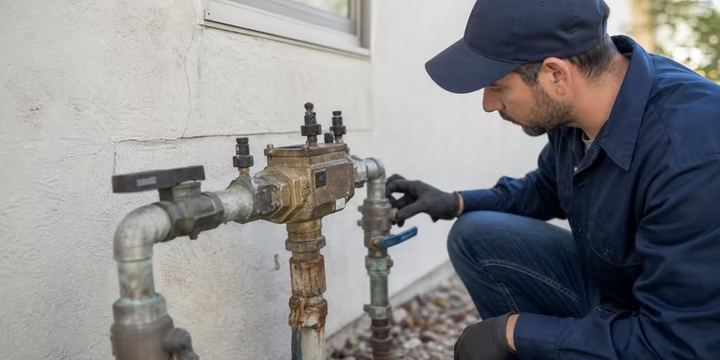
A backflow preventer is a mechanical valve assembly installed on your water line to stop contaminated water from flowing backward into the clean water supply. Without one, a sudden pressure drop (from a water main break, heavy fire hydrant use, or even someone opening multiple taps at once) could pull irrigation water, chemicals, or sewage back into the pipes your family drinks from.
Texas law requires backflow prevention on irrigation systems connected to a municipal water supply. The Texas Commission on Environmental Quality (TCEQ) mandates that only licensed Backflow Prevention Assembly Testers (BPAT) can test and repair these devices. This isn’t optional. It’s a public health regulation.
If your system is connected to Lubbock’s water supply, you’re required to have a functioning, tested backflow preventer. Knowing how to tell if a backflow device needs repair is the first step toward staying compliant, and more importantly, keeping your water safe.
→ Already noticing a leak or drip from your backflow assembly? Read our guide on why backflow devices leak for detailed causes and fixes.
Types of Backflow Devices and Why the Type Matters
Not all backflow preventers fail the same way. Symptoms differ depending on which type you have, so identifying your device is the starting point of any diagnosis.
Atmospheric Vacuum Breaker (AVB)
The simplest and cheapest option. It uses normal water pressure to hold up a small poppet valve, which drops open to let air in when pressure falls, preventing back-siphonage. AVBs are typically installed on individual irrigation zones, not as whole-system protection. They have few moving parts, which means fewer things break, but they offer the lowest protection level.
Pressure Vacuum Breaker (PVB)
The most common type on residential irrigation systems in Lubbock. PVBs must be installed at least 12 inches above the highest downstream point in the system. They protect against back-siphonage but not backpressure. When a PVB fails, you’ll often notice dripping from the top vent or a drop in household water pressure.
For a deeper look at how these above-ground assemblies work and where they’re installed, see our backflow preventer installation guide.
Double Check Valve Assembly (DCVA)
Typically used in commercial settings or medium-hazard residential applications. A DCVA contains two independently operating check valves. The critical thing to understand about this device: there is no external indicator when an internal valve fails. You won’t see dripping or hear noise. The only way to detect failure is through a formal test by a licensed tester. This makes annual or triennial testing absolutely essential.
Reduced Pressure Zone Assembly (RPZ)
The highest level of protection. RPZs include two check valves plus a relief valve between them that opens to dump water if either check valve fails. This design means RPZs are used for high-hazard applications (chemical injection, commercial food service connections, etc.).
RPZ assemblies typically need major internal components rebuilt every five to seven years. One important distinction: a small amount of water discharging from the RPZ relief valve is actually normal. It means the device is working as designed, releasing pressure to prevent contamination. Practitioners on plumbing forums frequently note that homeowners mistake this normal discharge for a “leak” and call for unnecessary repairs. Persistent, heavy discharge or pooling water is a different story entirely.
10 Warning Signs Your Backflow Device Needs Repair
This is the core of learning how to tell if a backflow device needs repair. Each symptom below includes what you’ll see, what’s happening mechanically, and how urgently you should respond.
1. Visible Leaks or Dripping Around the Device
What it looks like: Water pooling at the base of the assembly, dripping from pipe connections, or a steady stream from the body of the device.
What it means mechanically: Rubber seals, gaskets, or O-rings inside the assembly have worn out, allowing water to escape through gaps. In some cases, the housing itself has cracked (common after freeze events). If the leak is coming from an RPZ relief valve, check whether it’s a small, intermittent discharge (possibly normal) or a constant flow (definitely a problem).
Urgency level: Moderate to high. A small drip can become a major leak quickly, and any leak wastes water and can indicate the device isn’t sealing properly against backflow.
2. Water Pressure Drop or Fluctuation
What it looks like: Sprinkler heads aren’t throwing water as far as they used to, indoor faucets seem weak, or pressure fluctuates noticeably when the irrigation system runs.
What it means mechanically: Check valves inside the assembly may be stuck, clogged with sediment, or corroded. When a valve can’t open fully, it restricts flow and creates a pressure bottleneck. Sometimes the debris is cleanable, but this often points to internal corrosion that needs professional attention.
Urgency level: Moderate. Pressure changes affect your entire irrigation system’s performance and can signal problems beyond just the backflow device. Our water pressure troubleshooting guide covers how to diagnose whether the issue starts at the backflow assembly or elsewhere.
3. Discolored, Cloudy, or Rust-Tinted Water
What it looks like: Water coming from taps or sprinkler heads appears brown, yellow, cloudy, or has visible particles.
What it means mechanically: This is one of the most serious signs. Discolored water downstream of the backflow preventer can mean the device is no longer preventing reverse flow effectively. Contaminated water from irrigation lines (which may contain soil, fertilizer, or pesticide residue) could be mixing into your potable supply. Backflow contamination events have caused real illness outbreaks in communities across the country.
Urgency level: High. Stop using water for drinking or cooking and contact a licensed tester immediately.
4. Foul Smell or Strange Taste
What it looks like: Water smells sulfurous, metallic, or “off.” It may taste earthy or chemical.
What it means mechanically: Similar to discoloration, this suggests contaminated water is entering the potable supply through a failed backflow device. The smell could come from stagnant water in irrigation lines, chemical residue, or biological contamination.
Urgency level: High. Same response as discolored water. Treat this as an immediate health concern.
5. Unusual Sounds (Hissing, Whistling, Banging)
What it looks like: You hear hissing, high-pitched whistling, or banging near the backflow assembly when the water is on or when zones cycle.
What it means mechanically: Springs inside the preventer help check valves open and close at the right times. When springs weaken, snap, or corrode, valves can get stuck partially open or shut. This creates turbulent water flow that produces noise. A valve stuck in the wrong position can allow backflow or cause water hammer (the banging sound).
Urgency level: Moderate. The device may still be partially functional, but it’s mechanically compromised.
6. Slow Drainage Throughout the Property
What it looks like: Showers, sinks, and outdoor drains seem sluggish. Water takes longer to clear.
What it means mechanically: A malfunctioning backflow preventer can create a partial blockage in the water supply line, affecting drainage throughout connected plumbing. It could also indicate that backflow has already occurred and debris is clogging downstream lines.
Urgency level: Low to moderate. This symptom has many possible causes, but it’s worth checking the backflow assembly if other plumbing explanations have been ruled out.
7. Visible Rust, Corrosion, or Physical Damage
What it looks like: Rust stains, green patina, pitting, cracks, or heavy discoloration on the exterior housing. Fittings that look misaligned or warped.
What it means mechanically: If the outside looks bad, the inside is almost certainly worse. Corrosion on the body compromises structural integrity, and once a housing cracks, repair is rarely a safe or cost-effective option. In West Texas, the combination of hard water minerals and sun exposure accelerates exterior degradation.
Urgency level: High if cracks are present. Moderate if it’s surface corrosion only.
8. Unexplained Water Bill Increase
What it looks like: Your water bill spikes without any obvious change in usage.
What it means mechanically: A leaking backflow preventer, even one with a slow internal leak you can’t see externally, wastes water continuously. Over a billing cycle, this adds up. If you’ve ruled out other sprinkler system leaks, the backflow assembly is worth investigating.
Urgency level: Moderate. The financial impact compounds monthly, and the underlying issue will only worsen.
9. Failed Annual or Triennial Test
What it looks like: A licensed BPAT tester runs a differential pressure test and the device doesn’t hold within acceptable parameters.
What it means mechanically: Check valves aren’t sealing completely, the relief valve is dumping at incorrect pressure differentials, or internal components have degraded beyond functional tolerances. A test failure is the most definitive answer to how to tell if a backflow device needs repair, because it removes all guesswork.
Urgency level: High. The City of Lubbock requires repair or replacement and a successful retest before the device is considered compliant.
10. Frequent Relief Valve Cycling (RPZ-Specific)
What it looks like: The relief valve on an RPZ assembly opens and closes repeatedly in short intervals, with water spurting intermittently from the discharge port.
What it means mechanically: One or both check valves are leaking, causing pressure fluctuations in the zone between them. The relief valve is doing its job by dumping water to prevent contamination, but the underlying check valve failure needs to be addressed.
Urgency level: Moderate to high. The device is still protecting your water supply (that’s why the relief valve is cycling), but the root cause needs repair before it worsens.
Common Causes of Backflow Preventer Failure
Understanding what causes these problems helps you anticipate them. Here are the most common failure modes, with particular attention to factors that affect West Texas properties.
Worn Seals, O-Rings, and Gaskets
Every backflow preventer contains rubber or elastomer components that create watertight seals. Over time, constant water pressure, temperature swings, and chemical exposure cause these materials to harden, crack, and lose elasticity. This is the single most common cause of both leaks and test failures. Expect to replace internal rubber components every five to ten years.
Mineral and Scale Buildup (The West Texas Factor)
This is where Lubbock and West Texas properties face an accelerated timeline compared to the national average. West Texas water is notoriously hard, containing elevated levels of calcium and magnesium. These minerals form scale, a hard, chalky buildup that clings to internal surfaces and narrows water pathways.
Inside a backflow preventer, scale interferes with the movement of check valves and springs. It prevents components from seating properly, creating gaps where contaminated water can pass through. Backflow preventers older than ten years in hard water areas often show visible wear and corrosion that would take fifteen to twenty years to develop in areas with softer water.
Freeze Damage
Backflow preventers are especially vulnerable during Texas freezes because most assemblies sit above ground, fully exposed to the elements. When water inside the housing freezes, it expands and can crack the brass or bronze body, split pipe connections, or damage internal check valves. Practitioners in West Texas consistently report that freeze damage after winter storms is the primary driver of spring backflow failures. Many homeowners discover cracked housings only when they turn their irrigation system back on in March or April.
Winterizing your backflow preventer before the first freeze is the best prevention. Our backflow winterization guide walks through the process step by step.
Debris and Sediment Intrusion
Sand, dirt, small rocks, and pipe shavings can enter the water supply and lodge inside check valves. Even a tiny piece of debris can prevent a valve from closing completely. This is particularly common after water main repairs or construction work on the property’s plumbing.
Spring Fatigue and Check Valve Failure
The mechanical springs inside backflow assemblies lose tension over thousands of open-close cycles. A weakened spring can’t push the check valve closed with enough force to seal against backpressure or back-siphonage. This type of failure is gradual, often undetectable without a pressure test, and is the reason routine testing exists.
Improper Installation
A bad install can ruin a perfectly good backflow preventer. If the device is mounted at the wrong height (PVBs must be 12 inches above the highest downstream point), oriented incorrectly, or connected with incompatible fittings, it may never function properly. Poor installation also voids most manufacturer warranties.
Lack of Maintenance
The biggest theme across community discussions about backflow problems: most homeowners don’t think about their backflow preventer until something goes wrong or a city compliance letter arrives. That letter, not a visible symptom, is the most common trigger for discovering a repair is needed. Routine testing catches problems early, before they become emergencies.
Repair vs. Replace: A Decision Framework
Once you’ve confirmed your backflow device needs attention, the next question is whether to repair it or replace the entire assembly.
When Repair Makes Sense
Repair is typically the right call when the device is under seven years old, the housing is structurally sound, and the failure is limited to a specific internal component (a worn seal, a single check valve, or a fatigued spring). Simple repairs like replacing seals or springs typically cost between $150 and $400 for residential assemblies.
When Replacement Is the Better Investment
Many plumbing professionals use a straightforward guideline: if the repair cost exceeds 50% of the replacement cost, replace it. This is especially true for units past the midpoint of their expected lifespan.
Replace rather than repair when you see:
- Cracked or heavily corroded housing
- Repeated test failures after previous repairs
- The device is over 15 years old
- Replacement parts are hard to find (common with discontinued models)
Full replacements typically run $800 to $2,500 depending on device type and pipe size. For smaller residential assemblies (3/4-inch or 1-inch devices), replacement is often cheaper than repair because the labor to disassemble, rebuild, and retest can exceed the cost of simply swapping in a new unit.
→ Dealing with a leaking backflow preventer on your sprinkler system? Our guide on sprinkler backflow leaks covers fixes specific to irrigation systems.
Lifespan Expectations
Sources vary on backflow preventer lifespan. Some manufacturers claim 20 to 25 years. In practice, internal rubber components wear out in 5 to 10 years, and the metal housing lasts 15 to 25 years under normal conditions. In West Texas, hard water and extreme temperature swings shorten both timelines. Plan on internal rebuilds every 5 to 7 years for RPZ assemblies, and budget for potential full replacement after 12 to 15 years.
Lubbock and West Texas Compliance Requirements
This section matters because non-compliance carries serious consequences, and the rules are specific to your device type.
Testing Frequency by Device Type
The City of Lubbock requires testing on all backflow prevention assemblies connected to the municipal water supply. The schedule depends on what type of device you have:
Commercial plumbing backflow systems require annual inspection regardless of type.
Penalties for Non-Compliance
If you skip required testing, the City of Lubbock can shut off water service to your property. The city ordinance also allows fines of up to $2,000 per day for non-compliance. That’s not a one-time penalty. It accrues daily until the property is brought into compliance.
Who Can Legally Test and Repair Your Device
All testing and repair must be performed by a backflow tester licensed with the TCEQ and registered with the City of Lubbock as the water purveyor. This isn’t a job for a general plumber or a handy homeowner. The tester uses calibrated differential pressure gauges to verify that each check valve and relief valve operates within specification, then files a written certification with the city.
What Happens When a Device Fails Its Test
If your assembly fails, you must have it repaired or replaced by a licensed professional and then retested. The retest must pass before the city considers you compliant. There’s no grace period for a failed device. The clock on potential fines starts as soon as the test results are filed.
Why DIY Backflow Repair Is Risky
Can you physically replace a rubber disc or O-ring inside a backflow preventer? Probably. Should you? Almost certainly not.
The issue isn’t mechanical complexity. It’s verification. As experienced practitioners point out in online forums, unless you own a calibrated backflow testing kit (which costs several hundred dollars and requires training to use), you won’t know if you reassembled the device correctly. If any part is off by a fraction of an inch, you could cause more damage or create a false sense of security.
More importantly, most municipal water authorities, Lubbock included, require that a TCEQ-licensed tester verify the device after any repair. Even if you do the work yourself, you’ll still need to pay for a professional test. And if your DIY repair didn’t hold, you’ll pay for the professional repair on top of that.
What to Do Right Now if You See Warning Signs
If you’ve identified symptoms from the list above, here’s your action plan:
- Shut off the water supply if the device is leaking heavily or you suspect contamination (discolored water, odor). Locate the shutoff valve upstream of the backflow assembly and close it.
- Document what you see. Take photos or video of leaks, corrosion, discoloration, or damage. This helps the technician diagnose the problem faster and may be needed for city compliance records.
- Stop using water for drinking or cooking if you notice discoloration or odor, until a professional confirms the system is safe.
- Call a licensed backflow tester. Not a general handyman, not a plumber without BPAT certification. You need someone who can test, repair, and certify the device in a single visit.
- Schedule a full system inspection. Backflow problems often coincide with broader irrigation issues. A complete sprinkler system checkup can catch related problems before they escalate.
→ If you’re in Lubbock or the surrounding West Texas area and need a backflow test, repair, or replacement, M&M Sprinklers has licensed BPAT testers who can diagnose, fix, and certify your device in one trip.
Frequently Asked Questions
How often should a backflow preventer be tested in Lubbock?
RPZ assemblies must be tested every year. PVBs, DCVAs, and SVBs require testing every three years for residential irrigation. Commercial backflow systems require annual testing regardless of type. The City of Lubbock enforces these schedules and can fine property owners up to $2,000 per day for non-compliance.
Can I tell if my backflow preventer has failed without a professional test?
Sometimes. Visible leaks, discolored water, pressure drops, and unusual sounds are all indicators. But certain failures, particularly with Double Check Valve Assemblies, produce no external symptoms at all. The only way to confirm whether the device is actually preventing backflow is a differential pressure test performed by a licensed tester.
Is water dripping from my RPZ backflow preventer always a problem?
No. A small, intermittent discharge from the relief valve on an RPZ assembly is normal. It means the device is releasing pressure as designed. What’s not normal is persistent dripping, a steady stream, or pooling water around the base. If the discharge is constant or heavy, the internal check valves likely need repair.
How much does backflow preventer repair typically cost?
Minor repairs like replacing seals or springs usually cost $150 to $400 for residential systems. More complex problems can exceed $700. Full replacement ranges from $800 to $2,500 depending on the device type and pipe size. A useful rule of thumb: if repair costs exceed 50% of replacement cost, especially on a unit over 10 years old, replacement is the smarter investment.
Does West Texas hard water affect my backflow preventer?
Yes, significantly. Hard water contains high concentrations of calcium and magnesium that form scale inside the device. This buildup interferes with check valve movement and prevents proper sealing. Backflow preventers in hard water areas like Lubbock often show failure symptoms years earlier than identical devices in softer water regions. More frequent testing and proactive maintenance are essential here.
Can I repair my own backflow preventer to save money?
Technically you can replace some internal parts, but it’s not recommended. Without a calibrated testing kit, you can’t verify that the repair actually worked. Most water authorities, including Lubbock, require a licensed TCEQ BPAT tester to certify the device after any repair. Attempting DIY work and then failing the professional test means paying for both your parts and the professional’s labor.
What happens if my backflow device fails its city test?
The property owner must have the device repaired or replaced by a licensed professional, then retested. You cannot simply skip the retest. The City of Lubbock treats a failed test as non-compliant until a passing retest is filed. During that window, you’re exposed to potential fines and water shutoff.
How do I know if I need a backflow preventer in the first place?
If your irrigation system connects to the municipal water supply in Lubbock or anywhere in Texas, you’re required to have one. The city specifies which device type based on the hazard level of your connection. If you’re unsure whether your property has a backflow preventer or what type it is, a spring startup inspection will identify the device and its condition.