
TL;DR
Replacing a solenoid in a sprinkler valve is one of the simplest irrigation repairs: unscrew the old coil, screw in a matching replacement, and reconnect two wires with waterproof connectors. The hard part is confirming the solenoid is actually the failed component. Many “bad solenoid” symptoms turn out to be corroded wire splices, a broken common wire, a clogged port, or a damaged diaphragm. Test before you replace, match the solenoid to your exact valve model and controller type, and always shut off water and power before starting.
Replace Solenoid in Sprinkler Valve: What It Means, When to Do It, and When Not To
A sprinkler zone that refuses to turn on from the controller is one of the most common irrigation complaints. The solenoid is usually the first suspect, and for good reason: it is the electrical component most exposed to moisture, dirt, and wire corrosion underground. But replacing the solenoid blindly wastes time about half the time, because the actual failure is often somewhere else in the system.
The smarter approach is to diagnose first and swap parts second. This guide explains what it actually means to replace a solenoid in a sprinkler valve, how to confirm the solenoid is the real culprit, and how to do the replacement correctly when the evidence points there.
See what affects sprinkler repair costs in Lubbock
What a Sprinkler Valve Solenoid Does
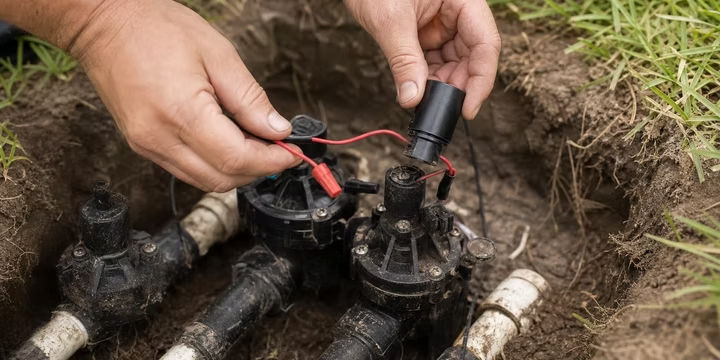
The solenoid is the small black or dark cylinder sitting on top of an irrigation valve, with two wires coming out of it. It is not a switch for water. It is an electrical trigger for a hydraulic process.
Here is how the sequence works. Your irrigation controller sends a low-voltage signal (typically 24 VAC) through field wiring to the solenoid. The energized solenoid creates a magnetic field that lifts a small plunger inside the coil. That plunger uncovers a tiny port in the valve body, which relieves water pressure above the diaphragm. With pressure equalized, incoming water pressure pushes the diaphragm open and water flows to the sprinkler zone. When the controller stops sending voltage, the plunger drops, the port closes, pressure rebuilds above the diaphragm, and the valve shuts. Rain Bird’s valve troubleshooting guide describes this mechanism in detail.
A useful analogy: the controller is the light switch, the solenoid is the relay, and the diaphragm is the water gate. The solenoid does not push water. It controls a small pilot port that lets water pressure do the heavy lifting. For a deeper explanation of how solenoids fit into the broader system, read our guide on what a sprinkler solenoid is.
One common mistake in online guides is saying the solenoid “controls water pressure.” That is not quite right. The solenoid controls a small pilot port and plunger that changes the pressure balance above and below the diaphragm, which is what actually opens or closes the valve.
Signs the Solenoid May Need Replacement
Not every zone failure means you need to replace the sprinkler valve solenoid. The table below separates symptoms where the solenoid is a likely cause from symptoms where something else is usually responsible.
Practitioners on Reddit’s r/Irrigation forum regularly push back on the assumption that low flow means a bad solenoid. In one thread, commenters told a homeowner to check the flow-control knob and the exhaust port under the solenoid before spending money on a new part.
For a deeper look at each failure pattern, our article on signs of a bad sprinkler solenoid covers every scenario in detail.
Multiple Zones Dead at Once? Probably Not the Solenoids.
When two or more zones fail simultaneously, the instinct is to blame multiple solenoids. That is almost never the answer. Multiple zones failing together usually points to a common wire break, a controller malfunction, a tripped rain sensor, a bad transformer, or a master valve problem. A LinkedIn practitioner shared a spring startup story where four zones would not turn on because a chipmunk had nested in the valve box and chewed through solenoid control wires. The repair required wiring work, not four new solenoids.
Before You Replace It: Quick Diagnostic Checklist
Replacing a sprinkler valve solenoid takes five minutes. Diagnosing whether the solenoid is actually the problem takes longer but saves repeat trips to the hardware store. Run through these checks before buying a replacement part.
- Is the irrigation shutoff valve open? A partially closed shutoff mimics a dead zone.
- Is the controller programmed, powered, and running? Verify the station is assigned to an active program with a nonzero runtime.
- Is a rain sensor, freeze sensor, or master valve blocking the signal? Bypass or check sensor status.
- Does the valve open manually? Turn the solenoid a quarter-turn counterclockwise (or open the bleed screw, depending on the model). If the zone runs manually, the water side is functional and the problem is electrical: controller output, field wiring, or solenoid.
- Is voltage reaching the valve? Use a multimeter to check for 24 to 28 VAC at the solenoid leads while the station runs. If voltage is present at the controller but absent at the valve, the issue is field wiring, not the solenoid.
- What is the solenoid resistance? Disconnect the solenoid wires and measure ohms across the two leads. Rain Bird uses a 20 to 60 ohm rule of thumb for irrigation solenoid circuits. Below 20 ohms suggests a short; above 60 ohms suggests an open coil. You can walk through this step by step with our multimeter testing guide.
- Are wire splices clean and waterproof? In a Reddit r/Irrigation thread, a user with intermittent zone operation assumed the solenoid was failing. A responder recommended rewiring the corroded splice first, because bad wire connections cause exactly the same symptoms as a dead solenoid.
- Is the solenoid port clean? Grit, sand, or insects in the small port under the solenoid can prevent the plunger from seating or unseating.
- Is the diaphragm intact? A torn or clogged diaphragm can prevent the valve from opening or closing regardless of solenoid condition.
- Can you swap a known-good solenoid from another valve to test? Rain Bird recommends borrowing a same-model solenoid from an adjacent valve as a quick diagnostic. If the borrowed solenoid activates the problem zone, the original solenoid is confirmed bad.
The golden rule: if the zone does not open manually, the problem is usually not the solenoid. Focus on water supply, flow control, diaphragm, clogged ports, or the valve body itself.
For a full diagnostic workflow, see our guide on diagnosing valve and solenoid problems.
How to Replace a Sprinkler Valve Solenoid
Once you have confirmed the solenoid is the failed component, the actual sprinkler solenoid replacement is straightforward. You will need a matching replacement solenoid, new waterproof direct-bury wire connectors, wire cutters and strippers, a multimeter, and a rag to keep dirt out of the valve.
Step 1: Turn off water and controller power. Shut the irrigation supply valve and unplug or power down the controller. Do not work on solenoid wires with the controller energized.
Step 2: Open the valve box and locate the solenoid. It is the cylinder with two wires on top of the valve body for the affected zone.
Step 3: Photograph your wiring. Before cutting anything, take a phone photo showing which wire connects to common and which connects to the station wire. This saves confusion during reconnection.
Step 4: Disconnect the old wires. Cut or remove the existing waterproof connectors. Do not reuse old grease-filled wire nuts. Practitioners on Reddit consistently advise that reused waterproof connectors lose their seal because the dielectric grease is depleted.
Step 5: Unscrew the old solenoid. Turn it counterclockwise. Once removed, immediately cover the open port with a rag to keep dirt out. DripWorks warns that debris falling into the port can cause the new solenoid to malfunction immediately.
Step 6: Inspect the port and O-ring. Check the solenoid seat for grit, sand, or insect debris. Inspect the O-ring on the new solenoid for damage. Rain Bird’s maintenance procedure specifically calls for cleaning this port and checking the O-ring before installing a replacement.
Step 7: Install the new solenoid. Screw it in clockwise until snug. Hand-tight is enough. Overtightening can crack the valve body or damage the solenoid seat.
Step 8: Reconnect wires with new waterproof connectors. On standard 24 VAC systems, connect one solenoid wire to the common wire and the other to the zone/station wire. Most AC solenoids are not polarity-sensitive, so either solenoid wire can go to either field wire.
Step 9: Restore water slowly and test. Open the supply valve, check for leaks around the solenoid and valve, then manually run the station from the controller. Watch for proper sprinkler operation on the zone.
Step 10: If it still fails, keep diagnosing. A new solenoid that does not solve the problem means the issue is elsewhere: wiring, controller output, diaphragm, clogged port, or valve body.
AC vs. DC Solenoids: A Critical Distinction
Standard wall-powered irrigation controllers use AC solenoids. Battery-operated controllers typically require DC-latching solenoids, which operate on a quick DC pulse rather than continuous 24 VAC power. Hunter’s support documentation explains that DC-latching solenoids have specific wiring requirements (one black common wire, one red station wire) and are not interchangeable with standard AC solenoids.
Do not replace a DC-latching solenoid with a 24 VAC solenoid, or the other way around, unless the controller and valve manufacturer confirm compatibility. Installing the wrong type can prevent the valve from operating or damage the controller.
What If the New Solenoid Does Not Fix It?
This happens more often than most how-to guides admit. A contributor on the SprinklerTalk forum described a valve where the solenoid tested good on a multimeter and the diaphragm looked fine visually, but the valve still refused to open. The problem turned out to be a clogged internal port that prevented pressure from bleeding off above the diaphragm. Voltage, ohms, and a click only prove the electrical side is plausible. The hydraulic side can still fail independently.
The valve does not open
Check voltage at the solenoid leads while the station runs. If voltage is missing, trace back to the controller and field wiring. If voltage is present, clean the port under the solenoid, inspect the diaphragm for tears or hardening, and verify the flow-control stem is fully open. Rain Bird’s troubleshooting guide lists inadequate pressure, broken pipes, blockages, too many heads, plugged ports, and diaphragm damage as possible causes.
The valve does not close
Confirm the solenoid is tightened clockwise to the closed position (not left in the manual-open position). Close the bleed screw. Check whether the controller is sending constant voltage to the station. Inspect the plunger, diaphragm seat, and valve body for debris.
If your zone keeps running and you need to stop water flow immediately, our guide on what to do when sprinklers keep running explains emergency shutoff steps.
It leaks around the solenoid
A leak at the solenoid does not always mean you need a new valve. In a Reddit thread, an irrigation professional mentioned carrying spare solenoid O-rings because this is such a common and easy fix. Check the O-ring, clean the seating surface, and confirm the solenoid is not cross-threaded. If the bonnet itself is cracked, that is a different repair.
Compare other common sprinkler problems
Solenoid-Only Replacement vs. Valve Rebuild vs. Full Valve Replacement
Not every valve problem calls for the same level of repair. Knowing which tier you are dealing with saves money and frustration.
Solenoid-only replacement
Appropriate when the zone opens manually, wiring and splices are clean, the solenoid fails electrically or mechanically, and the valve body, bonnet, and diaphragm are otherwise functional. This is the cheapest and fastest fix, often under $20 in parts.
Bonnet and diaphragm rebuild
Appropriate when the solenoid tests fine but the valve still misbehaves. A torn diaphragm, clogged bleed ports, damaged spring, or hardened seal can all prevent proper operation. Many valve brands sell rebuild kits with a new diaphragm, spring, and bonnet gasket. Alternatively, buying a matching valve and using its top assembly as a donor is a common field practice discussed in irrigation forums.
Full valve cut-out and replacement
Appropriate when the valve body is cracked, the seat is pitted, parts are discontinued, or the manifold is old and brittle. Cutting out a valve means working with PVC pipe, primers, and cement, which is a significantly bigger job than a solenoid swap. DripWorks notes that matching the same brand and model makes top-part swapping much easier, but when the model is no longer manufactured, full replacement may be the only practical option.
Part Compatibility: Before You Buy a Solenoid
Solenoids are not universal. Thread size, plunger geometry, O-ring design, and AC versus DC operation all vary between brands and models. A solenoid that screws in does not necessarily seal or function correctly.
Before purchasing a replacement:
- Note the valve brand and model number (stamped on the valve body or bonnet).
- Check whether your controller is AC-powered or battery-operated.
- Bring the old solenoid to an irrigation supply house for a direct comparison. Reddit users with older or discontinued systems consistently recommend this approach over guessing at compatibility online.
- If you cannot identify the valve model and a matching solenoid is unavailable, replacing the entire valve top or cutting in a new valve may be more practical.
Cost to Replace a Sprinkler Solenoid
The solenoid itself is one of the cheapest parts in an irrigation system. A standard replacement solenoid from Rain Bird, Hunter, or Orbit typically costs under $20 at retail. Waterproof wire connectors add a few dollars. If you already own wire strippers and a multimeter, the total DIY material cost is minimal.
Professional sprinkler solenoid replacement costs more, but the premium covers diagnosis, access, testing, wiring cleanup, and liability. HomeAdvisor’s 2025 data indicates that irrigation professionals commonly charge $50 to $100 per hour, and replacing a broken sprinkler valve runs $75 to $215 depending on the part and local labor rates.
Factors that push professional costs higher include buried or flooded valve boxes, corroded wiring that needs repair, old or discontinued valve models, manifold leaks requiring PVC work, multiple failing zones, and after-hours emergency calls. Reddit cost discussions consistently show that homeowners are sensitive to the gap between a $15 part and a $150 service call. The reality is that the part is the cheap piece. Diagnosis, experience, and proper waterproofing are what drive the bill.
Lubbock and West Texas Considerations
A stuck-open sprinkler valve is more than an annoyance in Lubbock. It wastes water quickly and can create runoff, both of which matter under the city’s irrigation rules.
Lubbock’s watering restrictions (April 1 through September 30) limit irrigation to two assigned days per week, prohibit watering on Sundays, and require irrigation without runoff. Watering is allowed between midnight and 10:00 a.m. or 6:00 p.m. and midnight. A valve that will not close can run outside your allowed schedule and generate runoff that violates city ordinance. If a zone will not shut off, shut off the irrigation supply valve first, then troubleshoot. Do not wait for the controller to fix it.
The EPA estimates that a poorly maintained automatic irrigation system can waste up to 25,000 gallons of water per year. In a West Texas climate where outdoor water use can account for 60% of household consumption, a single malfunctioning valve makes a real difference on your water bill.
If your repair involves the backflow prevention assembly (the device between city water and your irrigation system), use a licensed professional. Lubbock requires backflow assemblies to be tested periodically by a licensed tester, and property owners are responsible for compliance. Our article on how backflow preventer repairs work explains what that process involves.
See how flow monitoring catches hidden irrigation leaks
A Note on Texas Licensing
Homeowners in Texas can generally handle a like-for-like solenoid replacement on their own property. Texas law exempts irrigation work performed by a property owner on premises they own and occupy as their home. However, if you are hiring someone to repair, service, or alter an irrigation system, use a properly licensed irrigation professional.
Preventing Future Solenoid and Valve Problems
Solenoids fail for predictable reasons: water intrusion into wire connections, corrosion from poor splices, sediment buildup in ports, and simple age. A few habits extend solenoid and valve life considerably.
- Use quality waterproof direct-bury connectors on every splice. Never reuse old grease caps.
- Keep valve boxes clear of dirt, debris, and standing water.
- Run each zone manually at least once per season to catch problems early.
- Clean solenoid ports and inspect diaphragms during annual system checkups.
- Check for rodent damage in valve boxes after winter, especially if multiple zones fail in spring.
Routine maintenance catches solenoid and valve problems before they waste water or kill a section of your lawn. M&M Sprinklers serves Lubbock and the surrounding West Texas area with system checkups where technicians run every station, inspect for leaks and coverage issues, and recommend efficiency improvements.
Learn why regular sprinkler maintenance matters
Frequently Asked Questions
Can I replace just the solenoid on a sprinkler valve?
Yes. If the valve body, diaphragm, and bonnet are in good condition and you can find the correct replacement solenoid, a solenoid-only swap is a valid repair. It is one of the simplest fixes in irrigation and usually takes less than 15 minutes.
How do I know if my sprinkler solenoid is bad?
The strongest diagnostic clue is a zone that works manually at the valve but fails to activate from the controller, combined with good voltage at the valve and a solenoid that does not click, tests open or shorted on a multimeter, or activates the zone only when replaced with a known-good unit from another valve.
What ohm reading should a sprinkler solenoid have?
It depends on the brand and type. Hunter lists 23 to 28 ohms for its standard AC solenoid and about 4.8 ohms for its DC-latching solenoid. Rain Bird uses a broader 20 to 60 ohm range as a general guideline. Always compare to the manufacturer spec and, when possible, to a new solenoid of the same model.
Are all sprinkler solenoids interchangeable?
No. Thread size, plunger geometry, O-ring design, and AC versus DC operation differ between brands and even between models within the same brand. Always match the replacement solenoid to your specific valve model and controller type.
Can a bad solenoid make sprinklers stay on?
It can, but a valve that will not shut off has several other common causes: the solenoid left in the manual-open position, an open bleed screw, debris preventing the diaphragm from seating, a stuck plunger, or the controller sending constant voltage to the station.
Do sprinkler solenoid wires have polarity?
Standard 24 VAC solenoids are not polarity-sensitive, so either wire can connect to the common or the station lead. DC-latching solenoids are polarity-sensitive and must be wired correctly (typically black to common, red to station on Hunter systems).
Should I shut off the water before replacing a sprinkler solenoid?
Yes. Shut off the irrigation water supply and power down the controller before removing wires or unscrewing the solenoid. Working with water pressure on creates a mess and risks pushing debris into the open port.
When should I call a professional instead of replacing the solenoid myself?
Call a pro when multiple zones fail at once, you cannot identify the valve brand or model, the valve box is buried or flooded, the repair involves backflow devices, wiring damage is extensive, or you are not comfortable working with low-voltage electrical connections. M&M Sprinklers handles valve, solenoid, controller, and wiring repairs across Lubbock and West Texas, with licensed irrigators and in-house backflow testing capability.