
TL;DR
Low water pressure in a sprinkler zone means heads cannot pop up, rotate, or reach their designed coverage area. To troubleshoot low water pressure in sprinkler zones, first determine whether one zone or every zone is weak, then compare static pressure (system off) to dynamic pressure (zone running) while watching your water meter. One weak zone usually points to a clogged nozzle, valve problem, lateral leak, or overloaded zone. If every zone is weak, the problem is upstream: backflow preventer, isolation valve, pressure reducing valve, or municipal supply.
When a sprinkler zone runs weak, you get heads that barely pop up, rotors that stop turning, throw distances that shrink by half, and dry patches that seem to appear overnight. The temptation is to start replacing heads or shopping for a booster pump. That is almost always the wrong first move.
Troubleshooting low water pressure in sprinkler zones is a diagnostic process, not a guessing game. You need to figure out whether the problem is pressure, flow, a restriction, a leak, or a design overload, then narrow the cause before spending any money. This glossary walks through the terms, tests, and decision points that separate a quick nozzle cleaning from a buried leak or a valve rebuild.
If you already notice signs your system needs repair, this guide will help you understand what a technician is likely to find and fix.
Quick Answer: What Causes Low Pressure in One Sprinkler Zone?
If only one zone is running weak while the rest operate normally, the cause is almost certainly local to that zone. Here are the most common culprits, roughly in order of how often they show up:
- Clogged nozzles or filter screens
- Broken head, cracked riser, or missing nozzle
- Underground lateral line leak
- Zone valve not opening fully (debris, bad diaphragm, flow control closed)
- Tree root intrusion or crushed pipe
- Too many heads or too much nozzle flow on the zone
- Old pop-up seals leaking during startup
- Controller accidentally running two zones at once
- Recent nozzle or head changes that increased flow demand
Practitioners on Reddit’s r/Irrigation forum consistently treat a single weak zone as a local problem unless there is clear evidence that the main supply or backflow device is affecting other zones too.
Step 1: Decide Whether It Is One Zone or All Zones
This is the single most important diagnostic split when you troubleshoot low water pressure in sprinkler zones. It changes everything about where you look.
If Only One Zone Is Weak
The problem is downstream of the valve manifold. Start with that zone’s valve, lateral piping, heads, nozzles, and filter screens. Do not waste time checking municipal supply or your house pressure reducing valve. Those would affect every zone.
Common single-zone causes include debris in the valve diaphragm, a partially closed flow control on the valve, a cracked lateral fitting, root-crushed pipe, worn pop-up seals, or an overloaded zone with too many heads pulling too much water.
If All Zones Are Weak
Now the problem is upstream. Check these in order:
- Main irrigation shutoff valve (is it fully open?)
- Backflow preventer handles (both should be fully open)
- Master valve, if your system has one
- Pressure reducing valve (PRV)
- Mainline
- Municipal water supply
Oklahoma State University Extension recommends verifying that the isolation valve and backflow device valves are completely open when home pressure seems acceptable but irrigation pressure is low.
If Pressure Changes by Time of Day
Municipal water pressure fluctuates with neighborhood demand. In Lubbock, where watering is restricted to two assigned days per week, many homes on the same street run their systems simultaneously. That concentrated demand can temporarily lower supply pressure. Test at different times to see if the problem is consistent or intermittent.
Step 2: Key Pressure Terms You Need to Know
Understanding a few terms makes the entire troubleshooting process faster. Without them, you will misread your own test results.
Static Pressure
The pressure in the system when water is not moving. You measure it at a hose bib with everything turned off. It is easy to check, but it tells you only half the story. A system can show 70 PSI static and still fail when a zone opens.
Dynamic Pressure (Operating Pressure)
The pressure while water is actively moving through the system, such as when a sprinkler zone is running. This is what actually matters at the head. Oklahoma State University Extension notes that irrigation product specifications are based on dynamic operating pressures, not the static reading from your hose bib.
Flow Rate (GPM)
The volume of water moving through the system, measured in gallons per minute. A weak zone can result from low flow, low pressure, or both. Checking meter flow while the weak zone runs helps separate leaks (high unexpected flow) from restrictions (low flow).
Pressure Loss (Friction Loss)
Water loses pressure as it passes through meters, backflow devices, valves, mainlines, laterals, and fittings. OSU’s “5-4-3-2-1” rule of thumb estimates about 15 PSI total loss from the utility supply to the sprinkler head. If your utility delivers 60 PSI, the head might see roughly 45 PSI under normal conditions.
This explains why “my house has good pressure” does not prove the sprinkler zone has good pressure. For a deeper look at solutions once you identify the problem, see our guide on increasing sprinkler water pressure.
What PSI Should Your Sprinkler Zones Have?
“Low pressure” does not mean the same thing for every head type. What matters is whether there is enough dynamic pressure at the head for that specific device to work.
Benchmarks from OSU Extension. Hunter confirms that MP Rotator nozzles perform optimally at 40 PSI and can rotate slowly or stop if pressure drops below that threshold.
The right way to define low pressure: not enough dynamic pressure at the head for that specific device. Not simply “below 40 PSI.”
Step 3: How to Test Pressure and Flow Before You Dig
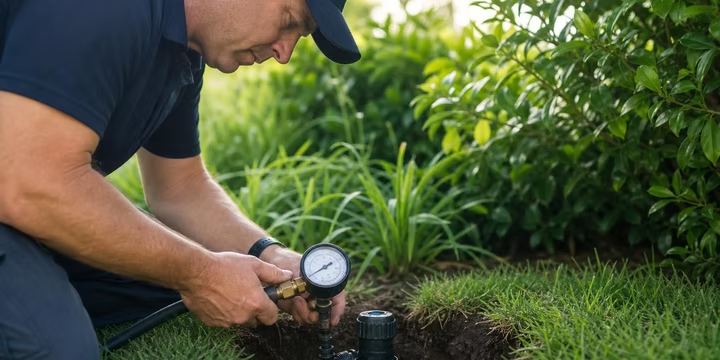
You need three numbers to troubleshoot low water pressure in sprinkler zones effectively: static pressure, dynamic pressure, and water meter flow. A hose-bib pressure gauge costs $10 to $20 at most hardware stores.
Tools You Need
- Hose-bib pressure gauge
- Notepad or phone for recording numbers
- Access to your water meter
- Timer
Test Sequence
- Turn off all water use inside and outside the house.
- Attach the pressure gauge to an outdoor hose bib.
- Open the bib and record the reading. This is your static pressure.
- Leave the gauge attached. Run the weak zone from your controller.
- Record the pressure again while the zone runs. This is your dynamic pressure.
- Walk to the water meter and note the flow while the zone is still running.
- Shut off the zone. Repeat the test on a zone that works well.
- Compare the two sets of numbers.
OSU recommends measuring at the same time of day the irrigation system normally runs, because municipal pressure can vary throughout the day.
This comparison is where the real diagnosis happens. If the weak zone drops pressure much harder than the good zone, or if the meter shows much higher flow, you are getting closer to the cause.
Why Static Pressure Alone Fools People
Practitioners on Reddit’s r/Irrigation forum report that static pressure is one of the most common sources of misdiagnosis. In one diagnostic thread, a homeowner measured 80 PSI at a spigot, but heads still performed poorly. The top reply explained that static pressure can look perfectly healthy while the system fails under load. The recommended approach: measure static, then dynamic, then check meter flow. The combination of all three tells you whether water is escaping, being restricted, or simply not available.
A good static pressure reading does not rule out an irrigation pressure problem. Period.
Step 4: The Pressure and Flow Diagnostic Matrix
This matrix is the most useful tool for narrowing the cause of low water pressure in sprinkler zones. Most contractor websites list causes but never show you how to tell them apart. Comparing your pressure drop and flow reading does that work for you.
A LinkedIn practitioner in irrigation maintenance emphasizes comparing design flow to actual flow. If one lateral shows much lower pressure than similar laterals in the same system, that lateral likely has a leak or maintenance issue that field readings will confirm.
If your readings point to a hidden leak, stop guessing. A professional system check can isolate the cause before you dig up the wrong part of the yard.
Related:Detecting underground sprinkler leaks
Step 5: Match the Symptom to the Cause
Use this table to connect what you see in the yard to the most likely problem, then confirm with pressure and flow testing.
Glossary of Low-Pressure Causes and Fixes
Each entry below defines the term, explains what it looks like in the yard, and indicates whether it is a DIY fix or a professional job.
Clogged Nozzle
Dirt, sand, mineral scale, or grass clippings block the nozzle opening. One or two heads spray weakly while nearby heads work normally. Remove the nozzle, pull out the filter screen, rinse both, briefly flush the riser, and reinstall. Usually a DIY fix unless clogging repeats across multiple zones, which can point to a water quality or mainline debris issue.
For step-by-step instructions, see our guide on replacing a sprinkler nozzle.
Dirty Filter Screen
Many nozzles (especially MP Rotators and rotary nozzles) have small filter screens built into the nozzle body or spray body. A clogged filter restricts flow to that head without affecting the rest of the zone. Pull the nozzle, remove the screen, rinse it clean, and reinstall. Takes about two minutes per head.
Broken Sprinkler Head or Missing Nozzle
A cracked body or missing nozzle lets water pour out at ground level instead of spraying through the nozzle. The broken head acts like an open drain, pulling flow and pressure away from every other head in the zone. You will usually see water pooling around the damaged head. Replace with a matching model, paying attention to head type and nozzle size.
Cracked Riser
The riser connects the underground lateral to the head. A cracked riser leaks underground and may not be visible from the surface. If a head barely rises but you see wet soil around it, the riser is a strong suspect. DIY for most homeowners comfortable with basic plumbing.
Lateral Line Leak
A lateral line carries water from the zone valve to each head in that zone. A cracked pipe, broken fitting, or root-damaged section can cause a slow or fast leak underground. Signs include soggy areas, unusually green patches in one strip, or a water bill that creeps up month after month. According to the EPA, an in-ground irrigation leak just 1/32 inch in diameter can waste about 6,300 gallons per month. Locating a buried lateral leak usually requires a professional with leak detection equipment.
Zone Valve Not Opening Fully
The zone valve controls water to one sprinkler zone. If it does not open fully, the zone starves for flow. Common reasons: the flow control is partially closed, debris is caught in the valve body, the diaphragm is worn or stuck, or the solenoid is not energizing properly.
Check the flow control first (the screw or knob on top of the valve). If that is already fully open, the valve likely needs to be opened and inspected internally.
Related:Diagnosing valve and solenoid problems
Valve Diaphragm Debris
The diaphragm is an internal valve part that opens and closes with water pressure and the solenoid signal. A small piece of debris (gravel, root fragment, mineral deposit) can hold it partially open or prevent it from opening fully. In a YouTube walkthrough of irrigation valve repair, one practitioner demonstrates that debris holding a diaphragm open is a common cause of continuous low-volume leaking, and recommends flushing the line after any valve disassembly to prevent recurrence.
Solenoid Problem
The solenoid is the electrical component that opens the valve when the controller sends a signal. A weak or failing solenoid may only partially open the valve, resulting in reduced flow to the zone. However, the solenoid is only one part of the valve assembly. Check the diaphragm, debris, wiring, and controller before assuming the solenoid is the sole problem.
Backflow Preventer Restriction
A backflow preventer protects your drinking water from contamination, but it also sits directly in the flow path of your irrigation system. If its handle valves are not fully open (common after winterization or testing), the entire system will run weak. Partially closed handles are one of the most overlooked causes of low water pressure across all sprinkler zones.
You can visually check whether the handles are aligned with the pipe (open) or turned perpendicular (closed). Do not disassemble, test, or repair backflow internals yourself. In Texas, TCEQ requires a licensed assembly tester for backflow testing and repair.
In Lubbock, city-connected irrigation systems must have their backflow assembly tested on a regular cycle, and failure to comply can result in fines up to $2,000 per day. If you have a test coming up, here is how to prepare for a backflow inspection.
Partially Closed Isolation Valve
The irrigation isolation valve controls water to the entire sprinkler system. If it was bumped, partially closed during a repair, or never fully reopened after winterization, every zone will run weak. The fix is simple: open it all the way. Many homeowners do not know where this valve is or that it exists separately from the house main shutoff.
Pressure Reducing Valve (PRV) Problem
A PRV reduces incoming municipal pressure to a safe level for household plumbing. If it is failing, it can allow normal static pressure while failing to maintain adequate flow when a sprinkler zone places demand on the system. Practitioners on Reddit point to a failing PRV as a commonly missed cause when static pressure looks healthy but dynamic pressure drops hard with normal meter flow. PRV diagnosis and replacement is typically a plumber’s job.
Municipal Supply Pressure Drop
City water pressure is not constant. It drops during peak demand, during utility maintenance, and when many homes on the same supply line irrigate simultaneously. If your low-pressure problem only appears at certain times, try running the zone at an off-peak hour to compare.
Overloaded Zone
An overloaded zone has more heads (or higher-flow nozzles) than the available supply can support. Every head in the zone will run weak because there is not enough flow to go around. OSU Extension notes that this can be addressed by switching to lower-flow nozzles or decreasing the number of heads in the zone. Sometimes the only real fix is splitting the zone into two, which involves adding zones to the system.
Root Intrusion
Tree roots can grow into, around, or through lateral lines over years. They crush pipe, crack fittings, and create restrictions that get worse each season. The zone near a mature tree may lose pressure gradually. Look for unusually green or wet areas along the pipe path. Repair usually requires excavation and sometimes rerouting the line.
Pop-Up Seal Blow-By
This is one of the most underdiagnosed causes of low pressure in sprinkler zones. The pop-up seal (also called a wiper seal) keeps water from leaking around the riser when the head extends. As seals age, they let water escape around the stem instead of pushing it through the nozzle.
If the zone was already near its flow limit, that seal leakage can prevent the zone from building enough pressure to pop up the remaining heads. Several practitioners on Reddit describe this exact pattern: heads only work if you manually pull them up and hold them. One practical test is to cap or close heads one at a time. If the remaining heads improve as you shut off neighbors, the zone is over capacity and worn seals are likely contributing.
Nozzle Mismatch
Swapping a few nozzles with a different model can increase the flow demand on a zone already running near capacity. Reddit practitioners note that adjustable or VAN nozzles often demand more water than the fixed nozzles they replace. Mixing spray nozzles and MP Rotators on the same zone is another common mismatch, since they operate at different pressures and precipitation rates.
A LinkedIn post from a commercial irrigation practitioner identifies mixed spray and rotator nozzles, improper pressure ratings, and mismatched components as causes of uneven coverage, repeat service calls, and higher long-term costs. Always match nozzles by zone.
Controller Overlap
If the controller is programmed to run two zones at the same time (or with overlapping schedules from multiple programs), both zones will share the available flow and pressure. Check your programming to make sure zones run sequentially, not simultaneously.
Undersized Pipe
Older systems or systems with long lateral runs may have pipe that is too small to carry the needed flow without excessive pressure loss. This is a design issue, not a maintenance issue. The fix usually involves replacing pipe or splitting zones, which is a professional job.
Booster Pump
A booster pump increases pressure, but it should be treated as a last resort after leaks, restrictions, valve problems, and zone design have been ruled out. OSU lists booster pumps as one possible solution but also recommends fixing leaks and reducing nozzle demand first. Installing a pump without fixing the underlying cause often creates new problems.
What You Can Safely Fix Yourself
Before calling anyone, run through this checklist:
- Verify the controller is not running two zones at once.
- Determine whether the problem is one zone or all zones.
- Check the main irrigation shutoff valve position (fully open?).
- Visually confirm backflow preventer handles are open, without disassembling the device.
- Remove and clean nozzles and filter screens on weak heads.
- Replace obviously broken heads or nozzles with matching parts.
- Walk the weak zone while it runs and look for wet spots, bubbling, or unusually green grass.
- Run a good zone for comparison.
- Record static pressure, dynamic pressure, and meter flow before calling a pro. These numbers save the technician time and save you money.
Ask yourself: “What changed recently?” This is one of the most useful diagnostic questions. New heads? New nozzles? Added heads? Swapped fixed nozzles for adjustable ones? Recent backflow test? Winterization? Landscaping, fence posts, or digging? Tree removal or new planting? New water softener or filter? Controller reprogrammed? If the zone worked fine before and something changed, that change is usually connected to the problem.
Safety and compliance note: In Texas, do not test or repair backflow preventer internals unless you hold the required TCEQ license. Backflow assembly testing and repair is a licensed job, and Lubbock enforces this with potential water shutoff and fines.
When to Call a Sprinkler Repair Professional
Call a professional when:
- One zone stays weak after cleaning nozzles and checking the valve.
- Meter flow during the weak zone suggests a hidden leak.
- You see soggy soil, bubbling water, or unusually green patches with no explanation.
- A zone valve, diaphragm, solenoid, or manifold may be involved.
- Backflow internals may be restricting flow.
- Roots may be crushing or growing into a line.
- The zone has too many heads and needs to be redesigned or split.
- Pressure readings make no sense or change unpredictably.
- The same zone repeatedly clogs after cleaning.
- You are in Lubbock and have backflow compliance questions.
For Lubbock and West Texas properties, M&M Sprinklers can check zone pressure, inspect valves and heads, locate hidden leaks, review backflow status, and recommend repair or redesign when a zone is overloaded. M&M’s team includes licensed irrigators and BPAT-certified testers, plus certified arborists who can evaluate root-related irrigation problems alongside tree health. Their Technology Plan offers live flow monitoring with break and clog alerts, so pressure problems can be caught early rather than discovered weeks later through dead grass.
Lubbock and West Texas Considerations
Low water pressure in sprinkler zones can look different in West Texas than in other parts of the country. A few local factors are worth noting.
Watering Restrictions
Lubbock’s spring and summer irrigation restrictions (April 1 through September 30) limit landscape irrigation to two assigned watering days per week based on house address, with no Sunday irrigation. The City recommends cycle-and-soak watering (3 to 4 minutes repeated 4 to 5 times) to prevent runoff.
When troubleshooting low water pressure in sprinkler zones, you will need to run zones manually. Do this briefly, without runoff, and within local rules. Poor pressure can actually make runoff worse, because weak coverage tempts people to run zones longer than they should.
Backflow Compliance
City-connected irrigation systems in Lubbock require a backflow prevention assembly and testing every one to three years. Failure to test can result in water service shutoff and fines. This is not optional, and it intersects with pressure troubleshooting because a restricted or failing backflow device is a real cause of system-wide low pressure.
Wind
West Texas wind makes pressure problems more visible. OSU’s field demonstration showed that pressure outside recommended ranges combined with wind significantly reduces the water reaching the intended area. Both weak zones and over-pressurized zones produce visible dry spots in windy conditions. Getting heads into the correct operating pressure range matters more here than in calmer climates.
Dust and Mineral Buildup
West Texas dust, sand, and hard water accelerate nozzle and filter screen clogging. Seasonal cleaning is more important here than in regions with softer water. If you find yourself cleaning the same nozzles repeatedly, it may point to a mainline debris issue or a water quality problem worth investigating.
Prevention: Keep Low Pressure From Coming Back
Once you fix the immediate problem, these habits reduce the chance of it returning:
- Clean nozzles and filter screens at least once per season.
- Inspect visible heads after mowing, edging, freeze events, or landscaping work.
- Run each zone and compare head performance at the start of each watering season.
- Watch the water meter while a zone runs. Unusually high flow compared to previous seasons is worth investigating.
- Keep controller schedules from overlapping zones.
- Avoid random nozzle swaps. Match nozzles by zone type and flow rate.
- Have backflow tested on schedule.
- Consider a smart controller with flow monitoring. The EPA says WaterSense labeled irrigation controllers can save an average home up to 15,000 gallons annually compared with standard clock-based controllers, and flow monitoring devices can identify leaks or irregular water use early.
Regular professional maintenance catches small problems before they become buried leaks or valve failures.
Related:Sprinkler system maintenance guide
Frequently Asked Questions
Why does only one sprinkler zone have low water pressure?
Usually a zone-specific problem: clogged nozzle or filter screen, lateral leak, valve not opening fully, root restriction, worn pop-up seals, nozzle mismatch, or too many heads pulling too much flow. If every other zone runs fine, the problem is local to that zone’s valve, piping, or heads.
How do I test sprinkler zone pressure at home?
Attach a hose-bib pressure gauge with no water running to get static pressure, then run the weak zone and read the gauge again for dynamic pressure. Check meter flow at the same time. Compare these numbers to a zone that works well. The difference between the two tells you more than either reading alone.
What PSI should sprinkler heads have?
It depends on the head type. OSU Extension gives roughly 30 PSI ideal for spray heads, 45 PSI ideal for rotors, and 20 PSI ideal for drip. Hunter recommends 40 PSI for MP Rotator nozzles. These are dynamic (operating) pressures, not static readings from a hose bib.
Can a backflow preventer cause low sprinkler pressure?
Yes. Partially closed handle valves or internal restrictions can reduce pressure to the entire system. Check that both handles are fully open. Do not disassemble the internals. In Lubbock, backflow testing and repair require a licensed tester, and the City requires periodic testing.
Can a sprinkler solenoid cause low pressure?
Yes, but it is only one part of the valve system. The diaphragm, debris inside the valve, wiring, controller signal, and flow control setting can all contribute to a valve that does not open fully. Check the whole valve assembly before replacing the solenoid alone.
Should I add a booster pump for low sprinkler pressure?
Only after ruling out leaks, restrictions, valve problems, overloaded zones, and supply timing issues. A booster pump adds pressure, but if the underlying problem is a leak or a partially closed valve, the pump will not fix the real issue and may create new ones like excess pressure and pipe stress.
Can tree roots cause low pressure in a sprinkler zone?
Yes. Roots can crush, obstruct, or break lateral lines over time. The damage often worsens gradually, making it harder to notice until the zone runs noticeably weak. Repair usually requires excavation, and an arborist’s perspective can help protect the tree during the process.
Why do my sprinkler heads only pop up when I pull them up by hand?
The zone cannot build enough pressure during startup to push the risers up. This usually points to a leak pulling pressure away, an overloaded zone, a valve not opening fully, or old pop-up seals leaking around the riser stem. Capping heads one at a time is a quick field test: if the remaining heads improve, the zone is over capacity.