10 Signs Sprinkler System Needs Repair (2026 Costs + Fixes)
TL;DR
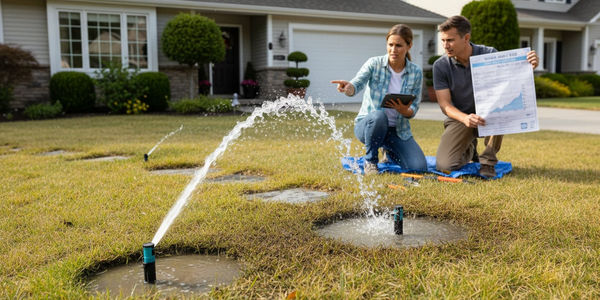
Most signs your sprinkler system needs repair show up long before a geyser erupts in your front yard. Dry patches, surprise water bill spikes, heads that won’t pop up, and pooling water are the most common early warnings. Catching these problems quickly is the difference between a $60 head swap and a $1,500 backflow preventer replacement. This guide covers the 10 warning signs Lubbock homeowners encounter most often, what causes each one, approximate repair costs, and whether you can handle it yourself or need a licensed irrigator.
The Warning Signs Most Homeowners Miss
A sprinkler system rarely fails all at once. It sends signals for weeks or months before the real damage shows up on your water bill, your lawn, or worse, your home’s foundation.
According to the EPA, a household with an automatic irrigation system that isn’t properly maintained can waste up to 25,000 gallons of water per year. In West Texas, where outdoor water use can account for 60 percent of total household consumption, that waste hits harder than most places in the country.
For Lubbock homeowners specifically, the stakes are higher than people realize. The city enforces year-round irrigation restrictions that limit watering to two assigned days per week based on your address. A malfunctioning system doesn’t just waste water; it can put you in violation of city ordinances. And on our expansive clay and caliche soil, a hidden leak near your foundation can create problems that cost tens of thousands to fix.
Below are the 10 signs your sprinkler system needs repair that licensed irrigators encounter most frequently. Keeping up with regular seasonal maintenance prevents most of these, but if you’re already seeing symptoms, this checklist will help you figure out what’s going on and how urgently you need to act.
At-a-Glance: All 10 Warning Signs Compared
Cost data sourced from LawnStarter and HomeAdvisor 2025 estimates.
Now let’s break down each sign, what’s really happening, and what to do about it.
1. Uneven Watering and Dry Patches
Severity: Moderate, but escalates fast in Lubbock summers
This is the single most common sign a sprinkler system needs repair, and every irrigation professional will tell you the same thing. You water on schedule, but certain areas of your lawn stay brown, thin, or crunchy while the rest looks fine.
What you’ll see:
Brown or dormant patches in otherwise green turf
Certain areas that are noticeably drier than zones nearby
Grass that looks healthy near heads but stressed between them
What’s causing it:
Clogged nozzles (mineral buildup from Lubbock’s hard water is a common culprit)
Heads knocked out of alignment by mowers, foot traffic, or settling soil
A cracked or broken head that isn’t distributing water in its full arc
Pressure imbalance in the zone causing some heads to underperform
In West Texas, dry spots worsen fast. Bermuda and buffalo grass can slip into dormancy within days if temperatures push past 100°F and coverage gaps exist. What starts as a cosmetic issue becomes turf loss that costs far more to replace than the $60 to $110 a head repair typically runs.
What to do: Walk each zone while it runs. Watch for heads that aren’t rotating, spraying in odd directions, or producing a weak stream. A nozzle clogged with sediment is sometimes a five-minute fix. Our guide on cleaning a clogged sprinkler head walks through the process step by step.
2. An Unexplained Spike in Your Water Bill
Severity: High
If your water bill jumped 20 percent or more and nothing else changed, your sprinkler system is the first place to look.
The numbers are staggering. A leak near just one sprinkler head can lose roughly 225 gallons during a single 15-minute watering cycle. Run that zone three times per week and you’re wasting about 3,000 gallons per month. A dime-sized crack in an underground sprinkler line is even worse, potentially wasting 6,300 gallons monthly and doubling a household water bill.
What you’ll see:
A 20% to 100% increase in your water bill over one or two billing cycles
No change in your watering schedule or household habits
Possibly a wet spot in the yard (but underground leaks often show no surface signs)
What’s causing it:
An underground pipe leak (especially common where Lubbock’s clay soil shifts during dry-to-wet cycles)
A valve that’s leaking through and allowing water to trickle constantly
A cracked fitting at a head connection
Lubbock-specific concern: The city uses tiered water rates, so a usage spike doesn’t just mean paying for extra gallons. It can bump you into a higher rate tier, compounding the damage to your wallet.
What to do: Turn off every water fixture in the house. Check your meter. If it’s still moving, you have a leak somewhere. Then run each sprinkler zone individually and look for pressure drops or wet spots. If you suspect a pipe break, our guide on repairing a broken sprinkler line covers the diagnosis and repair process.
3. Sprinkler Heads That Won’t Pop Up or Retract
Severity: Moderate
Sprinkler heads that fail to rise, only partially extend, or won’t retract after the cycle finishes are among the most frequent signs a sprinkler system needs repair. It’s easy to overlook because the zone still runs, but coverage suffers badly when a head sits below grade level.
What you’ll see:
Heads that stay flush with the ground when the zone activates
Heads that rise halfway and produce a weak, distorted spray pattern
Heads that stay up after the zone shuts off
What’s causing it:
Debris (dirt, gravel, grass clippings) packed around the riser
A worn internal spring or seal
Low zone pressure preventing the head from fully extending
Practitioners on lawn care forums frequently point out that heads not popping up usually trace back to a pressure problem. As one forum member put it: “The head furthest from the valve is always the most affected.” That’s a clue. If only the last head on a zone is struggling, there may be a break or restriction between the valve and that head.
What happens if you wait: A stuck head sitting below the grass line becomes a mower target. Once the mower blade clips the body, you’re replacing the entire unit instead of just cleaning or adjusting it.
What to do: Try pulling up the riser by hand and flushing it with water. If it springs back normally, debris was the problem. If it feels weak or grinds, the internal components are worn. At that point, replacing the sprinkler head is straightforward if you match the make and model.
4. Water Pooling or Soggy Spots in Your Yard
Severity: High, especially near foundations
Standing water in your yard while the sprinkler system is running might just be overwatering. Standing water while the system is off? That’s a sign your sprinkler system needs repair right away.
What you’ll see:
Persistently mushy or waterlogged areas
Water bubbling up from the ground
Algae or moss forming on the soil surface
Erosion channels appearing near sidewalks, driveways, or your home’s foundation
What’s causing it:
A cracked or broken underground pipe
A valve that won’t fully close, allowing constant water seepage
A broken head flooding a small area instead of spraying its full pattern
The foundation risk no one talks about: This is the big one for Lubbock homeowners. West Texas sits on expansive clay soil that swells when wet and shrinks when dry. According to irrigation specialists, the key to preventing expansive soil damage is keeping moisture levels uniform near foundations. A constant irrigation leak on one side of your slab creates exactly the kind of differential moisture that causes foundation movement, cracked walls, and sticking doors. Foundation repair in Texas can run $5,000 to $15,000 or more. Compared to that, a $150 to $370 pipe repair is nothing.
Prolonged standing water also creates safety concerns from slick surfaces and can attract mosquitoes, a genuine nuisance in Lubbock’s warm months.
5. Low or Inconsistent Water Pressure
Severity: Moderate to High, depending on scope
When your sprinkler heads produce a weak, droopy spray instead of their normal throw pattern, something is restricting water flow. Low pressure is both a symptom and a cause of further problems, because heads operating below their design pressure deliver uneven, incomplete coverage.
What you’ll see:
Spray heads that barely mist instead of producing a firm fan pattern
Rotors with dramatically reduced throw distance
One zone performing worse than all the others
How to read it:
Low pressure on ONE zone usually points to a zone-specific valve, solenoid, or pipe issue
Low pressure on ALL zones suggests a mainline problem, a backflow preventer restriction, or a municipal supply issue
Ideal residential sprinkler system pressure falls between 40 and 65 PSI. A $10 pressure gauge threaded onto an outdoor spigot tells you where you stand.
Cost context: Restoring proper water pressure can cost anywhere from $50 for a simple valve adjustment to $500 for more involved mainline work. The wide range depends entirely on what’s causing the restriction.
If you run a drip irrigation zone and pressure problems seem isolated there, the troubleshooting process is different. Our guide on fixing drip irrigation pressure issues covers that specific scenario.
6. Unusual Sounds: Hissing, Sputtering, or Hammering
Severity: Moderate
A properly designed sprinkler system runs quietly. If yours is hissing, sputtering, banging, or gurgling, those sounds are telling you something specific.
What you’ll hear and what it means:
Sputtering at a head usually indicates debris in the nozzle or insufficient pressure reaching that head
Water hammer (a loud bang when a zone starts or stops) means a valve is opening or closing too abruptly, creating a pressure surge that can damage pipes and fittings over time
Hissing from a valve box almost always means a leak at a pipe connection or fitting inside the box
Gurgling after the system shuts off suggests a check valve isn’t holding, allowing water to drain back through low heads
When irrigators hear hissing near a valve box during an inspection, they know there’s a leak before even opening the lid. That kind of audible clue saves diagnostic time.
What to do: Localize the sound. If it’s at a specific head, cleaning or replacing the nozzle often fixes sputtering. If it’s at the valve box, you’re likely dealing with a leaking valve connection that needs professional attention.
7. Controller or Timer Malfunctions
Severity: Moderate, but creates compliance risk in Lubbock
The controller is the brain of your irrigation system. When it fails, everything downstream stops working correctly, even if the valves, pipes, and heads are all fine.
What you’ll see:
A blank or flickering display
Zones running at unexpected times (or not at all)
Programming that resets after every power outage
The controller turns on manually but won’t run its automatic schedule
One Arizona irrigation company shared a case where a homeowner’s brand-new sod died because the controller had silently reset during a power outage. The system hadn’t run in over a week and nobody noticed.
Lubbock-specific risk: The city’s address-based watering schedule means your controller needs to be programmed for your specific allowed days. A controller that resets or malfunctions could irrigate on the wrong days, putting you in violation of Lubbock’s irrigation restrictions.
Controllers typically last 10 to 20 years. If yours is older than that, replacement makes more sense than repair. Modern smart controllers with weather-based scheduling can save up to 30 percent on outdoor water use compared to a basic clock timer.
What to do: Check for a tripped breaker or blown fuse first. If the display works but zones won’t fire, the problem may be wiring or solenoids rather than the controller itself. Our irrigation controller troubleshooting guide covers the full diagnostic process.
8. A Zone That Won’t Turn On (or Won’t Shut Off)
Severity: High
A “dead zone” that won’t activate from the controller, or a zone that keeps running after it should have stopped, is one of the clearest signs a sprinkler system needs repair. Stuck valves are among the most common calls irrigation pros receive.
What you’ll see:
One zone produces no water when activated from the controller
One zone runs continuously, even when the system is off
A single zone’s runtime on your water bill is noticeably higher than others
The diagnostic ladder:
If the valve works when you turn it manually (using the bleed screw) but not from the controller, the problem is electrical: bad solenoid, broken wire, or a failed controller terminal
If the valve won’t work manually either, debris may be jamming the diaphragm
If the zone won’t shut off, the diaphragm is likely torn or the solenoid is stuck open
Community members on DIY forums confirm this pattern. As one experienced homeowner put it: “If the valve works manually but not from the controller, it’s almost always wiring or the solenoid.”
Cost context: Valve replacement runs $75 to $215 including labor. A stuck-on valve can add $200 or more to a single water bill, so this isn’t one to ignore.
For a deeper look at electrical diagnosis, our guide on identifying a bad sprinkler solenoid walks through testing with a multimeter.
9. Your Backflow Preventer Is Leaking or Failing Its Test
Severity: High (compliance and health risk)
This is a sign that most national sprinkler repair articles barely mention, but for Lubbock homeowners it’s critical. The City of Lubbock requires backflow prevention devices on home irrigation systems to prevent contaminants like pesticides, herbicides, and fertilizer from entering the public drinking water supply. A failing backflow preventer isn’t just a repair issue. It’s a compliance issue.
What you’ll see:
Continuous dripping or spraying from the preventer body (the above-ground device, usually near your home’s water connection)
Discolored or odd-tasting water inside the house
Reduced water pressure across the entire system
Visible corrosion, rust, or mineral encrustation on the device
A failed annual test
What’s causing it: The backflow preventer body can last around 20 years, but the internal components (check valves, springs, seals) need replacing every 8 to 10 years. Most homeowners don’t realize maintenance is needed until the device starts leaking or fails its certification test.
Cost context: Backflow preventer repair or replacement is frequently the most expensive irrigation fix, ranging from $280 to $1,550 depending on the device type and whether the entire assembly needs replacing.
What to do: Backflow work isn’t a DIY job. Lubbock requires a licensed tester to certify the device after any repair or replacement. Our detailed guide on fixing a leaking backflow preventer explains the types of devices, common failure modes, and what the repair process involves.
10. Your System Is 10+ Years Old and Has Never Been Inspected
Severity: Preventive (but the most costly sign to ignore)
This is the “sleeper” sign, the one that doesn’t produce any single dramatic symptom. Instead, it shows up as a pattern: repairs keep happening, performance keeps declining, and the water bill creeps up year after year.
Why age matters: Every major sprinkler component has a finite lifespan. Sprinkler heads last 5 to 15 years. Solenoids last up to 20 years. Controllers last 10 to 20 years. Backflow preventer internals need replacing every 8 to 10 years. If your system has been running for a decade or more without a professional inspection, multiple components are likely approaching or past their end-of-life window.
The Lubbock context: Homes built during Lubbock’s growth periods in the 1990s and 2000s now have sprinkler systems that are 20 to 30 years old, many still running on original components. Practitioners report that homeowners in this situation often fall into a “band-aid” cycle, fixing the same types of problems over and over without addressing the underlying system decline.
The smart upgrade opportunity: Replacing an old clock controller with a WaterSense-labeled smart controller can save up to 15,000 gallons of water per year. Modern systems with flow monitoring can detect leaks automatically and send alerts to your phone. If your system is aging, upgrading to a smart irrigation controller is often more cost-effective than continuing to patch old equipment.
What to do: Schedule a professional system inspection. A qualified irrigator will run every zone, check every valve, test pressure, evaluate the backflow preventer, and give you an honest assessment of what needs attention now versus what can wait.
Quick-Reference Cost Table
Here’s a summary of what typical sprinkler system repairs cost in 2025, so you can gauge the financial urgency of whatever sign you’re seeing.
The average sprinkler system repair costs about $278, with most homeowners paying between $137 and $421 depending on the issue. Labor rates for sprinkler repair average around $90 per hour.
When to DIY vs. When to Call a Pro
Not every sign that your sprinkler system needs repair requires a service call. Some fixes take five minutes. Others require specialized equipment, licensing, or experience with underground utilities.
DIY-appropriate repairs:
Cleaning a clogged nozzle (unscrew, rinse, reinstall)
Adjusting a head’s arc or radius
Replacing a single broken spray head with the same make and model
Checking and reprogramming the controller after a power outage
Call a licensed irrigator for:
Underground leak detection and pipe repair (requires locating equipment and trenching)
Valve or solenoid replacement (involves digging into valve boxes and wiring)
Backflow preventer testing, repair, or replacement (Lubbock requires a licensed tester for certification)
System-wide pressure problems (too many possible causes for trial-and-error)
Any wiring diagnosis beyond the controller itself
A common DIY pitfall worth mentioning: Mixing sprinkler head brands or spray types within a single zone is one of the most frequent mistakes homeowners make. Different heads have different precipitation rates, so even if they look like they’re working, the zone delivers water unevenly. Installing a head even one inch below grade invites mower damage and creates coverage gaps.
If you’ve identified one or more of these signs and the fix is beyond a simple head cleaning, M&M Sprinklers has served Lubbock and surrounding West Texas communities since 1987 with three licensed irrigators on staff. Our complete Lubbock sprinkler repair guide covers what to expect during a service call, or you can explore our residential sprinkler services for ongoing maintenance options that prevent most of these problems before they start.
Frequently Asked Questions
How do I know if my sprinkler system has a leak I can’t see?
The easiest test: turn off all water-using fixtures and appliances in your home, then check your water meter. If the dial is still moving (or the digital readout is changing), water is flowing somewhere it shouldn’t be. Next, run each sprinkler zone individually and watch for pressure drops, unusual sounds, or newly wet patches in the yard. Underground leaks don’t always produce visible surface water, especially in sandy or well-draining soil, so the meter test is the most reliable starting point.
How often should a sprinkler system be professionally inspected?
At minimum, once per year, ideally in early spring before the heavy watering season begins. In Lubbock, a fall check before the first freeze is also smart because freeze-thaw cycles are a leading cause of cracked pipes and damaged backflow preventers. Systems older than 10 years benefit from twice-yearly inspections since multiple components may be nearing end of life simultaneously.
Can a sprinkler leak really damage my foundation?
Yes, particularly in West Texas. Lubbock’s expansive clay soil swells when saturated and shrinks when dry. A persistent irrigation leak on one side of your home creates uneven soil moisture, which leads to differential settling, cracked walls, and doors that won’t close properly. Foundation repairs in Texas routinely cost $5,000 to $15,000. Fixing the sprinkler leak itself is almost always under $400.
What are the signs of a bad backflow preventer?
Continuous dripping from the device, reduced water pressure across all zones, discolored water coming from indoor faucets, and visible corrosion or rust on the preventer body. The most definitive sign is a failed annual certification test. Lubbock requires backflow prevention devices on all irrigation systems and mandates testing to protect the city’s drinking water supply.
Is it worth upgrading an old sprinkler controller to a smart model?
In most cases, absolutely. Smart controllers with weather-based scheduling adjust runtimes automatically, preventing overwatering during cool or rainy periods. The EPA estimates that upgrading from a basic clock timer to a WaterSense-certified smart controller saves roughly 30 percent on outdoor water use. For a Lubbock household, that can translate to thousands of gallons saved per year and noticeably lower water bills, especially during the peak summer months when outdoor irrigation accounts for the majority of water consumption.
How long do sprinkler system components typically last?
Spray heads last 5 to 15 years depending on brand and conditions. Rotor heads tend toward the longer end of that range. Solenoid valves can last up to 20 years but often need attention around year 10 to 15. Controllers last 10 to 20 years. Backflow preventer bodies may last 20 years, but the internal seals, springs, and check valves should be rebuilt every 8 to 10 years. PVC pipe lasts decades if undamaged, but fittings and connections are vulnerable to soil movement, freezing, and root intrusion.
What does a sprinkler system repair typically cost?
The national average is about $278 per repair visit, with most repairs falling between $137 and $421. Simple fixes like a single head replacement run $60 to $110. Underground pipe repairs cost $150 to $370. Backflow preventer work is the most expensive common repair at $280 to $1,550. Getting an annual inspection ($60 to $165) almost always catches small problems before they become expensive ones.
Why does my sprinkler system lose pressure on only one zone?
A single zone losing pressure while others perform normally almost always points to a zone-specific problem: a partially closed valve, a failing solenoid not opening the valve fully, a cracked pipe within that zone’s run, or a head that has broken off underground and is dumping water below grade. Run the affected zone and walk the entire coverage area looking for water surfacing where it shouldn’t be. If you can’t find the cause visually, a licensed irrigator with pressure testing equipment can isolate the problem quickly.


Comments