
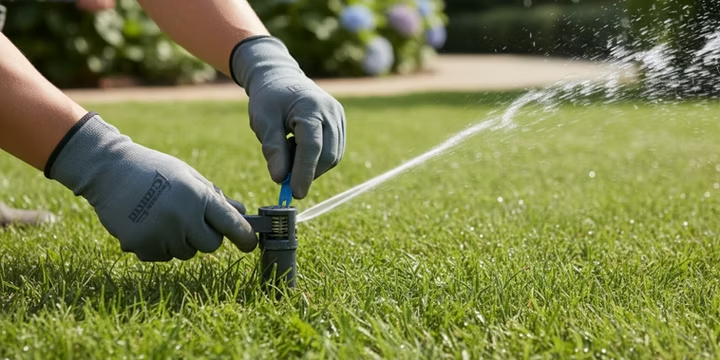
Is your sprinkler system watering the driveway more than the grass? Are you seeing frustrating brown spots or soggy patches on your lawn? These are classic signs that your system needs a tune up. Learning the basics of adjusting a sprinkler is one of the best things you can do for your lawn’s health and your water bill. It’s a simple skill that puts you in control, ensuring every drop of water counts. In essence, adjusting a sprinkler involves three key actions: aiming the direction of the spray, setting the width of the spray pattern (the arc), and controlling how far the water travels (the radius).
Properly adjusted sprinklers save a surprising amount of water. Outdoor irrigation can account for about 50% of a home’s water use in the summer, and a lot of that can be wasted through overspray or runoff. Just a few small tweaks can make a huge difference, potentially cutting your irrigation water waste by 10% or more. For even smarter watering, consider a Wi‑Fi sprinkler controller that automates schedules based on weather. This guide will walk you through everything you need to know about adjusting a sprinkler, from identifying your hardware to fine tuning its performance.
Getting Started: Know Your Gear
Before you can start making adjustments, you need to know what you’re working with. A little prep work makes the whole process much smoother.
Identify Your Sprinkler Head Types
Not all sprinkler heads are the same, and each one is adjusted differently. The first step in adjusting a sprinkler is figuring out which types you have. The three most common are:
- Fixed Spray Heads: These pop up and spray a fan shaped pattern of water in a fixed direction. They’re great for smaller, specific areas.
- Rotor Heads: These pop up and rotate, shooting a single stream of water back and forth. They cover larger distances and are perfect for big, open lawn areas.
- Impact Sprinklers: These are the classic “ticking” sprinklers. An arm repeatedly hits the water stream, causing the head to rotate and spread water over a large area.
It’s important that all the heads in a single watering zone are the same type. Spray heads put out water much faster (around 1.3 to 2 inches per hour) than rotors (about 0.4 to 1 inch per hour), so mixing them leads to some spots getting drenched while others are left dry.
Find the Right Sprinkler Adjustment Tool
You don’t always need a box full of specialty equipment. For many sprinkler adjustments, a simple flat blade screwdriver is all it takes. However, some manufacturers like Hunter or Rain Bird use special plastic keys or wrenches designed specifically for their rotor heads.
Using the correct tool for the job prevents you from stripping the small plastic screws or damaging the internal gears of the sprinkler head. If you don’t have the original tool, universal sprinkler adjustment tools are inexpensive and available at most hardware stores.
The Three Main Sprinkler Adjustments
Most of your fine-tuning when adjusting a sprinkler will involve one of three core adjustments. Mastering these will solve the majority of common sprinkler issues.
1. Adjusting the Spray Direction
This is the easiest and most impactful fix. Is a sprinkler head blasting the side of your house or creating a puddle on the sidewalk? You just need to change its direction. For most pop up spray heads, you can simply pull up the riser and gently turn it until the nozzle is pointing exactly where you want the water to go. You’ll often feel a slight clicking as it ratchets into a new position. Aiming your sprinklers correctly is a quick win for water conservation.
2. Adjusting the Coverage Arc
The arc is the angle of the spray pattern, like a slice of a pizza. A sprinkler in a corner should be set to a 90 degree arc (a quarter circle), while one along an edge should be 180 degrees (a half circle). If your arc is too wide, you’ll be watering the street; if it’s too narrow, you’ll miss parts of your lawn. You can typically adjust the arc on rotor heads and adjustable spray nozzles using a tool or screwdriver to widen or narrow the pattern. For step-by-step nozzle tweaks, see our Sprinkler Nozzle Adjustment: How to Set Arc and Radius.
3. Adjusting the Spray Distance (Radius)
The radius is how far the water travels from the sprinkler head. Most heads have a small radius adjustment screw on top of the nozzle. Turning this screw clockwise (tightening it) intercepts the water stream, reducing how far it throws. This is perfect for minor tweaks, but you generally shouldn’t reduce the distance by more than 25%. If you need a bigger reduction, it’s better to switch to a different nozzle.
How to Adjust Specific Sprinkler Head Types
Now that you know the basics, let’s look at the specifics for adjusting a sprinkler head based on its type.
Fixed Spray Head Adjustment
Even though they’re called “fixed,” these heads offer a good amount of control.
- Direction: As mentioned, just turn the pop up stem to aim the spray pattern.
- Arc: Many spray heads use interchangeable nozzles for different patterns (e.g., quarter, half, full circle). To change the arc, you just unscrew the old nozzle and replace it with the one you need. Some models have variable arc nozzles (VANs) that you can adjust by twisting a collar.
- Distance: Use the small screw on top of the nozzle to make fine adjustments to the spray radius.
- Maintenance: A common issue is a clogged nozzle. If you see a weak or uneven spray, unscrew the nozzle and clean the small filter screen inside. If cleaning doesn’t help, follow our sprinkler head replacement step-by-step DIY guide.
Rotor Sprinkler Head Adjustment
Rotors are used for larger areas and have a few key settings. You’ll usually need the manufacturer’s key or a flathead screwdriver for these adjustments.
- Arc: You set the arc to control how far the head rotates. Most rotors can be set from around 40 degrees up to a full 360 degrees.
- Distance: A nozzle screw on top lets you reduce the throw distance. Turning it also helps diffuse the water stream to provide better coverage near the head itself.
- Nozzle: Rotors come with a “tree” of interchangeable nozzles. If you need to significantly change the watering distance or flow rate, you’ll need to swap out the nozzle.
Setting a Rotor’s Left and Right Stops
This can seem tricky, but it’s straightforward once you understand it. The stops define the boundaries of the rotor’s rotation. Most rotors have one fixed stop and one adjustable stop. The key is to orient the sprinkler body so the fixed stop lines up with one edge of your lawn (like a driveway). Then, you use the adjustment key to set the other stop, defining the total sweep or arc. If your rotor is overshooting onto the pavement, the fixed stop is likely misaligned. You may need to dig around the sprinkler body and turn the entire casing to get the starting point right.
Impact Sprinkler Head Adjustment
These durable sprinklers have very mechanical and visible controls.
- Arc: Look for two metal collars (or clips) at the base. You slide these to set the left and right stop points. A small trip lever bounces between these collars, reversing the sprinkler’s direction. To get a full 360 degree circle, just flip this lever up so it doesn’t catch on the collars.
- Distance: A diffuser screw or pin on the front of the head can be turned into the water stream. The more it blocks the stream, the shorter the distance and the finer the spray. Backing the screw out allows for maximum distance.
Fine Tuning and Troubleshooting Your System
Getting your system dialed in perfectly sometimes requires a bit more detective work.
Using the Nozzle Screw for Precision
The nozzle screw is your go to for fine tuning. A small turn can shorten the spray by a few feet to avoid a flower bed or reduce misting if your water pressure is a little high. Just remember, it’s for small adjustments. If you have to crank the screw way down, you probably need a smaller nozzle.
Conducting a System Audit for a Problem Head
If you have a persistent dry spot or one head that just isn’t performing, it’s time for a mini system audit. Turn on that zone and watch the problem head.
- Is it clogged with dirt?
- Is it tilted or sitting too low in the grass?
- Is it popping up all the way? Low pressure could be the culprit.
- Are there puddles around the base? This could signal a leak. Learn how to locate and fix it with our broken sprinkler line repair guide.
For a more thorough check, you can do a “catch can test” by placing identical containers (like tuna cans) around your lawn to measure how much water each area actually receives. This can reveal surprising inconsistencies. If you’re in the Lubbock area and want a professional opinion, the team at M&M Sprinklers offers comprehensive system checkups to diagnose tricky issues and optimize your entire system.
Checking for Proper Coverage Overlap
A professional irrigation design ensures “head to head coverage.” This means the water from one sprinkler should reach the sprinkler head next to it. This overlap is critical for getting uniform water coverage and preventing dry spots from forming between heads. When you’re adjusting a sprinkler radius, run the system and visually confirm that you aren’t creating gaps in your coverage.
Sprinkler Adjustment Tips and Best Practices
Keeping your sprinkler system in top shape is an ongoing process. Following these best practices will lead to a healthier lawn and less water waste.
- Perform Seasonal Checkups. At the beginning and middle of the watering season, run each zone and do a quick visual inspection of every head. Use this seasonal sprinkler maintenance checklist to stay on track.
- Adjust Early and Often. Don’t wait for problems to appear. A quick monthly walkthrough during peak season can help you catch misaligned heads or leaks before they waste a lot of water.
- Mind the Water Pressure. Pressure that is too high causes misting, where water evaporates or blows away. Pressure that is too low prevents heads from working correctly. If you suspect pressure issues, it’s a good idea to consult a professional.
- Clean and Clear. Regularly clean nozzle filters and trim any grass or plants that are blocking the spray pattern.
- Know When to Call a Pro. While adjusting a sprinkler is often a DIY job, some problems require an expert. Persistent low pressure, zones that won’t turn on, or complex leak detection are best left to licensed professionals. A well maintained system is key, and an expert can ensure everything from the controller to the last nozzle is working efficiently. For sprinkler repair and maintenance in Lubbock, TX, you can schedule a service call with M&M Sprinklers to get your system running perfectly.
Frequently Asked Questions about Adjusting a Sprinkler
1. How often should I be adjusting a sprinkler? You should inspect your sprinklers at least twice a year, typically in the spring when you start the system up and once mid summer. It’s also a good idea to check them after mowing or if you notice any dry or overly wet spots.
2. Why is my sprinkler spraying a fine mist instead of droplets? This is almost always a sign that your water pressure is too high for that specific sprinkler head. Misting is inefficient because much of the water evaporates before it even hits the ground.
3. What is the easiest sprinkler adjustment I can make? Adjusting the spray direction is the simplest and often most effective fix. Just turning a head that’s spraying the sidewalk back onto the lawn can save a significant amount of water.
4. My rotor sprinkler isn’t turning. What’s the problem? The most common causes are debris inside the sprinkler body or insufficient water pressure. First, try cleaning the head and its filter. If that doesn’t work, you may have a larger pressure issue in that zone.
5. Can I use different types of sprinkler heads in the same zone? You should avoid this. Different types of heads (like rotors and sprays) have vastly different precipitation rates. Mixing them will result in very uneven watering.
6. How do I know if my sprinklers have good overlap? Visually, the spray from one sprinkler should reach the heads around it. After watering, your lawn should be uniformly damp with no distinct dry patches in between the sprinkler locations.
7. My lawn is healthy, but my trees look stressed. Is it related? It can be. Proper irrigation is crucial for tree health, too. An irrigation system that isn’t adjusted correctly can lead to under watering or overwatering, which stresses trees. A company that understands the relationship between soil, water, and plants, like M&M Sprinklers with its certified arborists on staff, can help ensure your entire landscape is getting the right amount of water.