
TL;DR
A standard backflow test on a single residential device takes 20 to 30 minutes, with the full visit (including paperwork) running 30 to 60 minutes. Your water is only shut off for about 5 to 15 minutes during the actual test. If your backflow preventer is on an irrigation line, your indoor water typically stays on the entire time.
Most Lubbock homeowners have a backflow preventer on their sprinkler system and don’t realize how quick the process is. You got a letter from the City, you’re wondering if this will eat up your whole morning, and the honest answer is: probably not. But several factors can stretch or shorten that timeline, and understanding them ahead of time makes the whole experience painless.
Need a licensed tester in Lubbock? Check out our backflow testing Lubbock guide for costs and requirements.
What Is Backflow Testing?
Backflow testing verifies that your backflow prevention device is working correctly, keeping contaminated water from flowing backward into the public drinking water supply. It’s a straightforward mechanical check, not an invasive plumbing overhaul.
Here’s the basic idea: your irrigation system (or any cross-connection to the city water main) has a device installed that acts as a one-way gate. Water flows out to your sprinklers but can never reverse direction and carry fertilizer, pesticide, or stagnant water back into the potable supply. Over time, the internal parts of that device, springs, rubber seals, check valves, can wear out. Testing confirms everything still holds pressure the way it should.
Three types of backflow preventers are common on residential and commercial properties:
- PVB (Pressure Vacuum Breaker): The most common device on residential irrigation systems in Lubbock. Mounted above ground, usually near the main shutoff for the sprinkler system.
- DCVA (Double Check Valve Assembly): Often found on commercial properties or in-ground vault installations. Tests tend to go quickly when the valves are in good condition.
- RPZ (Reduced Pressure Zone): The most protective device, required where health hazards exist. Testing takes slightly longer because the tester must verify relief valve behavior in addition to checking pressure differentials across two check valves.
If you’ve noticed water dripping from your backflow device or other warning signs, that’s worth addressing before your test. Our guide on signs a backflow device needs repair covers what to look for.
How Long Does a Backflow Test Take? A Detailed Breakdown
The short answer covers most situations, but the actual time depends on what the tester finds when they arrive. Here’s how the numbers break down across different scenarios:
Actual Water Shutoff vs. Total Appointment Time
This distinction matters and almost nobody explains it clearly. The total appointment might run 30 to 60 minutes, but your water is not off that entire time. The actual shutoff period is typically 5 to 15 minutes per device. The rest of the visit involves visual inspection, attaching gauges, recording data, and completing paperwork.
And here’s the detail that catches most homeowners off guard: if your backflow preventer is on your irrigation line only (which is the case for the vast majority of Lubbock residential systems), your indoor water stays on during the entire test. The shutoff only affects the sprinkler system. Your kitchen faucet, shower, and washing machine keep running as normal.
Does Device Type Affect How Long Backflow Testing Takes?
Yes, but modestly. A PVB or DCVA in good condition is the quickest to test. RPZ assemblies take a few extra minutes because the tester needs to verify the relief valve opens at the correct pressure differential (typically when downstream pressure exceeds upstream by less than 2 PSI). The difference is usually 5 to 10 minutes, not a dramatic gap.
For more on RPZ devices specifically, see our RPZ backflow preventer guide.
What Happens During a Backflow Test (Step by Step)
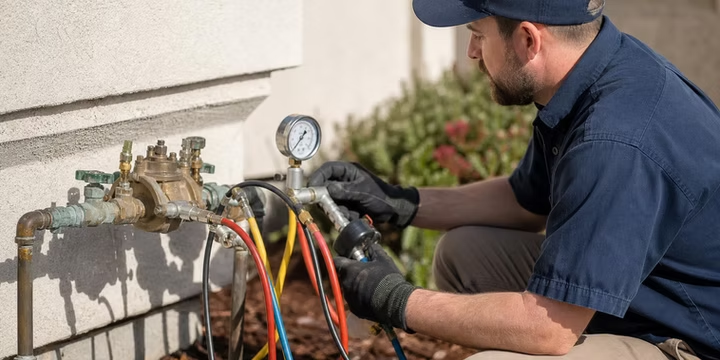
Knowing what the tester actually does on-site removes the mystery. The process follows the same sequence every time, required by state testing standards:
1. Visual inspection. The tester starts by examining the backflow assembly, confirming the test cocks are accessible, checking that the device is installed correctly, and verifying adequate drainage around the assembly.
2. Record device information. The manufacturer, model number, serial number, size, and location are documented or verified against previous test records.
3. Isolate the device. The downstream water supply is shut off to create a controlled testing environment. This ensures that active water usage elsewhere in the system doesn’t affect pressure readings. This is the moment your sprinkler line goes offline.
4. Attach differential pressure gauge. Specialized test gauges connect to the test cocks on the backflow preventer. These gauges measure the pressure difference across the device’s check valves.
5. Open valves in sequence. The tester opens valves in a specific order to pressurize each zone of the device independently. This isolates the performance of each internal component.
6. Measure pressure differentials. Each check valve must hold a minimum differential: 1 PSI for DC assemblies and 2 PSI for RP assemblies. If the readings fall below these thresholds, the device fails.
7. Relief valve check (RPZ assemblies only). For reduced pressure assemblies, the tester verifies the relief valve opens at the correct differential. This extra step is what makes RPZ testing take slightly longer.
8. Restore flow and document results. Once testing is complete, the tester restores water flow, fills out a standardized test report form required by the local water authority, and provides written certification if the device passes.
The whole procedure is methodical but quick. Most experienced testers have performed thousands of these and move through the sequence efficiently.
Factors That Add Time to Your Backflow Test
When a test runs longer than 30 minutes, one of these factors is almost always the reason.
Poor Access and Overgrown Landscaping
This is the number one time-killer practitioners report. Bushes growing over the assembly, locked enclosures without keys on hand, covers buried under mulch or dirt. The tester needs at least 3 feet of clearance around the device to connect a differential pressure gauge kit. Small preparation steps often turn a 60-minute headache into a 25-minute visit.
For tips on getting your property ready before the tester arrives, read our backflow test preparation guide.
Old or Stuck Shutoff Valves
Shutoff valves that haven’t been cycled in a year can seize. If the tester can’t isolate the device without fighting a corroded valve, that alone can add 15 to 20 minutes. Corroded test cocks are another common culprit. The tester may need to carefully free them before gauges can connect.
Multiple Assemblies
Most residential properties have a single backflow device on their irrigation line. Commercial properties often have two or three. Each additional assembly adds 15 to 30 minutes to the visit.
Hard Water and Mineral Buildup
West Texas has notoriously hard water. Mineral deposits accumulate inside check valves and around test cocks, making components harder to operate and sometimes causing false readings that require retesting. This is a distinctly local factor that testers in other regions don’t deal with as frequently.
Freeze Damage
Lubbock winters can drop below freezing for extended stretches. Backflow preventers that aren’t properly winterized can suffer cracked bodies, damaged seals, or warped internal parts. A freeze-damaged device will fail testing and need repair before a retest can happen. Our guide on protecting your sprinkler system from freezing covers prevention steps worth taking each fall.
Device Not in Use
Practitioners at Everist Irrigation note that the most common time they see assemblies fail is after a mainline repair. The Southington Water Department adds that backflow preventers left without water flowing through them for long periods are more prone to failure. If your sprinkler system has been dormant for months, expect a higher chance of issues during testing.
What Happens If Your Backflow Device Fails?
About 10 to 15% of backflow devices fail testing after one year in service. That’s not an alarming number, but it’s common enough that understanding the consequences matters.
A failed test does not necessarily mean replacing the entire assembly. Most failures are repairable on-site during the same visit. The most common fixes include replacing rubber seals, springs, O-rings, or individual check valves. Simple repairs typically take 1 to 2 hours. More complex problems might need 3 to 4 hours or a return trip if special parts are required.
Common reasons for failure include:
- Debris trapped inside the checks or relief valve
- Worn-out springs, seals, or poppets
- Mineral buildup from hard water (especially relevant in West Texas)
- Freeze damage from unprotected winter exposure
After any repair, the tester must retest the device to confirm it now passes. This retest follows the same procedure described above, adding another 20 to 30 minutes.
Wondering what repairs might cost? Our backflow preventer repair cost guide breaks down typical pricing for Lubbock homeowners.
Lubbock and Texas Backflow Testing Requirements
Backflow testing requirements vary by city, and Lubbock’s rules are specific. Here’s what property owners need to know.
Testing Frequency
The City of Lubbock requires backflow prevention assemblies on irrigation systems connected to the city water supply to be tested on a recurring schedule. The specifics depend on the type of property and the assessed risk:
- Residential irrigation devices: Testing required every 1 to 3 years. The city’s ordinance specifies that nonhealth-hazard conditions require certified inspections at least once every three years.
- Commercial plumbing backflow systems: Annual testing required.
- Health hazard cross-connections: Annual testing, as determined by the water purveyor.
Testing is also required upon initial installation of any new backflow prevention assembly.
Who Can Perform Testing in Texas
Texas requires anyone testing or repairing backflow prevention assemblies to hold a license issued by the Texas Commission on Environmental Quality (TCEQ). These licensed professionals are called Backflow Prevention Assembly Testers (BPAT). They’re qualified to test and repair assemblies on domestic, commercial, industrial, and irrigation service connections.
Paperwork and Filing Deadlines
Once the test is completed, the original Test and Maintenance Form must be mailed or delivered to the City of Lubbock Water Compliance Department within 10 days. This is the property owner’s responsibility to ensure, though a good tester will handle the filing or provide clear guidance.
Penalties for Noncompliance
The City of Lubbock takes backflow compliance seriously, and enforcement has tightened in recent years. According to local reporting, the Lubbock Water Utilities department was inspected by their state regulatory authority and found deficient in recordkeeping and compliance for backflow prevention testing. Since then, enforcement has ramped up.
The penalties are real:
- Fines up to $2,000 per day for noncompliance with the city ordinance
- Water service disconnection to the property if testing is not completed
This isn’t a theoretical risk. Property owners who ignore their testing notices can and do get their water shut off.
How to Prepare for Your Backflow Test
A little preparation before the tester arrives can cut the appointment time significantly and reduce the chance of unexpected issues.
Clear the area around the assembly. Remove plants, mulch, stored items, or anything else within 3 to 4 feet of the device. The tester needs room to kneel, connect gauges, and access both sides of the assembly.
Know where your device is. For most Lubbock homes with sprinkler systems, the backflow preventer is mounted above ground near the water meter or on the side of the house where the irrigation line connects. If you’re not sure, look for a brass or green device with test cocks (small ports) on it.
Unlock any enclosures. If your assembly is inside a locked box or behind a gate, have it unlocked before the appointment.
Turn off sensitive appliances if on the main service line. If your backflow device is on your main water service (not just irrigation), turn off ice makers, dishwashers, and washing machines before the test. Water cycling on and off during testing can disrupt these appliances.
For irrigation-only devices, relax. Your indoor water stays on. The tester only shuts down the irrigation supply. This is the most common setup in Lubbock, and it means virtually zero disruption to your daily routine.
Have previous test reports available if possible. Prior test results help the tester quickly identify the device details and compare current readings to previous ones.
Bundling your backflow test with a seasonal sprinkler inspection is a smart move. Spring startup is an ideal time for both. Our West Texas sprinkler maintenance guide explains what a full system checkup covers.
Frequently Asked Questions
Does my water get shut off during a backflow test?
Only briefly. The actual water shutoff lasts about 5 to 15 minutes per device. And if your backflow preventer is on your irrigation line only (as most Lubbock residential devices are), your indoor water is never interrupted. The shutoff only affects the sprinkler system.
How often do I need backflow testing in Lubbock?
Residential irrigation backflow devices must be tested every 1 to 3 years, depending on the risk level assessed by the City. Commercial backflow systems require annual testing. The City of Lubbock sends reminder letters when your testing window is approaching.
Can I test my backflow preventer myself?
No. Texas law requires a TCEQ-licensed Backflow Prevention Assembly Tester (BPAT) to perform the test using calibrated differential pressure gauges. Self-testing is not recognized by the City of Lubbock, and the results wouldn’t be accepted for compliance.
How much does backflow testing cost?
Most residential backflow tests in Lubbock range from $50 to $150 for a single device, depending on the tester and whether repairs are needed. Costs increase with additional assemblies or if parts need replacing. For a full breakdown, see our backflow preventer repair cost guide.
What is a BPAT license?
BPAT stands for Backflow Prevention Assembly Tester. It’s a professional license issued by the Texas Commission on Environmental Quality (TCEQ) that authorizes the holder to test and repair backflow prevention devices. Testers must pass a certification exam and maintain their credentials through continuing education.
What if my backflow device is leaking before the test?
A leaking backflow preventer is a sign that internal components have already failed. The tester will likely confirm the failure during testing and can often make repairs on the spot. If your device is actively leaking, it’s worth mentioning when you schedule so the tester brings the right repair parts.
Does a failed test mean I need a whole new backflow preventer?
Almost never. The vast majority of failures are caused by worn seals, springs, or debris caught in the check valves. These are standard repairs that a licensed tester can complete on-site, usually within 1 to 2 hours. Full replacement is only necessary when the body of the device is cracked or structurally compromised.
How long does backflow testing take if repairs are needed?
If the device fails and can be repaired on-site, expect the total visit to run 1.5 to 3 hours (original test plus repair plus retest). If special parts are needed, the tester may need to schedule a return trip, which typically happens within a few days.
M&M Sprinklers employs Texas-licensed BPAT testers who handle testing, on-site repairs, written certification, and paperwork filing with the City of Lubbock. Serving Lubbock and West Texas since 1987, we’re one of the few operations in the region combining irrigator licenses, ISA arborist certification, and TCEQ backflow testing credentials under one roof.
Ready to schedule your backflow test? Visit our backflow testing Lubbock page or call (806) 794-1300.