
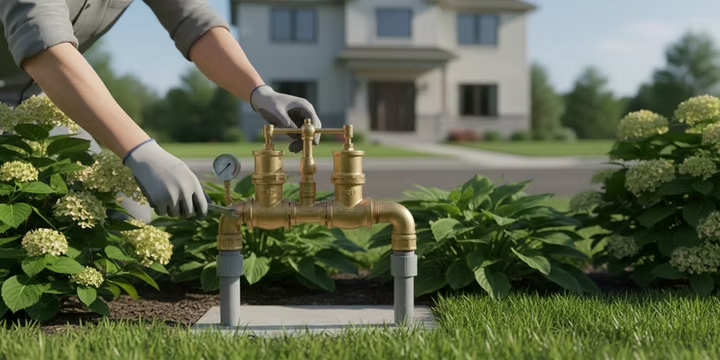
An irrigation RPZ, short for Reduced Pressure Zone assembly, is a crucial safety device that prevents contaminated water from your sprinkler system from flowing backward into your home’s clean drinking water supply. While a lush, green lawn is desirable, the irrigation system that maintains it can pose a hidden health risk without proper protection. If you have a sprinkler system, understanding what this device is and why you need it is essential for protecting your family and complying with local codes.
Let’s break down everything you need to know about the irrigation RPZ backflow preventer, from what it is to how it keeps your water safe.
What Exactly is an RPZ Backflow Preventer?
First things first, let’s define the terms. An RPZ is a mechanical device that ensures water flows in only one direction, from the city’s supply into your sprinkler pipes. Its full name is a Reduced Pressure Zone assembly, and its job is to prevent “backflow”.
Backflow is the unwanted reversal of water flow. It can happen in two ways, either pushing or pulling contaminated water from your lawn back into your clean drinking water lines. An irrigation RPZ is considered the highest level of protection for high hazard situations, which is exactly what a sprinkler system is. Thousands of backflow incidents are reported each year in the U.S., making a reliable prevention device a non negotiable part of your plumbing.
The Anatomy of an Irrigation RPZ: What’s Inside?
An RPZ might look complicated, but it’s built around a few key parts that work together to create a fail safe system.
Two Independent Check Valves
At its core, an RPZ has two spring loaded check valves that act like one way doors. Water can push them open to flow into your irrigation system, but if it tries to flow backward, they snap shut. Having two provides a redundant layer of safety.
The Differential Relief Valve
This is the star of the show. Situated in a “zone” between the two check valves, this relief valve is a smart pressure sensor. If it detects any backflow pressure or a leak in the first check valve, it automatically opens and dumps the water out onto the ground. This visible discharge is a sign the device is doing its job.
Test Cocks and Shut Off Valves
You’ll also see four small ports (test cocks) and two shut off valves on an RPZ. The test cocks allow a certified professional to connect gauges and verify the device is working correctly during annual inspections. The shut off valves allow the water to be turned off for testing or repairs without shutting down your whole house.
How Does an Irrigation RPZ Work Its Magic?
The operation of an irrigation RPZ is based on a simple principle: maintaining a buffer zone of lower pressure.
Under normal conditions, both check valves are open, and water flows through to your sprinklers. The area between the valves (the zone) is kept at a slightly lower pressure than the main supply line, which keeps the relief valve closed.
If a backflow event occurs (for instance, a water main breaks down the street), the pressure dynamics change. The check valves slam shut. If any contaminated water leaks past the first check valve, the relief valve instantly senses the pressure change in the zone and opens, dumping the potentially harmful water safely outside. This action prevents any contaminants from ever reaching your home’s faucets.
Protecting Against Water Contamination: Backpressure vs. Backsiphonage
An RPZ is designed to protect against both types of backflow scenarios: backpressure and backsiphonage.
- Backpressure is a “pushing” force. It happens when the pressure in your irrigation system becomes greater than the city’s supply pressure, forcing water backward. This can be caused by a pump or elevation changes on your property.
- Backsiphonage is a “pulling” force. It occurs when pressure in the city’s supply line drops, creating a vacuum that can suck water out of your sprinkler lines and back into the main system. A nearby fire hydrant being used can cause this.
The robust design of an RPZ handles both situations. It will open its relief valve to vent water and break the flow, whether the reverse pressure is from a push or a pull.
Why is an RPZ Essential for Your Irrigation System?
Your lawn isn’t a sterile environment. The water sitting in your sprinkler heads and lines can become contaminated with all sorts of things you don’t want in your drinking glass, including:
- Fertilizers and pesticides
- Herbicides and other lawn chemicals
- Animal waste
- Soil bacteria and microbes
An irrigation RPZ is the best defense against these health hazards. Because irrigation systems are considered a high hazard cross connection, most plumbing codes, including regulations from the Texas Commission on Environmental Quality (TCEQ), mandate a high level of backflow prevention. For homeowners in Lubbock and West Texas, ensuring your system has a properly functioning irrigation RPZ is key to both safety and compliance. For professional advice on your system, schedule backflow testing and certification in Lubbock with M&M Sprinklers.
Choosing the Right Device: Irrigation RPZ vs. Double Check Valve
You might hear about another device called a Double Check Valve Assembly (DCVA). While it also has two check valves, there’s a critical difference: a DCVA does not have a relief valve. If your property uses a PVB instead, see our pressure vacuum breaker (PVB) repair guide. This means if both its internal checks fail, it could allow backflow to occur silently.
Understanding Hazard Levels: High vs. Low
The choice between an RPZ and a DCVA comes down to the hazard level.
- High Hazard: Situations where backflow could introduce substances that cause illness or are toxic. This requires an RPZ. Lawn irrigation systems almost always fall into this category due to potential chemical and biological contaminants.
- Low Hazard: Scenarios where backflow would be a pollutant (affecting color or taste) but not a direct health threat. A DCVA might be permitted here, such as for a fire sprinkler system using only plain water.
For a residential irrigation RPZ application, the choice is clear. The potential for fertilizers and bacteria makes it a high hazard connection, demanding the superior protection of an RPZ.
Getting it Right: RPZ Installation and Placement
Proper installation is just as important as choosing the right device. An irrigation RPZ must be installed according to specific guidelines:
- Above Ground: It must be installed at least 12 inches above the ground and in a location where it cannot be submerged. This allows the relief valve to drain properly.
- Accessible: The device needs to be easily accessible for annual testing and maintenance.
- Horizontal Orientation: Most RPZ models are designed for horizontal installation with the relief valve pointing down.
Never install an RPZ in an underground pit or vault, as flooding would compromise its function.
Should You DIY or Hire a Pro for RPZ Installation?
While it might be tempting to install an irrigation RPZ yourself, this is a job best left to a licensed professional. Installation involves cutting into your main water line and requires a deep understanding of plumbing codes. An incorrect installation can lead to leaks, failure to protect against backflow, and a failed city inspection.
A professional will ensure the device is correctly sized, placed, and compliant with all local regulations—learn the basics of irrigation system design. To have peace of mind that your water is protected, schedule a professional installation with a trusted local expert.
Protecting Your Investment: Outdoor Enclosures and Freeze Protection
If your irrigation RPZ is installed outdoors, it needs protection from the elements, especially freezing temperatures. A hard freeze can cause water inside the device to expand and crack the brass body, leading to a costly replacement.
An insulated backflow enclosure or “hot box” is the best solution. These covers protect the device from freezing and also shield it from physical damage and vandalism. In climates like West Texas where surprise freezes can happen, winterizing your irrigation system or protecting it with an enclosure is a must.
Keeping Your Water Safe: RPZ Maintenance and Testing
An RPZ is a mechanical device with springs and seals that can wear out over time. To ensure it continues to protect your water supply, it needs to be tested periodically.
Most municipalities, including the City of Lubbock, require every irrigation RPZ to be tested annually by a state‑licensed Backflow Prevention Assembly Tester (BPAT). See our guide to annual backflow testing requirements in Lubbock. During a test, the technician uses specialized gauges to confirm that the check valves are holding tight and the relief valve opens at the correct pressure. If the device fails, it must be repaired or replaced to remain in compliance. M&M Sprinklers has licensed BPATs on staff ready to handle your annual certification.
Common Irrigation RPZ Problems and Troubleshooting
The most common “problem” homeowners notice is a leaking or dripping relief valve. If you need to stop the flow immediately, follow our emergency sprinkler repair steps. It’s important to know this can mean two very different things:
- The RPZ is doing its job: If the leak occurs during a backflow event, it’s working as designed by dumping contaminated water.
- The RPZ needs service: If the device drips constantly, it could be due to debris caught in a check valve or a worn out seal. Book sprinkler repairs in Lubbock to get it inspected.
Another common concern is pressure loss. An irrigation RPZ naturally causes a slight drop in water pressure, which is a normal part of its operation. A professional can account for this during system design.
Staying Compliant: Codes and Certifications for Your RPZ
Approved backflow preventers must meet strict industry standards to be sold and installed. When you purchase an irrigation RPZ, look for certifications from organizations like the ASSE (American Society of Sanitary Engineering), such as ASSE 1013, which is the standard for reduced pressure zone assemblies.
Using a certified device and having it installed and tested by a licensed professional ensures you are fully compliant with local and state plumbing codes, protecting both your family and the public water supply.
Your Local Experts in Irrigation RPZ Services
Protecting your drinking water is too important to leave to chance. At M&M Sprinklers, we provide comprehensive irrigation RPZ services for homeowners across Lubbock and West Texas. From professional installation and repairs to state required annual testing, our licensed technicians ensure your system is safe, reliable, and fully compliant. If you need your backflow preventer tested or have questions about your system, we’re here to help.
Frequently Asked Questions about Irrigation RPZ Devices
What does RPZ stand for?
RPZ stands for Reduced Pressure Zone. It refers to the chamber between the two check valves where pressure is intentionally kept lower than the supply pressure, which is key to its fail safe operation.
Why is my irrigation RPZ leaking water?
A leaking RPZ can mean it’s either preventing a backflow event (doing its job) or it has internal debris or worn parts that require service. If it’s a constant drip, it’s time to call a professional like M&M Sprinklers to diagnose the issue.
How often does my irrigation RPZ need to be tested?
In most areas, including Lubbock, an irrigation RPZ must be tested at the time of installation and then at least once per year by a licensed Backflow Prevention Assembly Tester (BPAT).
Can I install an irrigation RPZ myself?
It is strongly recommended that you hire a licensed professional for installation. This ensures the device is installed correctly, meets all local codes, and will pass inspection, guaranteeing the safety of your water supply.
Is an irrigation RPZ better than a double check valve?
For irrigation systems, yes. An RPZ offers a higher level of protection because of its relief valve, which actively dumps water during a failure. This is why it’s required for high hazard situations like sprinkler systems where contaminants could be present.
Where should an irrigation RPZ be installed?
It must be installed outdoors or in an area with adequate drainage, at least 12 inches above the ground. It should never be placed in a pit or any location where it could be submerged in water.