
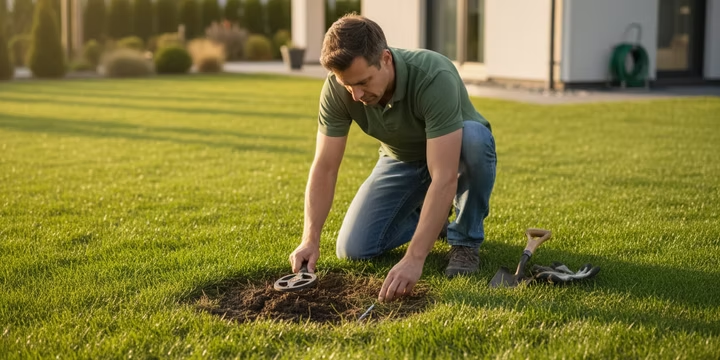
A healthy, green lawn depends on an irrigation system that works perfectly, but what happens when a sprinkler head goes missing? Over time, grass, soil, and thatch can swallow up sprinkler heads, leaving you with dry brown spots and a frustrating mystery to solve. A single buried or broken head can disrupt water coverage, stress your lawn, and even cause hidden leaks that waste thousands of gallons of water.
Learning how to locate sprinkler heads is a crucial skill for any homeowner. The most common methods involve a simple “wet walk” to look and listen for clues, consulting your system’s irrigation map, measuring the distance between known heads, and probing the soil in suspect areas. Whether you’re dealing with a pop up that won’t pop or a patch of grass that’s always dry, these tried and true techniques will help you find those elusive sprinklers and get your system back in top shape.
Start with a Simple “Look and Listen” Walkthrough
The easiest first step in how to locate sprinkler heads is to perform a visual and auditory inspection. Don’t rely on your automatic overnight watering cycle to spot problems. Instead, manually turn on one sprinkler zone at a time during the day and take a walk around your yard.
As the water runs, look for obvious signs of trouble. Are there areas where water is pooling or bubbling up from the ground? A soggy, squishy patch of turf is a classic red flag for a broken head or a leak right below the surface. At the same time, listen carefully. The sound of gurgling or hissing water underground can lead you directly to a hidden leak. If you uncover a major break or geyser, use our emergency sprinkler repair guide to shut off water fast and prevent damage.
This simple “wet walk” is a key part of sprinkler maintenance. A single broken head can waste over 1,000 gallons of water per hour, and even a tiny crack in an underground pipe can leak 6,300 gallons in a month if left unfixed. Catching these issues early saves water and protects your lawn. If you’re in the Lubbock area and suspect a bigger problem, the experts at M&M Sprinklers can perform a professional irrigation checkup to pinpoint any hidden issues.
Check Your Irrigation System Map
If you have one, your irrigation system map or blueprint is your best friend. This diagram, often provided by the original installers, shows the exact layout of your sprinkler pipes, valves, and heads.
Consulting the map is the most efficient way how to locate sprinkler heads that have gone missing. Compare the drawing to what you see in your yard. If the blueprint shows a sprinkler head in a location where you don’t see one, you’ve likely found a buried culprit. The map also shows the intended spacing, giving you a clear search area.
Many homeowners, especially in older homes, inherit systems without any documentation. If you don’t have a map, you can create your own by flagging the heads you can find and measuring the distances between them to build a rough schematic for future use.
Measure the Distance Between Sprinklers
When a map isn’t available, a measuring tape is your next best tool. Sprinkler systems are typically designed with consistent spacing to ensure even, head to head coverage for a healthy lawn. By measuring the distance between the heads you can see, you can figure out the pattern and deduce where a missing one should be.
Here’s how this method works:
- Pop up spray heads are often spaced 8 to 15 feet apart.
- Rotor heads, which cover larger areas, might be 25 to 50 feet apart.
Measure the gap between several pairs of visible heads in a single zone. If you find a consistent distance, say 12 feet, then search your lawn for a gap that is double that (24 feet). A missing sprinkler head is likely hiding right in the middle. This spacing method turns the frustrating task of how to locate sprinkler heads into a simple puzzle to solve.
Look for Clues in Your Lawn’s Health
Your lawn itself provides excellent clues. Pay close attention to the health and color of your grass, as it often tells a story about your irrigation system’s performance.
Dry or Brown Spots
Isolated dry or brown patches are one of the most common signs of a malfunctioning sprinkler. If you see a spot of grass that’s consistently crispy or less green than its surroundings, it’s a strong indicator that a nearby sprinkler head is buried, clogged, or broken. That patch isn’t getting the water it needs, and the problem head is almost always at the center of the brown area. Not sure whether the issue is a buried head, clog, or valve problem? Use our sprinkler system troubleshooting guide to narrow it down before you dig.
Blind Spots in Coverage
A “blind spot” is an area of your lawn that sprinklers aren’t reaching, often causing those telltale dry patches. This happens when a system lacks proper head-to-head coverage. Our sprinkler nozzle adjustment guide shows how to set arc and radius to close small gaps once you find the missing head. A missing or buried head is a frequent cause of a sudden blind spot. Observing where the water lands during a test run can help you identify these gaps and narrow your search for the sprinkler that’s supposed to be covering that zone.
Use a Garden Rake or Metal Detector
If visual clues don’t lead you to the missing head, it’s time for some hands on techniques. These methods help you find sprinklers buried just beneath the surface.
The Garden Rake Method
A simple garden rake can be surprisingly effective. Gently drag the metal tines of the rake over the area where you suspect a head is buried. Go slowly and apply light pressure. When the rake scrapes against the hard plastic or metal of the sprinkler head, you’ll feel a bump or hear a distinct “clink.” This low tech approach is perfect after you’ve already narrowed down the search area. If you uncover the head but it won’t pop or sprays unevenly, use this guide to fix a clogged sprinkler head.
Using a Metal Detector
For more deeply buried heads, a metal detector is the next logical step. Nearly all sprinkler heads contain metal components, like screws or internal springs, that a detector can pick up. Calibrate the device on a visible sprinkler head first to learn what signal to listen for. Then, sweep the detector in a slow, grid like pattern over the search area. When it beeps, you’ve likely found your target. This is a go to method for professional technicians and can save you from a lot of unnecessary digging.
For particularly tough cases where heads are buried under new sod or landscaping, you may need professional help. The team at M&M Sprinklers uses commercial grade equipment to find even the most stubbornly hidden sprinkler components.
Flag the Location and Probe the Soil
Once your detective work pays off, it’s important to mark the spot.
Mark the Spot with a Flag
Before you start digging, mark the suspected location with a small landscape flag, a stick, or even a rock. It’s surprisingly easy to lose the exact spot once you walk away to turn off the water or grab a shovel. Flagging each potential location helps you stay organized and work efficiently.
Use a Soil Probe for Hidden Leaks
Sometimes, the problem isn’t just a buried head but a leak underground. A soil moisture probe, or even a long screwdriver, can help you find oversaturated soil that isn’t visible on the surface. Push the probe into the ground in several spots around the problem area. If it slides in very easily or comes out much wetter in one spot compared to others, you’ve likely pinpointed an underground leak from a broken pipe or a head that has completely broken off. If the riser snapped, follow our broken sprinkler riser repair guide for a safe, permanent fix.
Frequently Asked Questions About How to Locate Sprinkler Heads
Q: Why do my sprinkler heads get buried? A: Over time, lawn mowers can push sprinkler heads down, and the natural growth of grass and thatch can slowly cover them. Soil can also settle or be moved around during landscaping projects, causing heads to become buried.
Q: Is it bad if a sprinkler head is buried? A: Yes. A buried sprinkler head cannot pop up properly to water your lawn, leading to dry spots. It can also cause water to spray underground, creating a muddy mess, wasting water, and potentially damaging the system. If the head sits below grade, raising it with a small extension is an easy fix. See our sprinkler head too low fix DIY riser guide.
Q: What’s the best way how to locate sprinkler heads without a map? A: The most effective method without a map is to turn on the system zone by zone. Look for wet spots and listen for water sounds. Then, measure the distance between the sprinklers you can see to estimate where the missing one should be located.
Q: Can I use a screwdriver to find sprinkler heads? A: Yes, you can gently probe the ground with a long screwdriver in the suspected area. When you hit the hard plastic body of the sprinkler, you will feel the resistance. Be careful not to apply too much force to avoid damaging the head.
Q: How do I dig out a buried sprinkler head? A: Once you locate the head, use a small trowel or shovel to carefully cut a circle in the turf around it. Remove the plug of grass and soil in one piece. After cleaning the head—or if it’s damaged, follow our sprinkler head replacement step-by-step DIY guide—you can place the turf plug back for a seamless repair.
Q: When should I call a professional for help? A: If you’ve tried these methods and still can’t find the head, or if you suspect a more complex issue like a deep underground pipe leak or an electrical problem, it’s time to call an expert. A professional has the tools and experience to diagnose and fix the problem quickly. Contact M&M Sprinklers for reliable sprinkler repair in the West Texas area. For an overview of common fixes and upgrades we provide locally, see our sprinkler repair in Lubbock guide.