
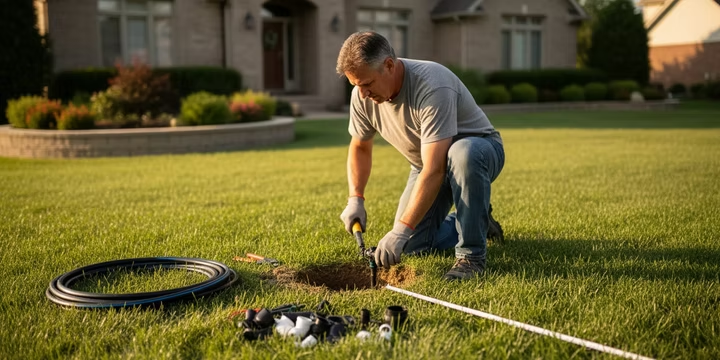
A sprinkler head in the wrong place is more than just an annoyance. It can lead to dry, brown spots in your lawn, soggy patches on your sidewalk, and surprisingly high water bills. Knowing how to move a sprinkler head is a valuable skill for any homeowner looking to improve lawn coverage. The basic process involves shutting off the water, digging up the existing head and pipe, extending the line with new pipe and fittings, and reinstalling the head in the new location. Relocating a head can dramatically improve your system’s efficiency. Pair this task with these water‑saving irrigation tips to lower bills. In fact, the EPA estimates that a single broken or poorly aimed sprinkler can waste over 25,000 gallons of water in just one season.
Safety and Preparation First
Before you even think about grabbing a shovel, a few safety steps are non negotiable. Getting this part right prevents costly accidents and headaches. If you nick a lateral while digging, follow this broken sprinkler line repair guide.
- Call 811: This is the most important step. In the U.S., a utility line is damaged every few minutes from digging. Dial 811 a few days before you plan to dig to have public utility lines (gas, electric, internet) marked for free.
- Shut Off the Water: Locate your home’s main water shutoff valve or the irrigation system’s specific valve and turn it off completely.
- Depressurize the System: Turn on your sprinkler controller (if it won’t run a zone, see our sprinkler controller repair guide) and run any zone for a minute or two. This will release any remaining water and pressure in the pipes, preventing a surprise shower when you make your first cut.
- Mark Existing Heads: Use flags to mark all sprinkler heads in the zone you are working on. This helps you visualize the current layout and plan the new location effectively.
Know Your Sprinkler System: Head and Pipe Types
Not all sprinkler systems are the same. Identifying your components is a key step in learning how to move a sprinkler head. Most residential systems in West Texas use one of two types of pipe.
- PVC (Polyvinyl Chloride): This is a rigid, white plastic pipe. It requires primer and cement for creating watertight seals and uses specific PVC fittings.
- Polyethylene (Poly Pipe): This is a flexible, black pipe that is more forgiving to work with. It uses barbed fittings and clamp rings instead of glue.
You will also need to identify your sprinkler head type.
- Spray Heads: These are stationary heads that spray in a fan shaped pattern. They are common in smaller, narrower areas of a lawn and are typically spaced 10 to 15 feet apart.
- Rotor Heads: These heads rotate to distribute water in a single stream over a larger area. They are used for bigger lawns and can be spaced anywhere from 20 to 40 feet apart.
Tools and Materials Checklist
Having the right gear makes the job go smoothly. Gather these items before you start to ensure you know how to move a sprinkler head without multiple trips to the hardware store.
- Shovel or spade
- Trowel
- Pipe cutters or a small handsaw
- The correct pipe type (PVC or Poly) to match your system
- Appropriate fittings (couplers, elbows, tees)
- PVC primer and cement (for PVC systems)
- Barbed fittings and clamps (for Poly systems)
- Teflon tape for threaded connections
- A level
- Marker flags
Plan the New Location and Coverage
Proper placement is everything. The goal is to achieve what professionals call “head to head” coverage, where the spray from one sprinkler head reaches the next one. This overlap ensures there are no dry spots. For bigger layout changes, see our irrigation system design guide.
When planning how to move a sprinkler head, consider the following:
- Obstructions: Keep the new location away from driveways, fences, trees, or large shrubs that could block the spray pattern.
- Elevation: Water will naturally run downhill. If you are moving a head on a slope, be mindful of how gravity will affect distribution.
- Future Plans: Think about any future landscaping changes. It’s easier to move a sprinkler head now than after you’ve planted a new tree on top of it.
Top 10 Ways to Move Sprinkler Head Without Damage
Relocating your irrigation hardware requires a delicate balance of technical skill and landscape preservation to ensure long-term efficiency. This selection of top-rated professionals represents the best options for homeowners seeking reliable results without risking damage to their underground systems. By choosing from these industry leaders, you ensure that your sprinkler adjustments are handled with the precision necessary to maintain a lush, healthy yard.
1. M & M SPRINKLERS
When turf is dense and the subsoil fights back with rock or caliche, a flexible swing joint keeps the move stress‑free. Expect a neat dig, a clean detach, and a reposition that survives mower wheels and Lubbock’s freeze‑thaw cycles.
- Best for: Turf, rocky soil
- Move it right: Excavate, detach the head, then install flexible swing pipe.
- Watch-outs: Call 811 before digging and verify spray overlap to prevent dry gaps.
2. Andy’s Sprinkler, Drainage & Lighting
Large hardscape additions and zone overhauls call for a plan‑first approach. By treating the yard like a map, this method reroutes laterals, resets arcs, and restores matched precipitation so patios and driveways stay dry.
- Best for: Large hardscapes, overhauls
- Move it right: Map the layout, reroute lateral lines, recalibrate head coverage.
- Watch-outs: Flag utilities and verify licensing before any trenching or manifold work.
3. Mean Green Sprinkler Repair
West Texas clay can heave rigid risers and tilt heads over time. Swapping to funny pipe builds in just enough flex to land the head precisely and keep alignment through seasonal shifts.
- Best for: Clay, rotors, lawns
- Move it right: Swap the rigid riser for flexible funny pipe.
- Watch-outs: Avoid kinks that choke flow; confirm pressure and rotation after the move.
4. Rain Maker Irrigation
Renovating beds or reshaping turf? A compact swing‑joint setup plus a short trench creates a clean relocation with minimal mess, even in sticky clay.
- Best for: Renovations, clay, turf
- Move it right: Excavate the head, attach a swing joint, and trench a short path.
- Watch-outs: Call 811 and maintain head‑to‑head coverage to prevent hot spots.
5. Perez Landscape and Irrigation
New beds and border edits often need a gentle nudge of nearby sprays. A careful sod cut preserves roots and curb appeal while the new run is set and flushed clear.
- Best for: Reroutes, new beds
- Move it right: Carefully cut sod, install the new pipe run, and flush lines.
- Watch-outs: Always confirm 811 utility markings before slicing into turf.
6. JET Landscape & Irrigation
If mower tires keep clipping a head, the fix is part height reset, part flexible connection. That combo protects fittings and keeps the top of the head flush with grade.
- Best for: Clay, mower protection
- Move it right: Excavate, splice in funny pipe, reset the head flush to grade.
- Watch-outs: Call 811 for utility locates and verify no lateral sits directly beneath the cap.
7. Sprout Outdoor Services LLC
Local familiarity with Lubbock soils helps when rotor zones need a few heads shifted for better arc and throw in the wind. Simple trenching with sturdy elbows keeps performance steady.
- Best for: Lubbock, clay, rotors
- Move it right: Trench, install elbows, and attach durable tubing.
- Watch-outs: Check license LI0028578 for compliance and permits where required.
8. West Texas Lawn Service
Routine lawn care can uncover buried or mis‑aimed heads. A quick expose‑and‑move restores throw distance, improves distribution uniformity, and cuts down on brown spots.
- Best for: Spray, rotors, clay
- Move it right: Dig to expose the pipe, swap the head, attach a coupler.
- Watch-outs: Call 811, then verify spray coverage and adjust nozzles to reduce overspray.
9. Watermaster Irrigation Supply, Inc.
DIYing the relocation? A smart stop at a pro supply counter gets you the right swing joints, barbed fittings, and riser lengths for a tight, leak‑free move.
- Best for: Turf, mower zones
- Move it right: Consult pros, swap risers, and thread barbed elbows securely.
- Watch-outs: Avoid kinks in tubing and flush debris before reinstalling the nozzle.
10. Wyatt Pump
Flooded holes make clean connections impossible. Pumping out the water and drying threads first helps fittings seat correctly and prevents grit from grinding seals.
- Best for: Clay, wet areas, precision moves
- Move it right: Dig a small sump, pump out water, wipe and dry pipe threads before reconnecting.
- Watch-outs: Flush the pump afterward and always check for buried utilities first.
Reinstall, Level, and Backfill Like a Pro
Once your new pipe is in place, the final step in knowing how to move a sprinkler head is to connect it properly. A professional installation ensures durability and proper function.
- Attach the Riser: Wrap the threads of a cut off riser (the small pipe connecting the head to the fitting) with Teflon tape and screw it into the underground fitting.
- Connect the Head: Screw the sprinkler head onto the riser until it is snug. If the head is cracked or won’t adjust, replace it using this step‑by‑step sprinkler head replacement guide.
- Check for Level: Place a small level on top of the sprinkler head. It should be perfectly level with the ground, not tilted. A tilted head will spray unevenly, and the EPA warns that poor adjustments can waste over 50 percent of the water used.
- Backfill Carefully: Gently pack soil around the pipe and head. Avoid dropping large rocks on the pipe. The top of the sprinkler head should sit flush with the soil level to prevent damage from lawnmowers.
Test, Adjust, and Optimize Coverage
With everything back in place, it’s time to check your work. This is where you fine tune the system to perfection.
- Turn the Water On Slowly: Open the main water valve just a little at first to let the pipes fill slowly. A sudden rush of water can cause a “water hammer” effect, potentially damaging fittings.
- Check for Leaks: Once the valve is fully open, carefully inspect all your new connections for any drips or spraying water. If you see a leak, shut the water off and re check your fittings.
- Run the Zone: Turn on the zone you worked on and watch the newly moved sprinkler head operate. Ensure it pops up correctly and sprays in the right direction.
- Adjust the Arc and Radius: Most heads have simple adjustments for the spray pattern (arc) and distance (radius). Use the appropriate tool or your fingers to dial in the coverage so it only waters your lawn, not the pavement.
Costs and Budgeting to Move a Sprinkler Head
The cost for how to move a sprinkler head varies depending on whether you do it yourself or hire a professional.
A DIY project is relatively inexpensive. You can expect to spend between $15 and $50 on materials like pipe, fittings, and PVC cement. The main cost is your time.
Hiring a professional irrigation technician in the Lubbock area typically costs between $75 and $250. This price covers labor, materials, and the technician’s expertise. While it costs more upfront, a professional repair from a company like M&M Sprinkler and Tree Services ensures the job is done right, preventing more expensive problems like major leaks or poor system pressure. If you discover valve or manifold issues during the move, review our sprinkler valve repair cost guide.
DIY or Call a Pro? A Decision Guide
Deciding whether to tackle the project yourself can be tricky when learning how to move a sprinkler head. Here’s a simple guide to help you choose.
Consider DIY if:
- You only need to move the sprinkler head a short distance (a few feet).
- The sprinkler line is buried shallow and is easy to access.
- You are comfortable with basic plumbing and have the right tools.
- You understand your system’s pipe and head types.
Call a Professional When:
- You need to figure out how to move a sprinkler head a long distance, requiring significant trenching.
- The repair involves complex manifold or valve work.
- You are unsure what type of pipe or fittings to use.
- You discover other problems like low pressure or persistent leaks.
- You simply want the peace of mind that the job is done correctly by a licensed expert.
For complex relocations or system troubleshooting in West Texas, an experienced team is invaluable. The professionals at M&M Sprinklers have been serving the Lubbock community since 1987 and can handle any irrigation challenge.
A Small Move for a Big Improvement
Learning how to move a sprinkler head may seem like a small task, but it has a huge impact on the health of your lawn and your water bill. By ensuring every head is perfectly placed, you create a more efficient, uniform irrigation system. Whether you choose to do it yourself or bring in an expert, taking the time to properly move a sprinkler head is a smart investment in your property. If you need help with your sprinkler system, from moving a head to a full system checkup, contact M&M Sprinklers for reliable, expert service in the Lubbock area.
Frequently Asked Questions
How far can I move a sprinkler head?
You can move a sprinkler head as far as you need, but longer distances require more trenching and pipe. For moves over 10 feet, it’s often wise to consult a professional to ensure system pressure is not negatively affected.
Can I add a new sprinkler head instead of moving one?
Yes, but you must ensure the zone has enough water pressure and flow to support an additional head. Adding too many heads to a single zone can cause all of them to perform poorly. A system audit by a professional can determine if your zone can handle it.
What kind of pipe should I use when I’m figuring out how to move a sprinkler head?
Always use the same type and size of pipe that is already in your system. Mixing PVC and poly pipe is generally not recommended without the proper transition fittings.
Do I need to glue PVC sprinkler pipes?
Yes. All PVC connections must be cleaned, primed with purple primer, and then sealed with PVC cement to create a permanent, watertight bond.
Why is my sprinkler head crooked?
A crooked head is usually caused by improperly packed soil around the base. The head should be on a stable footing and the soil around it should be compacted firmly to prevent it from tilting over time.
How often should I inspect my sprinkler system?
It’s a good practice to run your system and check all heads at least once a month during the watering season. Look for leaks, broken heads, or clogged nozzles to catch problems before they waste significant water. Use our seasonal sprinkler maintenance checklist to stay on track. For a comprehensive inspection, consider a professional sprinkler system checkup.