
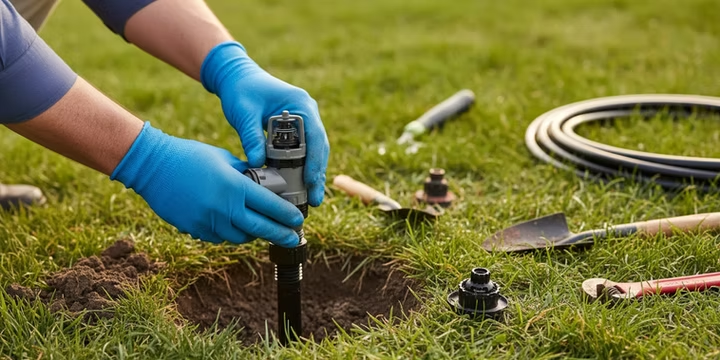
A broken sprinkler head can turn a lush lawn into a patchy, uneven mess. One of the most common workhorses in residential irrigation is the Rain Bird 3500 rotor, known for its reliability in small to medium sized yards. When one fails, a rain bird 3500 sprinkler head replacement is a simple project that involves shutting off the water, digging out the old head, unscrewing it, and threading on the new one.
This guide walks through every step, from preparing for the job to testing your new installation, plus details on nozzle removal, filter screen cleaning, and where to find the official user guide. Everything you need for a successful rain bird 3500 sprinkler head replacement is right here.
If the project feels bigger than expected, or you want it done right the first time, the team at M&M Sprinklers Lubbock handles these replacements regularly across West Texas.
Before You Get Started: Key Preparations
A little prep work goes a long way. Before you start digging, there are two important things to check that will make the replacement process much smoother.
Choose the Right Sprinkler for the Job
Is the Rain Bird 3500 the right choice for your space? It all comes down to “throw distance,” or how far the sprinkler sprays water.
- Rotors vs. Sprays: Rotors, which rotate to distribute water, are designed for larger areas, typically any space more than 18 feet across.
- Rain Bird 3500 Range: The Rain Bird 3500 is a short to mid range rotor. It works well for areas needing a radius of about 15 to 35 feet.
- Larger Areas: For bigger spaces, you would likely need a model like the Rain Bird 5000 series, which covers a radius of 25 to 50 feet. For a broader look at sprinkler head types, check out our guide to irrigation heads.
Choosing a rotor with the correct throw distance is essential for efficient watering and preventing overspray onto sidewalks or driveways.
Check for a Weeping Valve
Do you notice a constant puddle around the sprinkler head, even when the system is off? You might have a weeping valve, which is a zone valve that isn’t shutting off completely. See our sprinkler valve repair guide to diagnose and fix it. This slow, continuous leak is usually caused by a tiny piece of debris, like a grain of sand, stuck in the valve’s diaphragm. A weeping valve can waste a surprising amount of water and lead to soggy spots in your lawn. Fix this issue before proceeding with the rain bird 3500 sprinkler head replacement, as a new head will not solve the constant leak.
Download the Rain Bird 3500 User Guide
Before starting, it helps to have the manufacturer’s documentation on hand. Rain Bird publishes a detailed installation and operation guide for the 3500 series on their product page, including nozzle performance charts, arc adjustment diagrams, and torque specifications. Practitioners on Reddit recommend keeping this guide pulled up on a phone during installation because it shows the exact location of the radius adjustment screw and the correct direction for arc changes. The nozzle performance table in the user guide is particularly useful for matching GPM (gallons per minute) to your system’s water pressure, which helps prevent zones from running dry or exceeding flow capacity.
Step by Step: Rain Bird 3500 Sprinkler Head Replacement
With your prep work done, it’s time to get your hands dirty. Follow these steps for a straightforward replacement.
Step 1: Turn Off the Water Supply
This is the most important first step. An irrigation system holds water under pressure, and if you unscrew a head without shutting the water off, you will create a messy geyser. A single broken head can gush over 1,000 gallons of water per hour. To avoid this, locate your irrigation system’s main shutoff valve (often near the backflow preventer or water meter) and turn it off completely. If your backflow preventer needs service or certification, see our backflow testing guide.
Step 2: Expose the Sprinkler Head
Sprinkler heads are installed flush with the ground, so you will need to do a little digging. Use a small trowel or shovel to carefully clear away the grass and soil around the sprinkler body. Dig down far enough to expose the body and the fitting it connects to below. This gives you room to work and, just as importantly, prevents dirt from falling into the open water line. Having trouble locating buried heads? Our guide to finding sprinkler heads can help.
Step 3: Remove the Old Rotor Head
Grip the body of the old sprinkler head firmly and turn it counter clockwise (lefty loosey) to unscrew it from the riser pipe beneath it. Most of the time, it will come off with simple hand strength.
What If the Head is Stuck?
Over time, mineral buildup and dirt can cause a head to seize. If it won’t budge by hand, you can use a pair of channel lock pliers for extra grip. Hold the sprinkler body and apply steady, gentle pressure. Be careful not to use excessive force, as you could crack the PVC riser underneath. If that happens, follow our broken sprinkler riser repair guide to fix it. A little wiggling back and forth can also help break it loose.
Step 4: Flush the Irrigation Line
Once the old head is off, you will see the open riser pipe. Before installing the new sprinkler, flush out any debris that may have collected in the line. Briefly turn the water supply back on for that zone for about 5 to 10 seconds. This will shoot a stream of water up, carrying any dirt, sand, or plastic shavings with it. This simple step is critical for preventing your new sprinkler from clogging immediately.
Step 5: Remove and Clean (or Replace) the Filter Screen
Here is a step many homeowners skip, and it comes back to bite them. The Rain Bird 3500 has a small filter screen built into the bottom of the rotor body. Its job is to catch sediment before it reaches the nozzle and internal gears, but over time the screen gets clogged with sand, mineral deposits, and debris.
How to remove the filter screen:
- Pull up on the riser stem of the new (or old) Rain Bird 3500 to extend it.
- Look at the bottom of the stem assembly. You will see a small cylindrical screen seated inside.
- Use a flat blade screwdriver or your fingernail to gently pry the screen out.
- Rinse it under running water. If there is heavy mineral buildup, soak it in white vinegar for 15 to 30 minutes, then scrub with an old toothbrush.
- Push the clean screen back into place until it clicks.
One YouTube walkthrough from a professional irrigation tech pointed out that about half the “my new sprinkler won’t rotate” complaints he sees come from either a clogged filter screen or debris that bypassed a dirty screen. If the screen is cracked or misshapen, replace it. Rain Bird sells replacement screens, and they cost next to nothing. A clean filter screen means longer life for your new rotor and fewer clogged sprinkler head problems down the road.
Step 6: Adjust Height with a Riser if Needed
Check the height of the riser. The top of your new Rain Bird 3500 should sit level with the soil. If the sprinkler has sunk over time, you may need to add a small riser extension. These inexpensive threaded pipes come in various lengths and simply screw in between the existing fitting and the new sprinkler head to raise it to the proper grade.
Step 7: Install the New Rain Bird 3500
Now for the easy part. Take your new rain bird 3500 sprinkler head replacement and carefully thread it clockwise (righty tighty) onto the riser. Hand tightening is usually sufficient to create a good seal. Make sure it’s snug, but do not overtighten.
Nozzle Removal and Swapping on the Rain Bird 3500
One of the best features of the Rain Bird 3500 is its interchangeable nozzle system. You don’t always need to replace the entire head. Sometimes a nozzle swap is all it takes to fix poor coverage or adjust to a new landscape layout.
How to Remove a Nozzle
- Pull up the riser stem and hold it extended.
- The nozzle sits in a socket on the top of the rotor turret. You will see a small set screw on some models, but most Rain Bird 3500 nozzles simply pull straight out.
- Grip the nozzle with your fingers (or needle nose pliers if it is stuck) and pull it free.
- Insert the replacement nozzle by pressing it firmly into the socket until it seats.
Choosing the Right Nozzle
The Rain Bird 3500 ships with a “nozzle tree” containing six Rain Curtain nozzles, each color coded for different flow rates and distances. According to Rain Bird’s published nozzle performance data, nozzle selection depends on two factors: your available water pressure (measured in PSI) and the radius you need to cover.
Matching the correct nozzle to your zone’s pressure and spacing prevents both overwatering and dry spots. For a deeper walkthrough on fine tuning, see our sprinkler nozzle adjustment guide.
Practitioners on irrigation forums often point out that mismatched nozzles are the number one cause of uneven coverage on residential zones. If you have three heads on a zone all set to different nozzle sizes, some areas will get double the water while others stay dry. Take five minutes to check every head on the zone while you have the tools out.
After Installation: Testing Your New Sprinkler
The final step in any rain bird 3500 sprinkler head replacement is to test your work.
Turn the water back on slowly and run the zone with the new head. Watch the sprinkler pop up and begin to rotate. Check for these things:
- Smooth Rotation: The head should rotate smoothly without sticking or stopping. If it hesitates, debris may have entered during installation, or the filter screen may need cleaning (see above).
- Correct Arc: Ensure the sprinkler is watering only the lawn and not the sidewalk or fence. You can adjust the watering arc with a flat blade screwdriver.
- Proper Distance: Check that the water stream is reaching the next sprinkler head. If it’s overshooting, use the radius reduction screw on top to decrease the throw distance by up to 25%.
- No Leaks: Look for any water bubbling up around the base of the new head. If you see leaks, tighten the connection slightly more.
Observing a full rotation test gives you peace of mind that your lawn will be watered efficiently and your rain bird 3500 sprinkler head replacement was a success. To avoid watering during storms, consider adding a rain sensor. Our rain sensor installation guide shows how.
If you run into persistent issues like low pressure across the zone or multiple heads misbehaving, the problem likely goes beyond a single head. That is a good time to schedule professional sprinkler repair rather than chasing symptoms one at a time.
Frequently Asked Questions
What tools do I need for a Rain Bird 3500 sprinkler head replacement?
For most jobs, you only need a small garden trowel to dig around the head, a flat blade screwdriver for arc and radius adjustments, and possibly a pair of channel lock pliers if the old head is stuck. Needle nose pliers can also help with stubborn nozzle removal.
Why is my new Rain Bird 3500 not rotating?
This is often caused by debris getting inside the head during installation, which is why flushing the line and cleaning the filter screen are so important. It could also be that the arc is set incorrectly. Check the adjustment settings on top of the rotor. If the rotor is still stuck, see our guide on fixing sprinkler heads that won’t rotate. If electrical or timing issues are suspected, our irrigation controller repair guide can help.
My sprinkler head is too low in the grass. How do I fix it?
You can raise a sprinkler head by unscrewing it and adding a threaded riser extension of the appropriate length. This will lift the head to be flush with the ground again.
Can I replace just the nozzle on my Rain Bird 3500?
Yes. The Rain Bird 3500 comes with a “nozzle tree” containing six different Rain Curtain nozzles. Pull the old nozzle straight out from the turret and press the new one in. This lets you customize the flow rate and watering distance for your specific area without buying a whole new head.
How do I clean or replace the filter screen?
Extend the riser stem, pry the filter screen from the bottom of the stem assembly with a flat screwdriver, rinse it clean, and push it back in. If the screen is damaged, replacement screens are available at most irrigation supply stores for a couple of dollars.
How do I know the Rain Bird 3500 is the right rotor for my yard?
Measure the distance from the sprinkler head location to the edge of the area you need to water. If that distance is between 15 and 35 feet, the Rain Bird 3500 is an excellent choice. For distances beyond that, consider stepping up to the Rain Bird 5000 series.
Where can I find the official Rain Bird 3500 user guide?
Rain Bird hosts the full installation and specification sheet on their 3500 series product page. The document covers nozzle performance tables, arc adjustment instructions, filter screen details, and troubleshooting steps. Save it to your phone before heading outside.
A properly functioning irrigation system is the foundation of a healthy lawn. By following this guide for your rain bird 3500 sprinkler head replacement, you can save water, improve your lawn’s appearance, and feel the satisfaction of a job well done. For bigger repairs, system diagnostics, or a full tune up, contact M&M Sprinklers Lubbock for expert service across West Texas.