
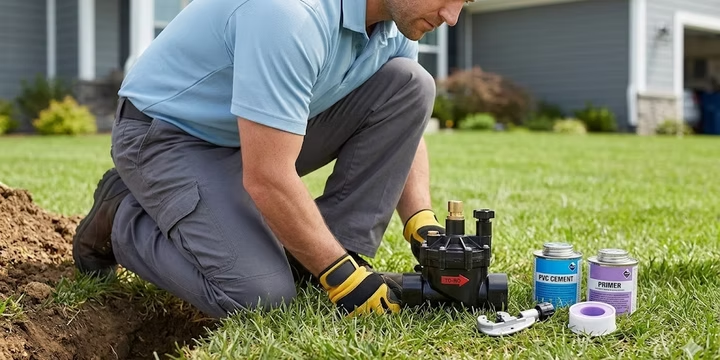
Keeping your lawn green and healthy in West Texas requires a reliable sprinkler system. A critical part of that system is the anti siphon valve. It controls the water flow to your sprinkler zones and protects your family’s drinking water from contamination. Installing these valves correctly involves mounting them at least six inches above the highest sprinkler head, using specific pipe materials for durability, and wiring them to your system’s controller.
This guide covers every step of installing anti siphon sprinkler valve setups, from tapping into your main line to the final pressure test. Whether you’re building a new system or replacing old valves, getting these details right keeps your system safe, efficient, and up to code.
If you’d rather leave it to the pros, M&M Sprinklers has been handling irrigation installs across Lubbock and West Texas since 1987.
Tool and Material Checklist Before You Start
Gathering everything before you start saves trips to the hardware store and keeps the project moving. Practitioners on Reddit and irrigation forums consistently point out that forgetting one fitting or the wrong glue can stall a weekend project for days. Here’s what you’ll need:
Tools:
- Pipe cutter or hacksaw
- PVC primer and cement (for solvent welding)
- Teflon tape (plumber’s tape)
- Adjustable wrench and channel lock pliers
- Tape measure
- Shovel and trenching spade
- Wire strippers
- Screwdriver (flathead and Phillips)
- Level (for checking valve orientation)
Materials:
- Anti siphon valve(s), one per zone, sized to match your flow rate
- Schedule 40 PVC pipe and fittings (tees, elbows, couplings)
- Galvanized steel or brass pipe and fittings for exposed inlet risers
- PVC to metal threaded adapters
- Waterproof wire connectors (gel filled)
- 18 gauge multi strand direct burial sprinkler wire
- Stakes or straps for securing the manifold
- Gravel (for drainage around the installation site)
Having this checklist printed out and checked off before you cut any pipe makes the whole process smoother.
First Things First: The Master Shutoff Valve
Before you get to any zone valves, you need a way to turn off the water to the entire irrigation system. This is the job of the master shutoff valve, also called an isolation valve.
This main valve is your first line of defense for repairs, maintenance, and emergencies (see our emergency sprinkler repair guide for quick shutoff tips). It’s typically installed where your sprinkler system branches off from your main water supply. By closing it, you can work on any part of the sprinkler system without turning off the water to your house. For a proper setup, the master shutoff valve is always placed before any control valves, including the anti siphon valves.
What Is an Anti Siphon Valve and Why Do You Need One?
An anti siphon valve is a two in one device. It’s an automatic zone valve that turns a sprinkler station on and off, and it has a built in backflow preventer. Backflow is what happens when pressure in the main water line drops, creating a siphon effect that can suck contaminated water from your lawn back into your home’s pipes. Think fertilizers, pesticides, and soil bacteria getting into your drinking water.
To prevent this serious health hazard, most local codes, including those in Texas, require an approved backflow prevention method on any irrigation system connected to a potable water supply. According to the Texas Commission on Environmental Quality, all customer service inspections must verify adequate backflow protection on irrigation connections. In Lubbock, you’ll also need periodic backflow testing to stay compliant. The anti siphon valve is a common and cost effective solution for residential systems. For sites that require a dedicated assembly, see our RPZ backflow preventer guide.
When water to a zone shuts off, a vent on top of the valve opens to let air in, which breaks the vacuum and stops any potential backflow in its tracks.
Connecting to the Main Line with a Tee Fitting
The first physical step of installing anti siphon sprinkler valve systems is tapping into your main water supply line. You do this with a tee fitting.
After shutting off the master valve (or main water to the house if you haven’t installed one yet), cut into the supply pipe at the point where you want the irrigation line to branch off. Install a tee fitting so one branch continues to the house and the other feeds your sprinkler manifold.
A few things to get right here:
- Match the tee size to the supply line. If your main is 1 inch, use a 1 inch tee. Downsizing at the branch point chokes flow before it even reaches the valves.
- Use Schedule 40 PVC for the underground supply run from the tee to the valve manifold. This pipe is under constant pressure and needs the thicker wall rating.
- Orient the tee properly so the branch outlet points toward where your valve manifold will sit. Planning this angle saves awkward extra fittings later.
- Support the connection. Pack firm soil around the tee after backfilling. Movement at this junction is a common source of leaks.
One YouTube installer walkthrough noted that many DIYers underestimate how much the existing pipe moves when you cut into it. Brace both sides of the cut pipe with packed soil or a helper’s hands before gluing the tee in place. A shifting pipe during the solvent welding cure window means a bad joint.
The Golden Rule: Mounting Height Requirement
Here’s a non negotiable rule for installing anti siphon sprinkler valve systems: the valve must be installed higher than the highest sprinkler head it controls.
The standard requirement is a minimum of 6 inches of elevation above the highest head. This height difference creates the necessary air gap for the backflow prevention feature to work correctly. Some experts even recommend 8 to 12 inches for an extra margin of safety. If the valve is too low, it defeats the entire purpose and puts your water supply at risk.
The Uniform Plumbing Code (Section 603.5.6) specifies that atmospheric vacuum breakers on irrigation systems must be installed at the required elevation above the downstream piping. This is a critical detail that professional installers check on every job.
Why Anti Siphon Valves Must Be Installed Above Ground
You might be tempted to bury your valves to keep your yard looking tidy, but you absolutely cannot do this with anti siphon valves. They must be installed above ground.
The reason is simple: the atmospheric vent on top needs access to open air to function. If you bury the valve, the vent can get clogged with dirt or flood with water, making it completely useless for backflow prevention. This is why you always see them mounted on vertical pipes, or risers, sticking out of the ground. This also makes them easier to inspect and service. A little water spilling from the top of the valve when it shuts off is normal. It shows the vent is doing its job. If it’s more than a trickle, check our valve leak fix guide.
Orienting the Valve with the Flow Direction Arrow
Every anti siphon valve has a flow direction arrow molded or stamped into the body. This arrow must point in the direction water travels, from the supply pipe toward the sprinkler zone.
Installing the valve backwards is one of the most common mistakes on forum threads about anti siphon valves. The valve simply won’t open correctly, and the backflow preventer mechanism won’t seat properly. Before you thread or glue the valve onto the riser, take five seconds to find that arrow and confirm it points downstream toward the zone piping. It sounds obvious, but it’s an easy thing to miss when you’re focused on getting threaded connections tight.
If you can’t find the arrow, look for the markings “IN” and “OUT” on the valve body. The inlet side connects to your pressurized supply. The outlet side feeds the zone.
Ensuring Proper Drainage Around the Installation Site
Anti siphon valves sit above ground, which means water drains down around the base of the risers every time a zone shuts off. In West Texas, our clay heavy soils don’t drain quickly. Standing water around the valve base can erode soil, destabilize the manifold, and in rare cases allow water to submerge the valve vent during heavy rain.
To prevent problems:
- Add a gravel bed (4 to 6 inches of pea gravel) around the base of the manifold risers. This lets water percolate away quickly instead of pooling.
- Grade the soil so it slopes away from the valve installation point. Even a slight slope of 1 to 2 percent makes a big difference.
- Avoid low spots. If the only place you can install the manifold is in a natural low area of the yard, build up the grade or consider a small French drain to redirect standing water.
Poor drainage around the installation site is a slow moving problem. It doesn’t show up on day one, but over a season or two, soil erosion and shifting can crack PVC joints and tilt the manifold. For broader yard drainage strategies, check this drainage solutions guide.
Getting the Pipes Right: Materials and Layout
Proper pipe assembly is key to a leak free, long lasting system. This involves using the right materials and arranging them in a logical way.
Inlet Pipe Material: Metal Is a Must (Usually)
The Universal Plumbing Code has a specific rule for the pipe that feeds water into your anti siphon valve (the inlet). Any exposed, above ground portion of this pipe must be made of metal, like galvanized steel, brass, or copper. The only exception is if you use PVC pipe that is buried at least 18 inches deep.
Why the strict rule?
- UV Resistance: PVC plastic becomes brittle and can crack when exposed to the sun’s UV rays over time. Metal isn’t affected.
- Durability: An exposed pipe could get hit by a lawnmower or stepped on. A metal pipe is far more resistant to physical damage.
Approved PVC Pipe and Fitting Layout
When you group several valves together, you create a valve manifold. If yours is cracked or leaking, here’s a step by step on replacing a sprinkler valve manifold.
- Use Schedule 40 PVC: The manifold and any pipe before the valves are under constant water pressure. Always use thick walled, pressure rated Schedule 40 PVC for these components.
- Keep it Neat: Arrange valves in a straight line or another logical pattern. This reduces stress on the fittings and makes troubleshooting easier.
- Provide Support: Secure the manifold so it doesn’t shift. If it’s above ground, you can strap it to a stake or a wall. For underground manifolds, pack soil firmly underneath to provide a stable base.
Assembling Your Valves and Pipes
Connecting everything correctly is crucial for preventing leaks. You’ll be dealing with both threaded and glued connections.
For threaded parts, like screwing a plastic valve onto a metal fitting, always wrap the male threads with Teflon tape (plumber’s tape). Use 2 to 3 clockwise wraps to create a watertight seal.
For PVC connections, you’ll use a two step process called solvent welding:
- Apply PVC primer (usually purple) to both the outside of the pipe and the inside of the fitting.
- Apply PVC cement to both surfaces, push the pipe into the fitting with a slight twist, and hold it for about 30 seconds. This creates a permanent, fused bond.
Important: Allow the solvent weld joints to cure before pressurizing the system. Most PVC cement manufacturers, including Oatey, recommend a minimum of 15 minutes for small diameter pipes (under 2 inches) at temperatures above 60°F, and up to 24 hours for larger pipes or cold weather. Pressurizing too soon is a guaranteed way to blow a joint.
Properly assembling these connections is a skill. If you’re struggling with leaks or aren’t sure about the process, a professional can get your connections sorted out. M&M Sprinklers offers sprinkler repair across Lubbock and the surrounding West Texas area.
Sizing Your Valves for Optimal Performance
Choosing the right size valve is important for maintaining good water pressure. If a valve is too small for the amount of water flowing through it, your sprinklers won’t perform well.
Valve sizing is based on two things:
- Flow Rate (GPM): Add up the gallons per minute used by all sprinkler heads in a single zone. Choose a valve rated to handle that flow. A 3/4 inch valve might be suitable for zones up to 12 GPM, while a 1 inch valve works well for zones in the 15 to 30 GPM range.
- Inlet Size: Generally, match your valve size to your main pipe size. If you have a 1 inch main line, using 1 inch valves helps maintain consistent flow and pressure.
If you’re dealing with pressure issues after installation, this guide on fixing low water pressure in sprinkler systems walks through the common culprits.
Avoid Downstream Shutoff Valves and Backpressure
This is a point that catches many DIYers off guard. You cannot install a shutoff valve or any other restriction on the downstream (outlet) side of an anti siphon valve. Doing so can create backpressure that forces the atmospheric vent closed, which defeats the entire backflow prevention mechanism.
The same principle applies to any condition that creates backpressure downstream:
- No gate valves or ball valves between the anti siphon valve and the sprinkler heads.
- No check valves on the zone piping downstream of the anti siphon valve.
- Avoid elevation changes where the zone piping rises above the anti siphon valve. If the pipe runs uphill to heads that are higher than the valve, backpressure during shutoff will compromise the vent.
Practitioners on irrigation forums report that installing a ball valve downstream “for convenience” is one of the most common code violations inspectors flag on residential systems. The anti siphon valve is designed to be the last point of control before water reaches the sprinkler heads. Anything that traps pressure between the valve and the heads undermines its safety function.
If you need to isolate individual zones for maintenance, the correct approach is to turn off water upstream of the anti siphon valve (at the master shutoff or at the manifold supply) rather than adding a valve downstream.
Wiring the Solenoids to Your Controller
The solenoid is the electronic part of the valve that receives signals from your sprinkler controller. Wiring it correctly is what makes your automatic system work.
You’ll need direct burial, multi strand sprinkler wire (18 gauge is standard). One wire, called the common wire (usually white), connects to one of the two leads on every valve solenoid. The other lead from each solenoid gets connected to its own colored wire, which runs back to a specific zone terminal on your controller. If a zone won’t respond, start with this sprinkler wire troubleshooting guide.
All underground wire connections must be made with waterproof wire connectors. These are gel filled caps that seal the connection from moisture, preventing corrosion that would cause the valve to fail. Twist on connectors without gel filling will corrode within a season or two in most soil conditions.
Perform a Pressure and Leak Check After Curing
Before you bury your pipes, it’s essential to perform a pressure and leak test. This step catches problems while they’re still easy to fix. Do not skip it.
Here’s the process:
- Wait for full cure. After assembling your manifold, give all solvent weld joints enough time to cure. At minimum, wait 2 hours for pipe under 2 inches at moderate temperatures. If temperatures dropped below 40°F during assembly, wait a full 24 hours.
- Open the master valve slowly. Don’t crank it wide open. Turn it a quarter turn and let the system fill gradually. A sudden surge of water can blow joints that are marginally cured.
- Walk and inspect every connection. Check every joint, every threaded fitting, every adapter. Look for drips, weeping, or spray. Run your finger along the bottom of horizontal pipes where drips are easy to miss visually.
- Activate each zone from the controller. Turn on each zone individually and let it run for a few minutes. Watch the anti siphon valve for proper operation: it should open cleanly, and you may see a small amount of water release from the vent when the zone shuts off.
- Check pressure. If you have a pressure gauge that threads onto a hose bib, check your static pressure and then check it again with a zone running. A drop of more than 10 to 15 PSI may indicate an undersized valve, a partially closed fitting, or a restriction.
A tiny leak, as small as 1/32 of an inch, can waste over 6,000 gallons of water in a month. If you notice a wet spot or pressure drop, this broken sprinkler line repair guide can help you make a clean fix.
Fine Tuning: Flow Control
Many quality valves include a flow control knob. This lets you fine tune the water flow and pressure for each zone. If your sprinklers are misting (a sign of high pressure), turn the flow control knob clockwise to reduce the flow until you get larger, more effective water droplets. Misting wastes water to wind and evaporation, which is a real problem in Lubbock’s dry, windy climate.
Manifold Spacing and Final Installation Steps
When building your manifold, leave a bit of space between each valve. This service allowance makes it possible to repair or replace a single valve without having to cut out the entire manifold. Using unions or threaded fittings can make this even easier.
For the first sprinkler head installation, the pipe running from the valve outlet should go down into a trench. While lateral pipes are often buried 8 to 12 inches deep, it’s good practice to bury the first elbow coming off an anti siphon valve at least 18 inches deep for stability. Remember to flush the pipes with water to clear out any debris before attaching the sprinkler heads.
Properly installing anti siphon sprinkler valve systems is a detailed process, but getting it right ensures a safe and efficient watering system for years to come. When you’re ready to power up for the season, follow our sprinkler system startup guide.
For homeowners in Lubbock and across West Texas who want it done right the first time, reach out to M&M Sprinklers. With licensed irrigators, certified arborists, and decades of local experience, they handle everything from valve installs to full system design.
Frequently Asked Questions
1. Can I install an anti siphon valve in an underground valve box?
No. Anti siphon valves must be installed above ground because their backflow prevention mechanism requires access to open air to work correctly.
2. How many anti siphon valves do I need for my sprinkler system?
You need one anti siphon valve for each irrigation zone. Each valve controls the flow and provides backflow protection for that specific zone.
3. What happens if I install my anti siphon valve lower than the sprinkler heads?
If the valve is installed below the highest sprinkler head, the backflow prevention feature will not function properly. This creates a serious health risk by allowing contaminated water to siphon back into your home’s water supply.
4. What kind of pipe should I use to connect to the inlet of an anti siphon valve?
For any portion of the inlet pipe that is exposed above ground, you must use metal pipe (like galvanized steel or brass). PVC is only permitted if it is buried at least 18 inches deep.
5. What is the difference between an anti siphon valve and a regular inline valve?
An anti siphon valve includes a built in backflow preventer and must be installed above ground. A regular inline valve only controls water flow and does not offer backflow protection. It is typically installed below ground in a valve box.
6. Do I need a master shutoff valve if I have anti siphon valves?
Yes. The master shutoff valve allows you to turn off water to the entire irrigation system for major repairs or winterization. Anti siphon valves only control individual zones.
7. Why is my anti siphon valve leaking water from the top?
A small amount of water discharging from the top vent when the zone shuts off is normal. However, a constant leak could indicate debris in the valve or a worn out seal that needs attention.
8. Can I put a shutoff valve downstream of the anti siphon valve?
No. Any valve or restriction downstream of the anti siphon valve can create backpressure that prevents the atmospheric vent from opening. This defeats the backflow protection and violates plumbing code.
9. Can I tackle installing an anti siphon sprinkler valve myself?
While it is a possible DIY project, it requires careful attention to plumbing codes, especially regarding height, pipe material requirements, and avoiding downstream backpressure. For peace of mind and to ensure it’s done right, consider contacting a licensed professional. The team at M&M Sprinklers has decades of experience ensuring systems in Lubbock are safe and efficient.