
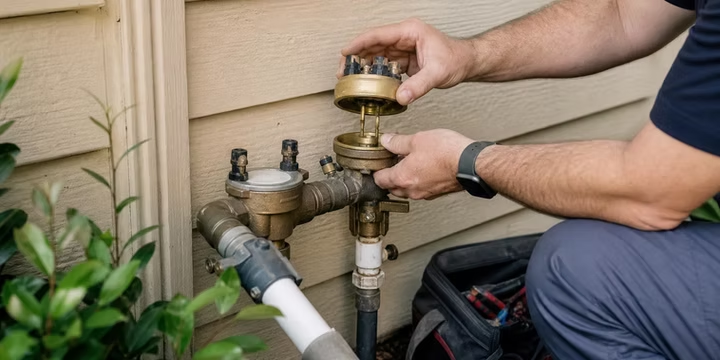
Sprinkler Vacuum Breaker Replacement: What It Means and When You Need It
TLDR: Sprinkler vacuum breaker replacement means restoring the backflow safety device on your irrigation system, either by rebuilding internal parts with a repair kit or installing a new assembly entirely. The right choice depends on whether the brass body is intact, whether the device is installed at the correct height, and whether it can pass a required backflow test afterward. In Lubbock and across Texas, replaced or repaired backflow assemblies typically need certified testing and city reporting.
If you found this page after discovering a brass device near your sprinkler shutoff spraying water from the top, you are probably looking at a pressure vacuum breaker, often shortened to PVB. It is the safety valve between your irrigation water and your drinking water. “Replacement” sounds straightforward, but the real question is whether you need a $50 bonnet kit, a $200 new assembly, or a $600+ professional job that includes pipe work, code corrections, and certified testing.
This guide breaks down what the term actually means, what triggers the need for replacement, and how Lubbock and Texas regulations affect the process.
Diagnose your PVB issue with our detailed repair walkthrough.
What a Sprinkler Vacuum Breaker Does
A sprinkler vacuum breaker prevents irrigation water from flowing backward into your home’s drinking water supply. This reverse flow, called backflow, happens when pressure drops in the supply line. TCEQ describes a scenario where pesticide-contaminated water from an irrigation system gets pulled backward through pipes and into a residence (and potentially a water main) during a pressure loss event source.
That is not hypothetical. It is why cities regulate these devices.
The vacuum breaker works by admitting air when supply pressure drops. That air breaks the siphon effect, stopping contaminated irrigation water (which can contain soil, fertilizer, pesticides, bacteria, or stagnant water) from reaching potable lines. In residential sprinkler systems, this device is almost always a PVB mounted above ground on the main irrigation supply line. For a deeper explanation, read about how backflow preventers protect water.
Is a Vacuum Breaker the Same as a Backflow Preventer?
Not exactly. A vacuum breaker is one type of backflow preventer, not a separate category. The confusion is understandable because the terms get used interchangeably in casual conversation.
Colorado State University Extension explains that backflow prevention devices protect potable water from contamination and that backflow occurs in two forms: back-siphonage (caused by a pressure drop) and backpressure (caused by downstream pressure exceeding supply pressure). Not all devices handle both types source.
Here is how the common types compare:
When homeowners search for “sprinkler vacuum breaker replacement,” they are almost always dealing with a PVB. The rest of this guide focuses there.
Signs You Need a Vacuum Breaker Replacement
The symptoms that send people searching fall into a few predictable categories:
Water spraying from the top. A brief spit during startup is normal as the assembly pressurizes. Continuous water from the top usually points to a worn poppet, cracked bonnet, debris lodged in the air inlet, or freeze damage. For a full symptoms breakdown, see our guide on vacuum breaker leaking fixes.
Cracked plastic bonnet or cap. This is extremely common after a hard freeze. Practitioners on SprinklerTalk forums describe broken bonnets as a telltale sign of water left in the device over winter. The plastic parts are sometimes designed to fail first, protecting the brass body from cracking.
Water leaking from the brass body itself. This is more serious. A cracked body means the entire assembly needs replacement, not just the internal parts.
Failed backflow test. If a licensed tester determines the check valve or air inlet valve cannot hold, and a rebuild does not fix it, the assembly needs replacing.
Weak pressure across sprinkler zones. A leaking vacuum breaker can bleed off pressure before water reaches downstream zones. But low pressure can also indicate other irrigation problems like underground leaks or valve issues, so diagnosis matters.
Device installed too low. If the PVB sits lower than the highest sprinkler head or downstream piping, no internal repair will fix the compliance problem.
Repair Kit vs Full Assembly Replacement
This is the core question behind most sprinkler vacuum breaker replacement searches. Homeowners see a bonnet/poppet repair kit online for under $100, then receive a professional quote for several hundred dollars. The gap creates frustration unless the scope differences are clear.
When a repair kit works
Manufacturers design PVBs to be serviced. Zurn’s 720A repair kit includes the bonnet washer, bonnet O-ring, poppet, spring, discs, guide spider, and hardware. FEBCO’s Series 765 uses engineered plastic for the bonnet and poppet assembly specifically to protect the brass body from freeze damage, reinforcing the idea that these top parts are designed to be replaced.
A repair kit is appropriate when:
- The leak is from the top or bonnet area
- The brass body is intact with no cracks
- The internal seating surface is not scored
- The device is installed at the correct height
- Test cocks and shutoff valves still work
- The model and size are known
When full replacement is necessary
Full sprinkler vacuum breaker replacement is the right call when:
- The brass or bronze body is cracked
- Ball valves are split or seized shut
- The internal seat is damaged and cannot seal
- The wrong type of device is installed (for example, a hose-bib vacuum breaker where a PVB is required)
- The device sits below the highest downstream outlet
- It leaks again after a correct rebuild
- It fails a certified backflow test
Practitioners on Reddit repeatedly describe a pattern worth noting: homeowners replace the poppet kit, the leak stops temporarily, then returns. Commenters often identify the real culprit as debris in the check valve, a scratched seating surface, a pressure problem, or the wrong installation height. Replacing the poppet is not a guaranteed fix if the underlying condition remains.
Quick decision reference
For a deeper look at how professionals approach this diagnosis, see how backflow repairs are diagnosed.
What a Proper Replacement Should Include
Stopping the leak is only part of the job. A good sprinkler vacuum breaker replacement should leave the device code-compliant, testable, and protected from future damage. Texas rules require PVBs to be installed at least 12 inches above downstream piping and the highest downstream opening, with pop-up sprinkler heads measured from the retracted position source.
Here is what a proper replacement should address:
- Correct device type for the system’s hazard level
- Correct installation height (minimum 12 inches above highest downstream outlet in Texas)
- Correct orientation (vertical, per manufacturer specs)
- Accessible test cocks that a tester can reach without contortion
- Working shutoff valves on both sides
- Unions or serviceable connections so the assembly can be removed for future service
- Freeze protection (insulation, drain capability, or heated enclosure)
- Slow startup and leak check before running at full pressure
- Certified backflow test and report when required by code
That last point about accessibility gets overlooked. One practitioner on Reddit pointed out that a PVB installed with test cocks tight against a wall makes annual testing extremely difficult for whoever has to connect test equipment. Replacement is a chance to make the device testable, not just watertight.
If a new flowerbed, raised sprinkler head, slope change, or added uphill zone puts any outlet higher than the PVB’s approved clearance, replacing the internal parts will not fix the compliance problem. The assembly may need to be relocated or swapped for a different approved backflow device.
Lubbock and Texas Code Requirements
Sprinkler vacuum breaker replacement in Lubbock is not just a plumbing job. It is a compliance event.
The City of Lubbock requires irrigation systems connected directly to the city water supply to have a backflow prevention assembly tested every one to three years. The city also states that customers are responsible for installation, maintenance, and testing costs source.
Lubbock’s municipal code goes further. It says water service may be discontinued if a required backflow prevention assembly is not properly installed, tested, and maintained, or if the assembly has been removed, bypassed, or an unprotected cross-connection exists. All assemblies must be tested upon installation, relocation, or repair, and test reports must be submitted to the city within 10 days source.
On the state level, TCEQ requires that anyone who repairs or tests backflow prevention assemblies hold a TCEQ license. Licensed Backflow Prevention Assembly Testers (BPATs) are qualified to test and repair assemblies on irrigation service source.
Texas irrigation rules do include a homeowner exemption for irrigation work performed on a property the person owns and occupies. But official backflow testing and certified repair documentation are not DIY tasks. A repair or replacement should end with the device being code-compliant, testable, and properly documented.
For Lubbock-specific compliance details, including what happens before and during a test, read the backflow testing compliance guide.
Cost Factors for Sprinkler Vacuum Breaker Replacement
The gap between parts cost and installed cost is where most homeowner frustration lives. A bonnet/poppet repair kit for a common model like the Febco 765 runs around $69 at retail. A complete 1-inch Wilkins 720A PVB assembly costs roughly $165. But professional replacement quotes can range from the low hundreds to $650 or more.
Why the difference? The part is only one line item. The total depends on:
- Whether the brass body, shutoff valves, risers, and unions also need work
- Copper or PVC pipe repairs
- Insulation or freeze protection
- Code corrections (height, device type, accessibility)
- Certified backflow testing and city reporting
- The specific assembly model and size
One Reddit thread captures the tension well: a homeowner received competing quotes of roughly $220 to $320 versus $728 for what sounded like similar PVB replacement work. The difference almost certainly came down to scope, not dishonesty. One quote may have included valve replacement, pipe work, and testing while the other covered only the assembly swap.
The takeaway: compare scope, not just price. Ask whether the quote includes diagnosis, parts, code-correct installation, and any required backflow test and report.
For broader context on what sprinkler work costs in this area, see the sprinkler repair cost guide.
How to Avoid Replacing Your Vacuum Breaker Again
Freeze damage is the number one reason Lubbock homeowners face vacuum breaker replacement. Water expands as it freezes, and that expansion force can crack or burst pipes, valves, fittings, and backflow assemblies. Texas A&M AgriLife recommends shutting off the controller, turning off irrigation water near the meter or backflow assembly, insulating exposed above-ground PVC, and draining above-ground irrigation components before freezing weather source.
Lubbock’s climate makes this a real concern. The National Weather Service lists Lubbock’s average first fall freeze as October 31 and average last spring freeze as April 10 source. That is a long freeze window.
Lubbock ordinance also requires automatic irrigation systems to include freeze sensors that render the system inoperative at 35°F or higher, and prohibits operating an irrigation system during freezing weather.
Steps that reduce the odds of another replacement:
- Shut off irrigation water at the supply before freeze events
- Drain above-ground components, including the PVB, ball valves, and exposed risers
- Insulate exposed piping and the backflow assembly
- Verify your freeze sensor works before each winter
- Open valves slowly at spring startup to reduce pressure shock
- Schedule a spring inspection to catch damage early
- Fix small leaks quickly before they worsen
For a step-by-step winterization process, read how to winterize your backflow preventer. And for broader system protection, see our guide on how to protect your sprinkler system from freezing.
Irrigation industry practitioners on LinkedIn consistently emphasize seasonal checks, noting that irrigation season brings many PVBs that have not been inspected since the previous fall. Checking the bonnet and poppet during startup takes minutes and can prevent a larger replacement later.
Frequently Asked Questions
Is a sprinkler vacuum breaker the same as a backflow preventer?
A vacuum breaker is one type of backflow preventer. In residential sprinkler systems, it usually refers to a pressure vacuum breaker (PVB), which protects against back-siphonage but not backpressure. Other backflow preventers, like RPZ assemblies, handle both types of backflow and are used for higher-hazard situations.
Can I replace only the top part of a sprinkler vacuum breaker?
Sometimes. If the brass body is intact and the issue is a cracked bonnet, worn poppet, failed O-ring, or weak spring, a model-specific repair kit may restore the device. Both Zurn and FEBCO publish service instructions and sell repair kits for common PVB models. The rebuilt assembly should still pass a backflow test if one is required.
When does the whole assembly need to be replaced?
The full PVB assembly typically needs replacement when the brass body is cracked from freeze damage, the internal seat is scored or cannot seal, the shutoff valves are split or seized, the device is installed too low, or it fails a backflow test after rebuild. If the wrong type of vacuum breaker is installed (like a hose-bib vacuum breaker used as the main system protector), that also calls for full replacement with the correct device.
Why is water spraying from the top of my vacuum breaker?
A short burst at startup is normal as the assembly pressurizes and vents trapped air. Continuous water from the top usually means a worn poppet seal, cracked bonnet, debris stuck in the air inlet, or freeze damage. Practitioners on Reddit and irrigation forums identify bonnet/poppet kits as the first fix when the body is sound, but persistent leaking after a rebuild often signals a deeper issue like a damaged seating surface or incorrect installation.
Does a replaced sprinkler vacuum breaker need to be tested in Lubbock?
Yes. Texas rules require backflow assemblies to be tested by a licensed BPAT upon installation, repair, replacement, or relocation. Lubbock code requires the test report to be submitted to the city water purveyor within 10 days of testing.
How high does a sprinkler vacuum breaker need to be installed?
In Texas, PVBs must be installed at least 12 inches above downstream piping and the highest downstream opening. For pop-up sprinkler heads, the measurement is taken from the top of the sprinkler in its retracted position.
What causes vacuum breakers to fail in West Texas?
Freeze damage is the most common cause. Water left in the assembly during cold weather expands and cracks plastic bonnets, splits ball valves, or fractures brass bodies. Normal wear on the poppet, springs, and O-rings over years of use is the second most common cause. Debris from the water supply can also lodge in the check valve or air inlet and prevent proper sealing.
If your sprinkler vacuum breaker is leaking, cracked, or has failed a test in the Lubbock area, M&M Sprinklers can diagnose the assembly, explain whether a repair kit or full replacement makes sense, and handle certified backflow testing and repair documentation. M&M serves Lubbock and surrounding West Texas communities including Levelland, Littlefield, Wolfforth, Shallowater, Post, Brownfield, and Plainview.
Check if your backflow device needs repair or call (806) 794-1300 for a diagnosis.