
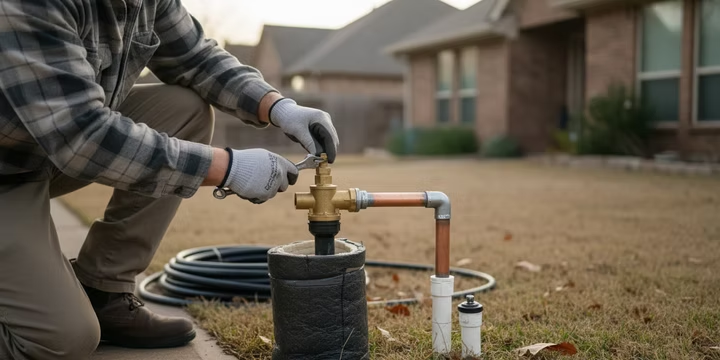
TLDR: To winterize a backflow preventer, shut off the irrigation supply at the isolation valve, open the test cocks to drain residual water from the assembly body, set both shutoff handles to about 45 degrees, and insulate exposed piping. In Texas, most irrigation systems are not designed for compressor blowouts, so the emphasis is on draining above-ground components and insulating before the first freeze. Lubbock’s average first freeze falls around October 31, making late October the target window for this work.
Winterizing a backflow preventer is the seasonal process of isolating the irrigation water supply, draining all residual water from the backflow prevention assembly, and protecting exposed components so freezing temperatures can’t crack the device. It sounds simple, and it mostly is. But the details matter, because a single missed step (like closing a valve all the way instead of leaving it at 45 degrees) can turn a $30 task into a $400 replacement.
In West Texas, backflow preventers sit above ground, exposed to wind and rapid temperature swings. That makes them the most freeze-vulnerable part of a typical irrigation system. TAMU’s School of Irrigation notes that most Texas landscape irrigation systems are not designed for the blowout method common in northern states. Instead, the focus is draining above-ground assemblies like the backflow preventer and insulating what’s exposed.
The City of Lubbock reinforces this, urging residents to insulate irrigation equipment and backflow preventers and to avoid irrigating at or below 35°F to prevent icy runoff and potential fines.
When to winterize in Lubbock: The National Weather Service reports Lubbock’s average first freeze around October 31, though it can swing earlier or later by a couple of weeks. Plan to winterize before late October in a typical year. If an early Arctic front shows up in the forecast, get it done 24 to 48 hours ahead. For a broader seasonal checklist beyond just the backflow device, see our fall irrigation maintenance and winterize checklist guide.
What Type of Backflow Preventer Do You Have?
Before you winterize your backflow preventer, you need to know which device you’re working with. Texas irrigation systems typically use one of three types, and each has slightly different drainage points and placement rules.
PVB (Pressure Vacuum Breaker)
The most common backflow preventer on residential irrigation in Texas. It mounts above grade on a riser, usually near the meter or where the irrigation line branches off. You’ll see two shutoff handles and small slotted valves (the test cocks) on the body. PVBs are especially vulnerable to freeze damage because the entire assembly sits exposed to the elements.
RPZ (Reduced Pressure Principle Assembly)
An RPZ provides the highest level of backflow protection and is required on systems classified as health hazards. It also installs above grade, with the added requirement of an air gap below the relief valve so discharge water can flow freely. RPZ assemblies are larger and heavier than PVBs. The relief valve cavity creates an additional spot where water can collect and freeze.
DCVA (Double Check Valve Assembly)
A DCVA can be installed below grade in a properly drained valve box, which gives it more natural freeze protection than the other two types. But “below grade” doesn’t mean it’s immune. Standing water in the vault, frozen risers, or neglected test cocks can still cause problems.
Exact Winterization Steps by Device Type
How to Winterize a PVB
This is the procedure most Lubbock homeowners will follow. It takes about 10 minutes once you know where everything is.
- Turn off the irrigation supply at the isolation valve near the meter or backflow assembly. Do not leave the assembly pressurized going into a freeze. TAMU guidance emphasizes this as the first and most important step.
- Relieve pressure and drain. Open a downstream drain or hose bib on the irrigation main, then open the PVB’s test cocks (the small slotted valves on the body) to vent and drain residual water. Expect a short burst of water and air.
- Set both shutoff handles to about 45 degrees (half-open). This prevents water from being trapped inside the ball cavity where it can freeze and split the valve. Leave the test cocks open. FEBCO manufacturer instructions call for this specifically.
- Insulate. Wrap exposed piping and install a breathable, insulated cover over the assembly. Insulation slows freezing, but it is not a substitute for draining.
- Consider a freeze-resistant upgrade for exposed or wind-prone sites. Models like the FEBCO LF767FR feature low-point test cock drains that make winterization easier and survive marginal protection better. If your PVB cracked during a previous freeze, our sprinkler vacuum breaker replacement guide walks through the replacement process.
For more on PVB-specific issues that might surface during or after winterization, see our guide on diagnosing and fixing PVB leaks.
How to Winterize an RPZ
RPZ assemblies require the same core steps with one added consideration: the relief valve cavity.
- Shut off upstream water and open a low downstream drain or hose bib.
- Open test cocks to vent and drain the body and the relief valve cavity. Leave them open for the duration of winter.
- Park both shutoff handles at 45 degrees to prevent trapped water in the valve balls.
- Keep the relief valve discharge area clear. Ice buildup around the relief port can cause damage or mask leaks. If the assembly is fully exposed, install an insulated, ventilated enclosure. RPZ assemblies must never be installed below grade or anywhere the relief discharge could be submerged.
How to Winterize a DCVA in a Valve Box
Below-grade DCVAs have natural insulation from the soil, but they still need attention.
- Pump or scoop out any standing water in the valve box. A DCVA should never sit submerged.
- Shut off the upstream irrigation supply and open test cocks to drain the body. Leave them open.
- Set shutoff handles to 45 degrees. Add closed-cell insulation around exposed risers and make sure the vault lid seals tightly against weather.
Why 45 Degrees and Open Test Cocks Matter
This is the detail that separates a properly winterized backflow preventer from one that cracks in January.
When you close a ball valve all the way, water gets trapped in the ball cavity. There’s no room for expansion when that water freezes, so the valve body splits. Setting the handle to 45 degrees (half-open) leaves the ball partially rotated, creating enough space for any residual water to expand safely. Manufacturer manuals from FEBCO and Zurn explicitly prescribe this position for winter storage.
Open test cocks serve a different purpose. Even after you close the isolation valve, a slow internal leak can allow water to seep past the shutoff and refill the backflow assembly body. With test cocks open, that water drips out harmlessly instead of re-pressurizing the device. Practitioners on irrigation forums report that leaving test cocks open also provides a visual confirmation: if a spring technician arrives and finds them closed, they know the system wasn’t winterized correctly.
One irrigation professional on Reddit described it this way: pros leave ball valves at 45 degrees so anyone can see at a glance that the device was winterized, and test ports stay open so a slow-leaking shutoff can’t silently refill the main over winter.
Do Lubbock Homeowners Need a Full Sprinkler Blowout?
Usually not. The compressor blowout method is standard in northern climates where irrigation pipes sit in soil that freezes solid for months. Texas is different.
TAMU’s School of Irrigation states plainly that most Texas landscape irrigation systems are not designed for blowouts. The buried PVC lines in Lubbock rarely freeze because they sit below the frost line. The vulnerable point is the above-ground backflow preventer and any exposed risers.
The Texas approach to winterizing a backflow preventer is: isolate the water, drain the above-ground components, insulate, and move on. No compressor required.
That said, Lubbock homeowners on Reddit note that skipping even these basic steps usually works fine until an outlier cold event arrives. The PVB is always the first thing to split when protection was skipped. The 2021 winter storm made that painfully clear across West Texas.
If you want to understand the broader context of how smart watering and sensors can protect your system year-round (including freeze sensors that can trigger shutoffs), that’s worth reading too.
Five Common Winterization Mistakes and How to Fix Them
1. Insulating without draining. The most widespread error. City guidance rightly stresses insulating backflow preventers, but insulation only slows heat loss. If the assembly is full of water and temperatures stay below freezing long enough, insulation alone won’t save it. Always drain first, then insulate.
2. Closing ball valves fully for winter. This traps water in the ball cavity. When it freezes, the valve cracks. Set handles to 45 degrees, per manufacturer instructions. Every time.
3. Forgetting to leave test cocks open. A leaky upstream shutoff can silently refill the backflow assembly over weeks. Open test cocks prevent the device from re-pressurizing and give water an escape route.
4. Using an open flame to thaw a frozen assembly. Torches and heat guns aimed at PVC or brass fittings can cause burns, warping, or fire. If a backflow preventer freezes, let it thaw with ambient heat, wrap it with insulation, or call a professional. Safe thawing is slow thawing.
5. Ignoring a leaking relief valve after spring startup. If the RPZ relief valve won’t stop discharging after you re-pressurize, something inside was damaged. Don’t ignore it. Schedule a test or repair. For troubleshooting help, see our guide on why backflow devices leak and how to fix them.
For ongoing system care that catches problems like these before they become emergencies, read our piece on why sprinkler system maintenance matters.
Texas Compliance: What You Should Know
Winterizing your backflow preventer correctly isn’t just about avoiding freeze damage. There’s a compliance dimension too.
Isolation valve requirement.Texas Administrative Code Chapter 344 requires an isolation valve upstream of the backflow assembly on new irrigation system installations. If your system doesn’t have one (common on older installs), adding one during repairs makes winterization a five-minute job instead of a frustrating search for the right shutoff. It’s also the code-compliant path forward.
Annual testing. Backflow assemblies on irrigation systems designated as health hazards must be tested annually under Texas rules. Local water purveyors, including Lubbock Water Utilities, administer their own testing programs and send notifications. Testing frequency can vary by jurisdiction, so check with your utility.
Who should do the testing? A licensed Backflow Prevention Assembly Tester (BPAT) is required for formal testing and certification. If you need annual testing, compliance paperwork, or repairs after freeze damage, M&M Sprinklers provides certified backflow testing through Texas-licensed BPATs who handle testing, repairs, and written certifications.
Property managers and HOAs dealing with multiple backflow devices across a property face amplified compliance headaches each fall and spring. Our commercial sprinkler repair guide for property managers covers the operational side of managing seasonal irrigation work at scale.
Upgrade Options After Freeze Damage
If you’ve already lost a backflow preventer to a West Texas freeze, replacing it with the same setup invites the same result. Consider these upgrades:
Freeze-resistant PVBs. Models like the Watts/FEBCO LF767FR feature low-point test cock drains that make it easier to fully evacuate water. They survive marginal protection better than standard PVBs, which is especially useful on wind-exposed lots common in Lubbock neighborhoods.
Insulated enclosures. A properly built, ventilated enclosure around the backflow assembly adds a meaningful layer of protection. For RPZ assemblies, make sure the enclosure doesn’t block or submerge the relief valve discharge.
Adding an isolation valve. If your system predates the Texas requirement, adding an isolation valve upstream of the backflow preventer is the single most impactful upgrade for winterization. It lets you shut off and drain the device in minutes without affecting your domestic water supply.
DCVA vault relocation. If you’re replacing a PVB that keeps freezing and your system qualifies for a double check valve assembly, a below-grade DCVA vault provides inherently better freeze protection.
Spring Startup After Winterization
When overnight lows are consistently above freezing and it’s time to bring the irrigation system back online, follow this sequence:
- Close all test cocks on the backflow assembly.
- Return both shutoff handles to the fully open position (aligned with the pipe direction).
- Slowly open the upstream isolation valve. Repressurize the system gradually to avoid water hammer.
- Inspect the backflow preventer for drips, seepage, or hissing at test cocks, fittings, and the relief valve (on RPZ assemblies).
- Run each irrigation zone and check for broken heads, leaking pipes, or zones that won’t activate.
- Schedule your annual backflow test if required by your local utility program.
If anything looks off during startup, our residential sprinkler services guide covers the full range of spring checkup and repair services available to Lubbock homeowners.
Frequently Asked Questions
Do I need to remove my PVB for winter?
Generally no. In Texas, properly draining the PVB, setting handles to 45 degrees, leaving test cocks open, and insulating the assembly is sufficient. Some professionals in extreme northern climates remove and store PVBs indoors, but TAMU guidance does not recommend that for Texas systems.
My RPZ relief valve drips after spring startup. Did I winterize wrong?
Possibly. A dripping relief valve after startup usually means debris entered the assembly during winter or freeze damage compromised the internal check valves. Don’t ignore it. A licensed BPAT can test the assembly and determine whether repair parts or a full rebuild is needed.
Can I use heat tape on my backflow preventer?
Only if it’s UL-listed heat cable installed according to both the cable manufacturer and the backflow device manufacturer instructions. Heat tape helps, but it is not a replacement for draining and insulating. Never use an open flame.
What happens if I don’t winterize my backflow preventer?
Water trapped in the assembly freezes, expands, and cracks the brass or plastic body. PVBs are the most common casualty in Lubbock freeze events. You won’t know until spring, when you turn the system on and water sprays from the cracked housing. Replacement costs vary, but they always exceed the ten minutes it takes to winterize.
Is a sprinkler blowout necessary in Lubbock?
For most residential systems, no. Texas irrigation pipes are buried below the typical frost depth, so the underground components are generally safe. The priority is draining and insulating the above-ground backflow preventer and any exposed risers. Blowouts are a standard northern practice that doesn’t apply to most West Texas installations.
How do I find my isolation valve?
Look for a shutoff valve on the pipe leading into the backflow preventer, usually located near the water meter or where the irrigation line branches from the main supply. On older systems, there may not be one. If you can’t locate it, or if it’s stuck and won’t turn, a licensed irrigator can identify, repair, or install one. Texas code requires isolation valves on all new irrigation system installations.
When should I call a professional instead of doing it myself?
Call a licensed BPAT or irrigator if: you can’t locate the isolation valve, the valve box is flooded, shutoff handles won’t move, the RPZ relief valve won’t stop discharging, you suspect the device isn’t installed to code, or you’ve had freeze damage before and want an upgrade to a freeze-resistant model or below-grade vault. M&M Sprinklers has Texas-licensed backflow testers on staff who handle testing, repairs, and compliance reporting for Lubbock and surrounding West Texas communities.