TL;DR
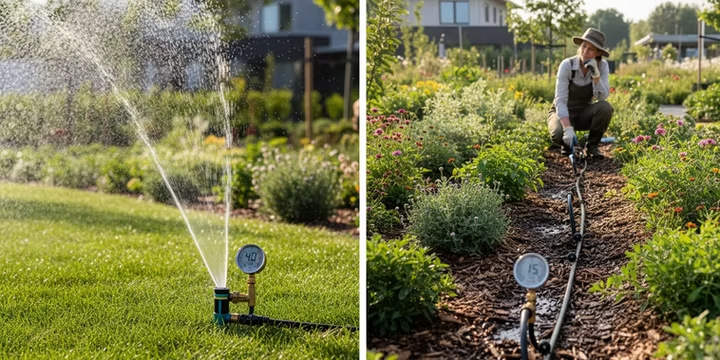
A sprinkler system throws water through the air to cover turf areas, while drip irrigation delivers water directly to soil at the root zone. Sprinklers operate at higher pressures (30 to 45 psi depending on head type) and run about 50 to 70% efficiency in residential settings, whereas drip achieves 90 to 95% application efficiency because it sidesteps wind and evaporation losses. Most properties in West Texas benefit from a hybrid approach: sprinklers for lawns and drip irrigation for beds, trees, and foundation plantings, each on separate zones with their own pressure regulation and scheduling.
What Is a Sprinkler System?
A sprinkler system is a pressurized, in-ground network of valves and pop-up heads that distributes water through the air in overlapping patterns. The goal is uniform coverage across large, consistent areas, primarily turf grass.
Three main head types define most residential sprinkler systems:
- Fixed spray heads pop up and throw a fan of water at a set radius. They apply water fast (often over 1.0 inch per hour) and work best for small, tight zones. Optimal operating pressure is around 30 psi. Above that, water atomizes into mist that drifts on the wind and never reaches the ground.
- Multistream rotary nozzles (like the Hunter MP Rotator) send multiple rotating streams at roughly 0.4 inches per hour, a much lower application rate. They need about 40 to 45 psi and handle medium-to-large areas well.
- Rotors rotate a single stream across a wide arc, applying water at about 0.4 to 0.7 inches per hour. They need roughly 45 psi and cover the largest radii.
Pressure regulation matters more than most homeowners realize. WaterSense-labeled pressure-regulated spray bodies (PRS), a specification EPA finalized in 2017, keep nozzles at their designed pressure to reduce misting and waste. Without regulation, high street pressure (common in Lubbock) forces water into a fine mist that evaporates or blows away before it soaks in.
If you’re trying to understand the differences between head types in more detail, this guide to irrigation head types breaks them down by radius, arc, and application.
Pros: Fast, uniform coverage of turf; compatible with smart controllers and weather-based scheduling; many nozzle options to match lot size and shape.
Cons: Wind drift and evaporation can eat 30% or more of applied water. Runoff risk is high on clay soils when precipitation rates exceed infiltration. Requires pressure regulation and correct head-to-head spacing to work properly.
West Texas Note for Sprinklers
Lubbock averages around 11 to 12+ mph winds annually. That constant wind amplifies drift and evaporation losses on overhead irrigation, especially from fine-mist spray heads. Choosing lower precipitation nozzles (multistream rotators or rotors) and pairing them with PRS bodies is the single best hardware move for windy properties. Always water in the early morning when wind speeds are lowest and humidity is highest.
What Is Drip Irrigation?
Drip irrigation (also called micro-irrigation or low-volume irrigation) is a low-pressure, filtered system that delivers water directly to the soil at the root zone. Instead of throwing water through the air, it seeps out of emitters at a slow, controlled rate.
Drip emitters come in several forms:
- Point-source emitters snap into tubing and water individual plants.
- Inline dripline has emitters built into the tubing wall at preset spacing (commonly 12 or 18 inches), ideal for rows of shrubs or groundcover beds.
- Micro-bubblers and micro-sprays cover slightly wider areas at low volume, useful around tree roots or dense plantings.
The component order for a drip zone matters and should follow this sequence:
Backflow preventer → Zone valve → Filter → Pressure regulator → Mainline → Dripline/emitters → Flush cap
Filters are not optional. Emitter passages are tiny, and even moderate sediment or mineral buildup will clog them. Most landscape drip systems need a 150-mesh filter and a regulator set to 20 to 30 psi. Backflow prevention is required by many municipalities, including most Texas cities.
For a closer look at how to connect drip properly, including filter and regulator placement, read this water source setup guide for drip irrigation.
Pros: 90 to 95% application efficiency (WSU Extension). Near-zero wind loss because water goes straight to soil. Works on slopes, oddly shaped beds, and narrow foundation strips. Less weed pressure since only targeted areas get wet.
Cons: Clogging risk demands regular filter cleaning and line flushing. Tubing exposed to sun degrades faster. Critters (rabbits, squirrels, even dogs) chew exposed poly lines, especially in hot, dry months. Harder to visually confirm the system is running correctly since there is no visible spray pattern.
West Texas Note for Drip
In a climate where outdoor irrigation accounts for 30 to 50% of total potable water use, drip irrigation on beds and tree rings eliminates the wind-driven waste that plagues overhead watering. For Lubbock properties, converting foundation beds and shrub areas from spray heads to drip can cut water use on those zones by 25 to 40% while actually improving plant health, because roots get consistent moisture instead of brief, windy dousings.
Sprinkler System and Drip Irrigation Efficiency: The Numbers
The efficiency gap between these two methods is real and measurable.
Sources: WSU Extension, CSU Extension, Irrigation Association SWAT
The roughly 70% figure for sprinklers represents application efficiency under decent conditions. In a windy semi-arid place like West Texas, real-world efficiency for poorly maintained sprinkler systems can drop well below 50%. Research has documented wind-drift and evaporation losses varying dramatically based on wind speed, nozzle pressure, droplet size, and time of day.
Drip’s advantage is straightforward: water that never enters the air never gets lost to the air.
For homeowners comparing costs and savings in more depth, this comparison of drip vs. spray irrigation adds context on when each method makes financial sense.
Understanding Precipitation Rates (and Why They Matter on Clay)
Precipitation rate is how fast an irrigation device applies water to the ground, measured in inches per hour. It determines whether water soaks in or runs off.
Here is the spectrum from slowest to fastest:
- Drip irrigation: Trickle rate, well below any soil’s infiltration capacity. No runoff concern.
- Rotors: ~0.4 to 0.7 inches per hour. Gentle enough for most soils when spaced properly.
- Multistream rotary nozzles: ~0.4 inches per hour (some models like the MP800 reach ~0.8). These match rotor rates, which is why they pair well on the same zone.
- Fixed spray heads: Often 1.0+ inches per hour. This exceeds the infiltration rate of heavy clay soils, which is common across Lubbock.
When water hits the ground faster than soil can absorb it, you get puddles, runoff, and wasted money. The fix for clay soils is cycle-and-soak scheduling: run each zone for a shorter period, let water soak in for 30 to 60 minutes, then run the zone again. Texas A&M AgriLife Extension publishes a cycle-and-soak quick guide specifically for this problem.
This is one reason why understanding sprinkler systems and drip irrigation together matters. You need to match the device to the soil, not just the plant.
Hybrid Systems: Using Sprinklers and Drip Irrigation on the Same Property
The most efficient residential landscapes in arid and windy regions typically combine both methods. Sprinklers handle the turf. Drip handles everything else.
The “Hybrid by Default” Rule
If you are not sure which method to use, default to:
- Sprinklers (rotors or multistream rotary nozzles) for open lawn areas where head-to-head coverage is achievable.
- Drip (inline dripline or point-source emitters) for flower beds, shrub borders, tree rings, foundation plantings, parkways, and slopes.
Then refine with proper pressure regulation on each zone type and weather-based scheduling across the whole system.
The One Rule You Cannot Break
Never run drip and sprinklers on the same zone. Their precipitation rates and pressure requirements are too different. A zone running at 45 psi and 0.5 inches per hour for rotor coverage will blow out drip emitters rated for 25 psi. Meanwhile, a runtime that satisfies drip emitters will leave sprinkler zones bone dry.
Practitioners on Reddit’s r/Irrigation emphasize this point frequently. One common thread describes homeowners tying micro-bubblers into spray or rotor zones, creating wildly mismatched runtimes where some plants drown and others wilt. The solution is always the same: give each device type its own zone with matched precipitation rates.
Proper zoning is foundational to any hybrid sprinkler system and drip irrigation layout. For a deeper look at planning zones, valves, and head placement, the irrigation system design guide walks through the full process.
West Texas Considerations: Wind, Clay, and Water Bills
Most national guides on sprinkler systems and drip irrigation ignore local conditions. That is a problem when your local conditions include 12 mph average winds, expansive clay soils, and summer afternoon temperatures above 100°F.
Wind Drift and Evaporation
Overhead irrigation losses spike on windy days. Research shows wind-drift and evaporation losses can reach well into the double digits depending on wind speed, nozzle type, and pressure. In Lubbock, those conditions exist most afternoons from March through October.
Three hardware and scheduling moves reduce wind losses:
- Switch from fixed sprays to multistream rotary nozzles wherever possible. Larger droplets resist drift better than fine mist.
- Install pressure-regulated spray bodies to prevent the over-pressurization that creates mist in the first place.
- Water between 4:00 AM and 8:00 AM, when wind speeds are lowest and humidity is highest.
Clay Soils and Runoff
Lubbock’s heavy clay soils absorb water slowly. Fixed spray heads applying 1.5 inches per hour will generate runoff within minutes. Cycle-and-soak programming, where you break one long runtime into two or three shorter cycles with rest periods between them, keeps water on the lawn instead of on the sidewalk.
The Water Bill Argument
With many Texas communities seeing 30 to 50% of total potable water going to outdoor use, efficiency upgrades to sprinkler and drip irrigation systems carry real financial returns. Converting even a few bed zones from spray to drip, adding pressure regulation, and programming cycle-and-soak can shave meaningful dollars off a summer water bill.
Smart Controllers: Do They Actually Save Water?
Yes, but only if the irrigation system underneath is mechanically sound.
A WaterSense-labeled weather-based irrigation controller (WBIC) adjusts runtimes automatically based on local weather data, including temperature, humidity, wind, and rainfall. The EPA estimates these controllers save an average home about 7,600 gallons per year, with field studies showing 6 to 30% outdoor water savings depending on site conditions.
The catch: a smart controller cannot fix bad hydraulics. If your sprinkler heads are misting because pressure is too high, or your drip lines are clogged because there is no filter, a weather-based controller just automates the waste more precisely.
Fix the hardware first. Regulate pressure. Clean or add filters. Confirm head-to-head coverage on sprinkler zones. Then let the smart controller optimize scheduling.
For practical tips on pairing smart controllers with efficient hardware, this guide covers water-saving irrigation upgrades for homeowners, including Wi-Fi controller setup and sensor integration.
Common Mistakes with Sprinkler Systems and Drip Irrigation
Mixing Device Types on One Zone
Already covered above, but it deserves repeating because it is the most common design error on hybrid properties. Sprays, rotors, multistream rotators, and drip emitters each have different precipitation rates and pressure needs. Mixing them on a single zone destroys distribution uniformity and guarantees some areas get too much water and others get too little.
Skipping the Filter and Regulator on Drip
Many DIY drip installs fail because the homeowner skips the filter, the regulator, or both. Practitioners on Reddit consistently trace drip pressure problems to missing or incorrectly placed regulators. Emitter passages are small. Without a 150-mesh filter, sediment and hard-water minerals clog them within a season. Without a regulator set to 20 to 30 psi, full house pressure (often 60+ psi in Lubbock) will blow fittings and degrade emitters.
If your drip zones are running unevenly, the drip irrigation pressure troubleshooting guide covers diagnosis step by step.
Ignoring Wind When Choosing Nozzles
Installing fixed spray heads on an exposed front yard in Lubbock is asking for trouble. The mist will blow onto the driveway, the street, or the neighbor’s property. Multistream rotary nozzles handle wind far better and apply water at a rate clay soil can absorb.
Forgetting About Critters
Exposed drip tubing gets chewed. This is not a maybe; it is a when. Practitioners on Reddit report that exposed half-inch poly is especially vulnerable during hot, dry months when animals are looking for moisture. Burying drip lines under 2 to 3 inches of mulch reduces UV degradation and discourages chewing. In areas with persistent rodent pressure, stainless or copper sleeves at vulnerable points can help.
Running Sprinklers in the Afternoon
Afternoon watering in West Texas combines peak heat, peak wind, and peak evaporation. It is the worst possible combination for overhead irrigation. Early morning watering (before 8:00 AM) reduces all three loss factors simultaneously.
Maintenance Checklist
For Sprinkler Systems
- Seasonal audit: Walk every zone while it runs. Look for tilted heads, broken risers, clogged nozzles, and dry spots.
- Check pressure at heads. Carry a pitot tube or pressure gauge. If spray heads are misting, pressure is probably too high. Swap in PRS bodies.
- Replace damaged heads promptly. A broken head dumps water at full flow and starves the rest of the zone. Our step-by-step guide to fixing broken sprinkler heads walks through the process.
- Confirm head-to-head spacing. If coverage gaps exist, you may need to add or relocate heads.
- Test backflow annually. Many Texas municipalities require certified testing. A leaking or failed backflow device is both a code violation and a contamination risk. More on that in this backflow device troubleshooting guide.
- Update seasonal runtimes or let a weather-based controller handle adjustments automatically.
For Drip Irrigation
- Clean filters at least twice per season, more often with hard water. Lubbock water is hard, and mineral buildup is a constant issue. Practitioners on irrigation forums note that regular filter cleaning and periodic line flushing are the difference between a drip system that lasts years and one that fails in months.
- Flush lines by removing end caps and running water for 30 to 60 seconds per zone.
- Inspect for chew damage. Walk drip zones monthly during growing season. Replace damaged sections immediately.
- Swap clogged emitters. If a plant looks stressed and the emitter is not dripping, pop it out and replace it. Pressure-compensating emitters perform more consistently on long or uneven runs.
- Verify zone pressure at the regulator. It should read 20 to 30 psi downstream of the regulator, not upstream.
For a broader look at keeping your full system in shape, this sprinkler system maintenance guide covers annual inspection routines for both sprinkler and drip zones.
Frequently Asked Questions
Can I run drip and sprinklers on the same zone?
No. Drip and sprinkler heads have different pressure requirements and vastly different precipitation rates. Running them on the same zone means one type will always be over or under-watered. Use separate zones for each, with individual pressure regulation.
Do I really need a filter and regulator for drip irrigation?
Yes, without exception. Drip emitters have tiny internal passages that clog easily. A 150-mesh filter catches sediment and mineral particles, and a regulator (typically set to 20 to 30 psi) protects emitters and fittings from damage caused by full municipal water pressure. Skipping either component is the most common reason drip systems fail.
What nozzles work best for clay soils in West Texas?
Multistream rotary nozzles (around 0.4 inches per hour) and properly spaced rotors (0.4 to 0.7 inches per hour) apply water slowly enough for clay to absorb it. Combine these with cycle-and-soak scheduling for best results. Avoid fixed spray heads on clay, especially on slopes, because their high precipitation rates cause runoff almost immediately.
How much water can a smart controller actually save?
EPA data shows WaterSense-labeled weather-based controllers save roughly 7,600 gallons per year for an average home, translating to about 6 to 30% outdoor water savings depending on site conditions. The important caveat: the irrigation system must be mechanically sound first. A smart controller optimizing a broken system just wastes water on a smarter schedule.
Is subsurface drip irrigation a good option for lawns?
It can work and does reduce evaporation, but it is design-sensitive and much harder to diagnose or repair when problems arise. Subsurface drip for turf requires professional design, proper filtration, root intrusion prevention (typically chemical injection), and strict maintenance routines. It is not a typical homeowner retrofit project.
How do I protect drip lines from animals chewing through them?
Bury drip tubing under 2 to 3 inches of mulch or soil whenever possible. This also reduces UV degradation. In areas with heavy rodent or rabbit activity, some contractors use stainless or copper sleeves around vulnerable connection points. Checking lines monthly during growing season catches damage before plants suffer.
Which method is better for trees?
Drip irrigation is almost always better for trees. It delivers water directly to the root zone without wasting it on surrounding hardscape or turf. For large or mature trees, you need enough emitters to wet at least three-quarters of the active root zone, which often extends well beyond the canopy drip line. A single emitter on a 20-foot oak will not cut it.
What is the best setup for a property that has both lawn and garden beds?
A hybrid sprinkler system and drip irrigation design. Use sprinklers (rotors or multistream rotary nozzles with pressure regulation) for turf zones and drip with filters and regulators for beds, trees, and foundation plantings. Keep them on separate zones with independent runtimes. This is the standard approach for efficient irrigation in windy, semi-arid climates like West Texas.
Ready to Upgrade Your Sprinkler System or Add Drip Irrigation?
Getting sprinklers and drip irrigation to work together on a single property takes correct zoning, matched precipitation rates, proper pressure regulation, and scheduling that accounts for wind and clay soil. It is not complicated, but the details matter.
M&M Sprinklers has been designing, repairing, and maintaining irrigation systems in Lubbock and across West Texas since 1987. The team includes licensed irrigators and certified backflow testers who handle everything from drip conversions and smart controller programming to annual backflow certification.
If you are considering a hybrid irrigation upgrade, adding drip to existing beds, or just need someone to audit what you have, find a Lubbock sprinkler installer or contact M&M Sprinklers directly at (806) 794-1300.