
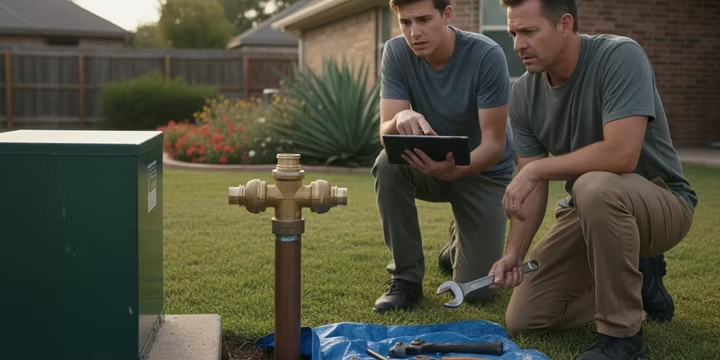
You might be looking at that brass device on your sprinkler system’s pipe and wondering, “What is this thing, and can I get rid of it?” Maybe it’s in the way, or maybe you’re trying to simplify your plumbing. Whatever the reason, the thought to remove backflow preventer hardware is one you should dismiss immediately. Doing so isn’t just a bad idea, it’s illegal, dangerous, and can lead to some seriously unpleasant consequences.
Your backflow preventer is a critical safety device that protects your family’s and your community’s drinking water. Let’s break down exactly what happens if you tamper with it and why it’s so important to leave it to the professionals.
1. Your Water Can Be Shut Off Immediately
The most direct consequence if you remove backflow preventer hardware is losing your water service. Public water systems are legally obligated to protect the water supply from contamination. If they discover a required backflow device is missing, bypassed, or broken, they have the authority to shut off your water until the hazard is fixed.
Many local ordinances, including those across Texas, empower water utilities to “deny or discontinue the water service to any premises” where a cross connection hazard exists. This isn’t a slap on the wrist, it’s an immediate enforcement action to prevent a potential public health crisis. To remove backflow preventer components or skip your annual test isn’t a minor infraction; it could trigger a service disconnection without much warning.
2. Violations and Penalties for Removing a Backflow Preventer
Beyond having your water turned off, you can expect significant legal and financial penalties. The decision to remove backflow preventer components, bypass them, or otherwise tamper with them is a direct violation of state plumbing codes and local water safety laws.
This can result in:
- Hefty Fines: Some Texas cities have ordinances imposing penalties of up to $2,000 per violation. This shows just how seriously authorities take the issue.
- Daily Penalties: The problem gets worse the longer it goes unaddressed. Many municipalities treat each day the violation continues as a separate offense. A month of non compliance could mean 30 separate fines.
- Legal Action: Authorities can also seek court orders (injunctive relief) to force you to reinstall the proper protection or stop using your irrigation system altogether.
The bottom line is that trying to remove a backflow preventer is a costly gamble. If you’ve inherited a system with issues or are unsure about its compliance, it’s best to get a professional inspection. The licensed irrigation experts at M&M Sprinklers can assess your setup in the Lubbock area and correct any code violations before they become expensive problems.
3. Why Your Irrigation System Must Have an Approved Backflow Preventer
So, why all the fuss? An irrigation system creates a “cross connection,” which is any point where your clean, potable drinking water could come into contact with contaminated water. Sprinkler systems can be full of lawn chemicals, fertilizers, pesticides, animal waste, and bacteria.
If you remove backflow preventer protection, a sudden drop in city water pressure (caused by a water main break or firefighter use) can create a back siphonage effect. This can literally suck the contaminated water from your lawn back through the sprinkler heads, into your home’s plumbing, and potentially into the public water main.
Real world examples show how dangerous this is:
- In Boise, Idaho, a failed backflow device on a sprinkler system allowed irrigation water to contaminate the neighborhood’s drinking supply, making about 80 residents sick with a nasty bacteria.
- In Texas, a man mixing pesticide in a tank connected to a garden hose had the toxic mixture sucked back into his home’s plumbing when city water pressure dropped.
Because of these risks, the Texas Commission on Environmental Quality (TCEQ) mandates that any irrigation system connected to a potable water supply must have an approved backflow prevention assembly. This is not optional.
4. Permits and Testing Are Required for Installation and Relocation
Permits and Approvals
You cannot remove backflow preventer parts and reinstall them elsewhere without proper approval. Installing a new backflow preventer or even moving an existing one is considered plumbing work and almost always requires a permit from your local municipality. In Texas, new irrigation system design and installation must be handled by a licensed irrigator, and cities like Lubbock require an irrigation permit before work begins.
Skipping the permit process is risky. Unpermitted work can lead to fines, orders to remove the installation, or even void your homeowner’s insurance if a failure causes damage. A professional contractor like M&M Sprinklers will handle pulling the necessary permits and scheduling inspections for you, ensuring the job is done right from the start.
Mandatory Testing
After a backflow preventer is installed, repaired, or relocated, such as when you replace a failed vacuum breaker, it must be tested by a certified professional before it’s put into service. This initial test confirms the device is working correctly.
Furthermore, Texas law requires that backflow preventers on irrigation systems be tested annually. This ensures the device continues to provide protection year after year. Failing to complete your annual test can put you out of compliance, risking the same penalties as if you were to remove the backflow preventer entirely.
5. Bypasses Around Backflow Preventers Are Strictly Prohibited
Some people think they can get clever by installing a “bypass,” an alternate pipe that goes around the backflow preventer. This is strictly forbidden. If you’re troubleshooting a leaking backflow preventer, fix the assembly rather than bypassing it. An unprotected bypass pipe creates the exact cross connection the device is meant to prevent, rendering the entire safety system useless. A bypass is no safer than if you were to remove backflow preventer hardware altogether.
Plumbing codes are clear: every path from the clean water supply to your irrigation system must be protected. If an inspector finds a bypass, you will be required to either remove it or install a second, approved backflow preventer on the bypass line itself. This is a serious violation, similar to the penalties you would face if you choose to remove backflow preventer components. There are no shortcuts when it comes to water safety.
6. Always Use a Licensed Backflow Tester (BPAT)
When it’s time for your annual test or a post repair certification, you can’t just call any plumber. The work must be done by a licensed Backflow Prevention Assembly Tester, or BPAT, as they are known in Texas.
A BPAT is a state certified professional trained to properly inspect, test, and repair these critical devices. Water authorities will only accept test reports submitted by a licensed BPAT. They use calibrated equipment to perform the test and then file the official report with your water provider, keeping you in compliance.
The team at M&M Sprinklers includes licensed BPATs who serve the Lubbock and West Texas communities. They can handle your annual testing, complete any necessary repairs, and manage all the required paperwork with the city; consider pairing testing with this seasonal irrigation maintenance checklist to stay ahead of issues.
Ready to ensure your system is safe and compliant? Schedule your certified backflow test with M&M Sprinklers today.
Frequently Asked Questions
Can I legally remove my backflow preventer?
No. It is illegal to remove a required backflow preventer from your irrigation system. Doing so violates state and local plumbing codes and can result in fines, disconnection of your water service, and other legal penalties.
What is a cross connection?
A cross connection is any physical link between a potable (drinkable) water system and a non potable source, such as an irrigation system. This connection creates a risk of contamination if backflow occurs.
Why does my sprinkler system need a backflow preventer but my hose doesn’t?
While a simple hose bib vacuum breaker is recommended for hoses, a permanent, in ground irrigation system poses a much higher and more constant risk. The system is always connected and contains stagnant water that can harbor bacteria, fertilizers, and pesticides, making a more robust, testable backflow assembly mandatory.
How often does my backflow preventer need to be tested in Texas?
In Texas, backflow preventers connected to irrigation systems must be tested upon installation and then at least once annually by a licensed BPAT. Your local water utility will keep records and notify you when your test is due.
What happens if my backflow preventer fails its test?
If your device fails, it must be repaired or replaced by a licensed professional and then retested until it passes. A licensed BPAT can typically diagnose the problem and perform the necessary repairs on site.
Will the city really shut off my water if I remove backflow preventer parts?
Yes. Water utilities take cross connection hazards very seriously. To protect the public water supply, they are authorized by law to discontinue service to any property with a known, uncorrected backflow hazard, such as when someone decides to remove backflow preventer parts.