It’s a frustrating moment for any gardener or homeowner. You’ve set up a drip irrigation system to deliver water efficiently, but all you get is a disappointing trickle. When your drip irrigation not enough pressure, your plants suffer and water gets wasted. Don’t worry, this is a common issue with clear solutions.
Whether it’s a design flaw, a hidden leak, or a simple clog, we’ll walk you through everything you need to know to diagnose and fix the problem. Let’s get that water flowing properly again.
Understanding the Problem: Low Pressure Symptoms
When your drip system isn’t getting enough pressure, the signs are usually obvious. You’ll likely see patches of dry, under watered soil, and your plants might look stressed or wilted despite the system running.
Key symptoms include:
- Weak Emitters: Drip emitters at the end of the line are barely dripping, or some sections have no water at all.
- Uneven Watering: Plants closer to the water source seem fine, while those farther away are clearly thirsty.
- Lackluster Appearance: Your lawn or garden beds just look dull and aren’t thriving the way they should.
These issues often point to an underlying problem that, if left unaddressed, defeats the entire purpose of your irrigation system.
The Sweet Spot: Ideal Drip Irrigation Pressure
Unlike traditional sprinklers that need high pressure (often 40 to 60 PSI), drip systems are low pressure by design. Most garden drip systems operate best in a range of 10 to 30 PSI.
- Drip Tape: This thin walled tubing, common in vegetable gardens, works best around 10 PSI.
- Poly Tubing: Standard drip lines with individual emitters prefer pressure around 20 to 25 PSI.
If the pressure is too high, fittings can pop off and emitters can spray uncontrollably. If the pressure is too low, you get the weak performance that led you here. This is why managing pressure is so critical.
Your System’s Gatekeeper: The Pressure Regulator
A pressure regulator is a non negotiable component for any drip system. Its job is to take your home’s higher water pressure (often 50 PSI or more) and reduce it to the safe, gentle level your drip lines need.
Selecting the Right Regulator
Choosing the correct regulator is simple: match it to your system’s needs. A 25 PSI regulator is standard for most drip tubing, while soaker hoses or drip tape might require a 10 to 12 PSI model. Always check that the regulator can handle your zone’s flow rate (gallons per hour) to avoid performance issues.
Proper Placement
Proper placement is crucial. The pressure regulator must be installed after the zone control valve. This protects it from constant pressure and allows you to shut off the water for maintenance. Also, make sure the arrow on the regulator points in the direction of water flow, toward your drip lines. A quality regulator can last 5 to 10 years, but if you notice pressure creeping up, it might be time for a replacement.
How to Test Your Water Pressure
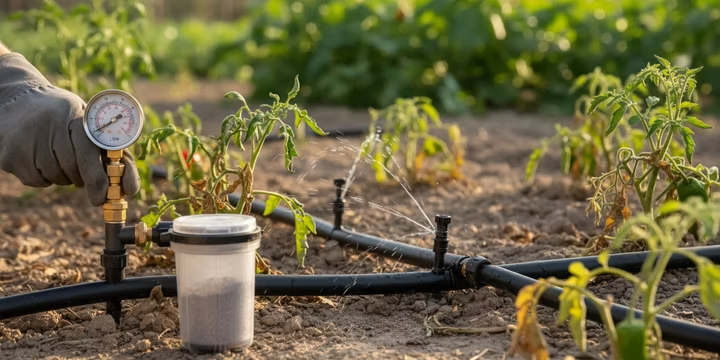
Guesswork won’t solve a pressure problem. The best way to know what you’re working with is to use an inexpensive pressure gauge, available at most hardware stores.
You can perform two key tests:
- Static Pressure at the Source: Attach the gauge to an outdoor faucet and turn it on full blast (with all other water off). This reading shows your home’s available supply pressure.
- Dynamic Pressure at the Line End: To see what the emitters are actually getting, attach the gauge to the far end of your drip line (you may need an adapter). With the system running, this reading shows you the pressure after accounting for friction loss and system demand.
If you have 50 PSI at the faucet but only 10 PSI at the end of the line, you know there’s a significant pressure drop happening within the system itself.
When the Source is the Problem: Low Municipal Pressure
Sometimes, the issue isn’t your system, it’s the water supply. If your home’s static pressure is low (say, under 40 PSI), your entire irrigation system will struggle. This is common in some parts of Lubbock and West Texas, especially if you’re at a higher elevation or at the end of a supply line.
In these cases, a booster pump is the most effective solution. This device is installed on your main irrigation line to increase the incoming water pressure. A residential booster can typically add 20 to 40 PSI, making a world of difference for underperforming sprinklers and drip zones. If you suspect your home has low water pressure, the team at M&M Sprinklers can evaluate your system and see if a booster pump is the right solution for you. You can schedule a system inspection with M&M Sprinklers to resolve persistently weak watering.
Common Culprits for Pressure Loss
If your source pressure is fine, the problem lies within your drip system. Here are the most common causes of drip irrigation not enough pressure.
1. Clogged Filters and Dirty Lines
Your system’s filter is the first line of defense against debris. If it gets clogged with sand, rust, or sediment, it will choke off water flow and kill your pressure.
- Filter Maintenance: Regularly unscrew your filter housing and rinse the screen. A clogged filter is a very common and easily fixed cause of pressure loss.
- Line Flushing: Fine particles can still get past the filter and settle in your drip lines. At the start of each season, open the end caps on your drip lines and run the water for a few minutes until it flows clear. See our seasonal sprinkler maintenance checklist for more preventive tasks.
2. Hidden Leaks
Even a small leak can cause a significant drop in pressure because water is escaping before it reaches the emitters. Look for telltale signs like:
- Unexplained muddy spots or pooling water.
- Soggy soil along the path of your drip tubing.
- Water spraying from a fitting that should only be dripping.
To fix a leak in poly tubing, simply cut out the damaged section and reconnect the ends with a barbed coupling. Finding and fixing leaks will almost always bring your pressure back up. For tricky underground leaks, this broken sprinkler line repair guide can help you confirm and fix the issue—or a professional service can save you a lot of time and digging.
3. System Design Flaws
Sometimes, drip irrigation not enough pressure is due to the system being asked to do more than it can handle.
Overly Long Tubing Runs
Water loses pressure as it travels through a pipe due to friction. The longer the pipe, the greater the pressure loss.
- 1/2 inch poly tubing can typically run up to about 200 feet before pressure drop becomes a major issue.
- 1/4 inch micro tubing (spaghetti tubing) should not be longer than 30 feet.
If your runs are too long, the emitters at the end will be starved for water. The fix is to either use larger diameter main lines or break the area into more zones.
Too Many Emitters on One Zone
Every emitter has a flow rate (e.g., 1 GPH). The total flow rate of all your emitters cannot exceed what your water source and pipes can supply. For example, 1/2 inch tubing can handle about 200 to 300 GPH of flow. If you have 200 emitters all rated at 2 GPH, your demand (400 GPH) is far too high, and pressure will crash.
4. Not Fully Open Valves
It sounds simple, but a partially closed valve is a frequent culprit. Make sure your main water shutoff, backflow preventer valves, and zone valves are all turned to the fully open position. A valve handle aligned parallel with the pipe usually means it’s fully open. If you suspect a stuck or failing valve, see our sprinkler valve repair guide. Industry experts often recommend this as the very first check when troubleshooting pressure issues.
Smart Solutions for Better Pressure and Uniformity
Fixing the basics is a great start, but modern drip components offer even better ways to manage pressure.
Zone Segmentation
If a zone is too long or has too many emitters, the best solution is often to split it into two or more smaller zones. By dividing the workload, each new zone runs separately and gets the full available pressure, ensuring all emitters work correctly. This might involve adding a new valve, but the performance boost is well worth it. If your system seems overloaded, the experts at M&M Sprinklers can revise your irrigation layout to balance the load.
Pressure Compensating (PC) Emitters
Pressure compensating emitters are a game changer. They have a built in mechanism, usually a flexible diaphragm, that delivers a constant flow rate over a wide range of pressures. This means an emitter will release 1 GPH whether it’s at the start of the line with 30 PSI or at the end with only 15 PSI.
PC emitters are especially crucial for:
- Long Runs: They ensure the last plant gets the same amount of water as the first.
- Slopes and Hills: They counteract the effect of gravity, which increases pressure at the bottom of a slope and decreases it at the top.
Using PC emitters provides incredible watering uniformity and can simplify your system design. For broader upgrades, see our smart irrigation systems guide.
Managing Slopes and Elevation
Gravity has a direct impact on water pressure. For every 2.31 feet you go uphill, you lose 1 PSI of pressure. If your yard has slopes, it’s vital to account for this. Besides using PC emitters, you can design separate zones for higher and lower elevation areas to manage pressure needs independently. For planning help, check out our irrigation system design guide.
Using Drip Tape for Uniform Flow
Drip tape is a flat, thin walled tube with built in emitters, often used for vegetable gardens. It is designed to provide highly uniform watering at very low pressure, typically around 10 PSI. Its design allows for very long runs with even water distribution, making it an efficient choice for row crops. Just remember, a pressure regulator is mandatory for drip tape.
Maintaining Your System for the Long Haul
An irrigation system requires a little upkeep to perform its best. Following a component replacement schedule can prevent failures before they happen.
- Drip Emitters: Plan to replace these every 2 to 5 years, as they can clog with mineral deposits over time.
- Filters & Regulators: These workhorses should be replaced every 5 to 10 years to ensure they function correctly.
- Drip Tubing: High quality poly tubing can last 7 to 10 years or more, but inspect it annually for cracks or brittleness.
Regularly checking and replacing these parts as they age will save you from bigger headaches and keep your system running efficiently for years. If you’d prefer scheduled support, explore our maintenance plans.
FAQ: Drip Irrigation Not Enough Pressure
1. Why is my drip irrigation pressure suddenly low? A sudden drop in pressure is often caused by a new leak, a completely clogged filter, or a valve that has been partially closed. Start by checking your filter, walking the line to look for wet spots, and ensuring all shutoff valves are fully open.
2. Can I increase the pressure in my drip system? First, ensure you don’t have a leak or clog. If the system is clean and intact but pressure is still low, the cause might be a design flaw (like too many emitters) or low source pressure. You can’t simply “turn up” the pressure, but you can improve it by splitting zones or, if your home’s supply is low, installing a booster pump.
3. Is 40 PSI too high for drip irrigation? Yes, 40 PSI is generally too high for most drip components. It can cause emitters to pop out of the tubing or create a fine, wasteful mist. Drip systems operate best between 10 to 30 PSI, which is why a pressure regulator is essential.
4. How do I know if my pressure regulator is bad? If you notice that your drip emitters are spraying water instead of dripping, or if fittings start blowing off the tubing, your regulator may have failed. You can test the pressure downstream from the regulator with a gauge. If the reading is significantly higher than the regulator’s rating (e.g., 45 PSI on a 25 PSI regulator), it needs to be replaced.
5. Will adding more emitters lower my water pressure? Yes. Every emitter you add increases the total flow demand on the zone. Adding too many emitters will exceed the capacity of the pipe to supply water, causing the pressure to drop significantly for all emitters on that line.